Painful past, uncertain future Northern Manitoba Dene community re-established decades after brutal forced relocation is inextricably linked to shrinking caribou population
Read this article for free:
or
Already have an account? Log in here »
To continue reading, please subscribe:
Digital Subscription
One year of digital access for only $1.44 a week*
- Enjoy unlimited reading on winnipegfreepress.com
- Read the E-Edition, our digital replica newspaper
- Access News Break, our award-winning app
- Play interactive puzzles
*Billed as $5.77 plus GST every four weeks. After 52 weeks, price increases to the regular rate of $19.95 plus GST every four weeks. Offer available to new and qualified returning subscribers only. Cancel any time.
To continue reading, please subscribe:
Add Free Press access to your Brandon Sun subscription for only an additional
$1 for the first 4 weeks*
- Enjoy unlimited reading on winnipegfreepress.com
- Read the E-Edition, our digital replica newspaper
- Access News Break, our award-winning app
- Play interactive puzzles
*Your next Brandon Sun subscription payment will increase by $1.00 and you will be charged $17.95 plus GST for four weeks. After four weeks, your payment will increase to $24.95 plus GST every four weeks.
Read unlimited articles for free today:
or
Already have an account? Log in here »
Hey there, time traveller!
This article was published 30/10/2020 (2182 days ago), so information in it may no longer be current.
Turning off the main road that goes in and out of Churchill, there’s no signs to mark the site or the horror stories it holds. Just over five kilometres southeast of town is a place known as Dene Village. All that remains are overgrown paths that lead in a loop, linking the cement foundations where homes once stood.
It is hard to talk about Churchill without discussing one of the most painful stories from the town’s history.
In 1956, the federal government forcefully relocated the Sayisi Dene people from their homelands in remote northwestern Manitoba to Churchill, claiming they were over-harvesting caribou.
It’s just one instance of how the lives of these people are entwined with this animal.
By the early 1970s, when the community’s leaders decided to bring their people back to their traditional lands near Tadoule Lake, they’d already lost more than a third of the people in their community.
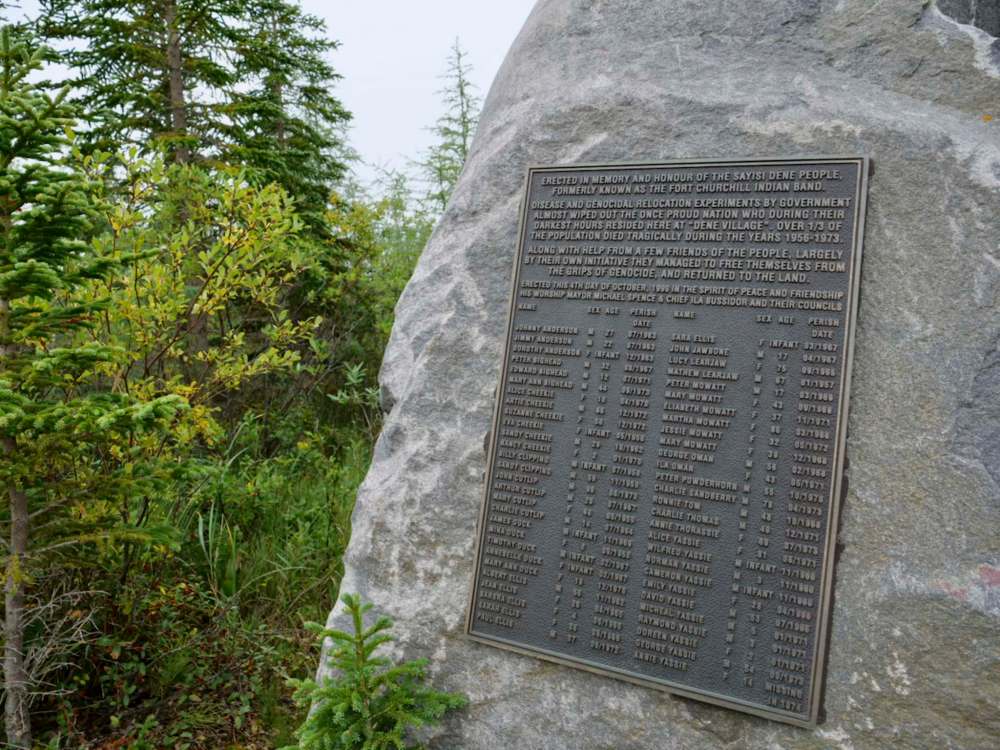
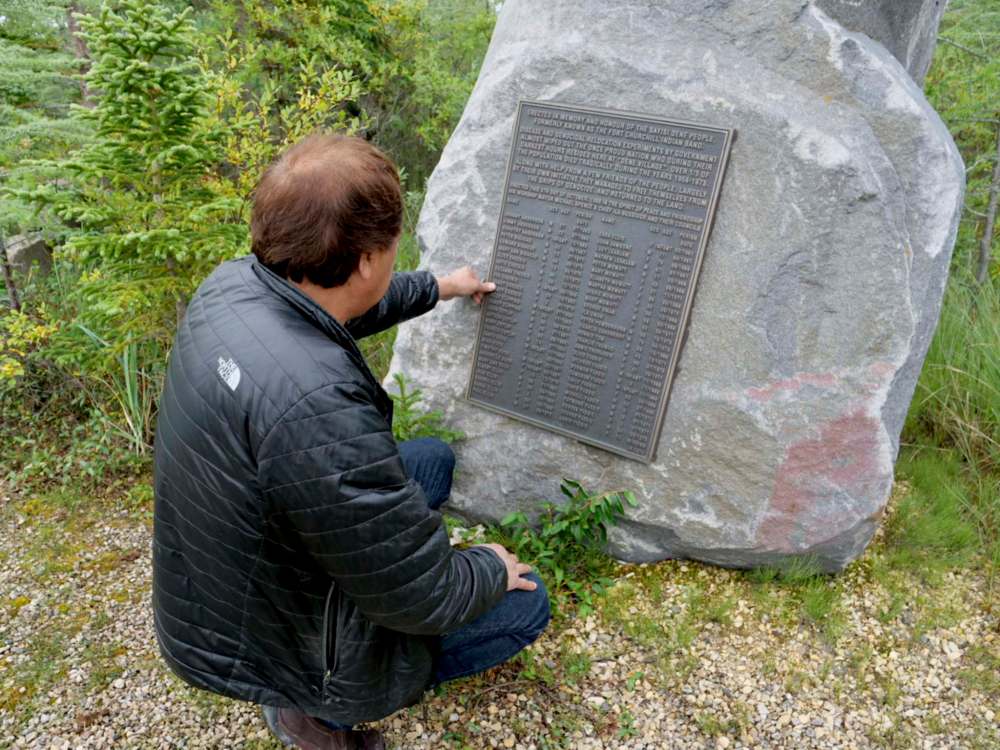
A plaque commemorating the horrors of the relocation is affixed to a rock in what remains of their former home on the outskirts of Churchill.
“Disease and genocidal relocation experiments by government almost wiped out the once proud nation who during their darkest hours resided here at ‘Dene Village,’” the plaque reads, along with 56 names of people who lost their lives here between 1956 and 1973; about half of the total number of deaths.
Fast forward to 2016: members of Sayisi Dene First Nation — now living on the northwest corner of Tadoule Lake — waited to cast their votes on a financial settlement the federal government was offering in reparation for the pain, suffering and loss the community had experienced.
“The day of the vote for the relocation settlement, for whatever reason, there must have been 100,000 caribou within a six-mile radius of Tadoule Lake. It’s just like they came to us on that day,” remembers Ernie Bussidor, a Sayisi Dene elder and former chief. Their presence perhaps numbing some of the pain dredged up on an awful day where his people were forced to reflect on all they’d lost.
It was a spiritual connection that brought them there, Bussidor says, as his community has always felt a deep connection to the caribou.
“The caribou, they reach out to us. We’ve played hand game every Friday night for the last five years. The young boys and the elders have this game, called traditional hand game, with caribou-skin drums. And the caribou hear those drums, you know?
“The drums of the Sayisi Dene people get louder and louder every year as we teach the games to our young. The caribou have a spiritual connection to our drum and the songs we sing.”
● ● ●
Fast-forward again, to the past summer: Bussidor and the leaders from Dene, Cree and Inuit communities came together to accept a $3.2-million cheque from the federal government for the establishment of the Seal River Watershed Indigenous Protected Area.
The initiative is an effort by Environment and Climate Change Canada to protect more wildlife and ecosystems across the country under the leadership of the Indigenous communities that live there. The Seal River watershed is of particular importance because it’s one of the world’s largest remaining intact watersheds (an area just shy of the size of Nova Scotia), and it’s the habitat for at-risk creatures including polar bears, short-eared owls and the olive-sided flycatcher.
But most important to Bussidor, it’s home to caribou.
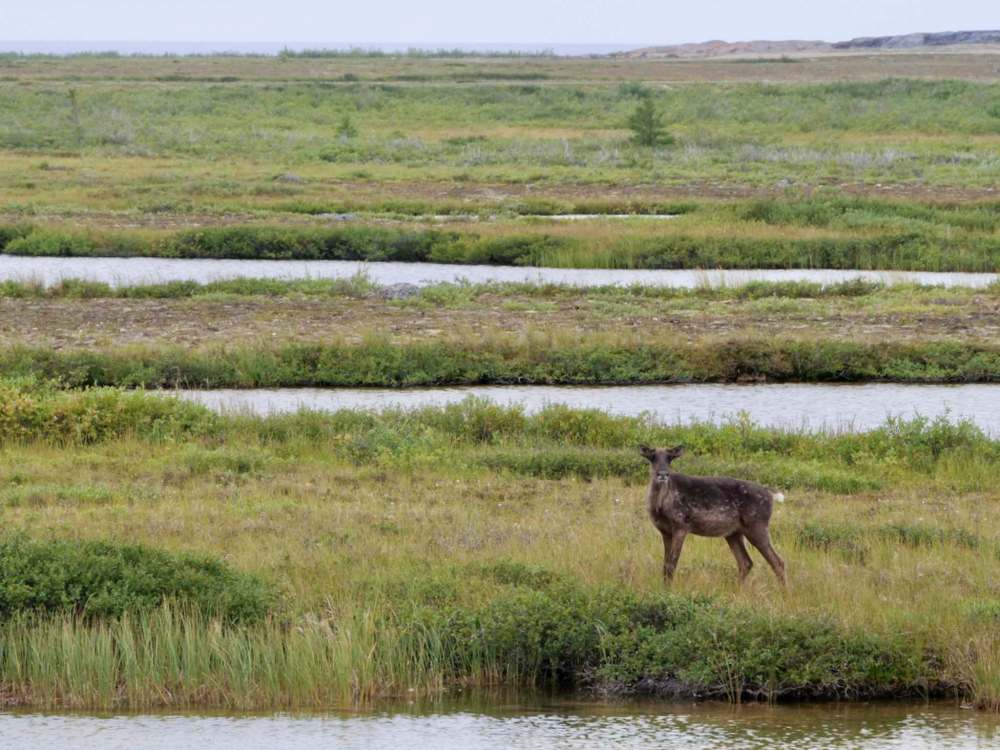
The Qamanirjuaq herd of barren ground caribou have a range that straddles Nunavut, the Northwest Territories, northeastern Saskatchewan and northern Manitoba. The largest herd in the country had, in 1994, an estimated population of 500,000 animals. By 2008, it had fallen to about 350,000. The most recent estimate, published by the government of Nunavut in 2018, is about 288,000 animals.
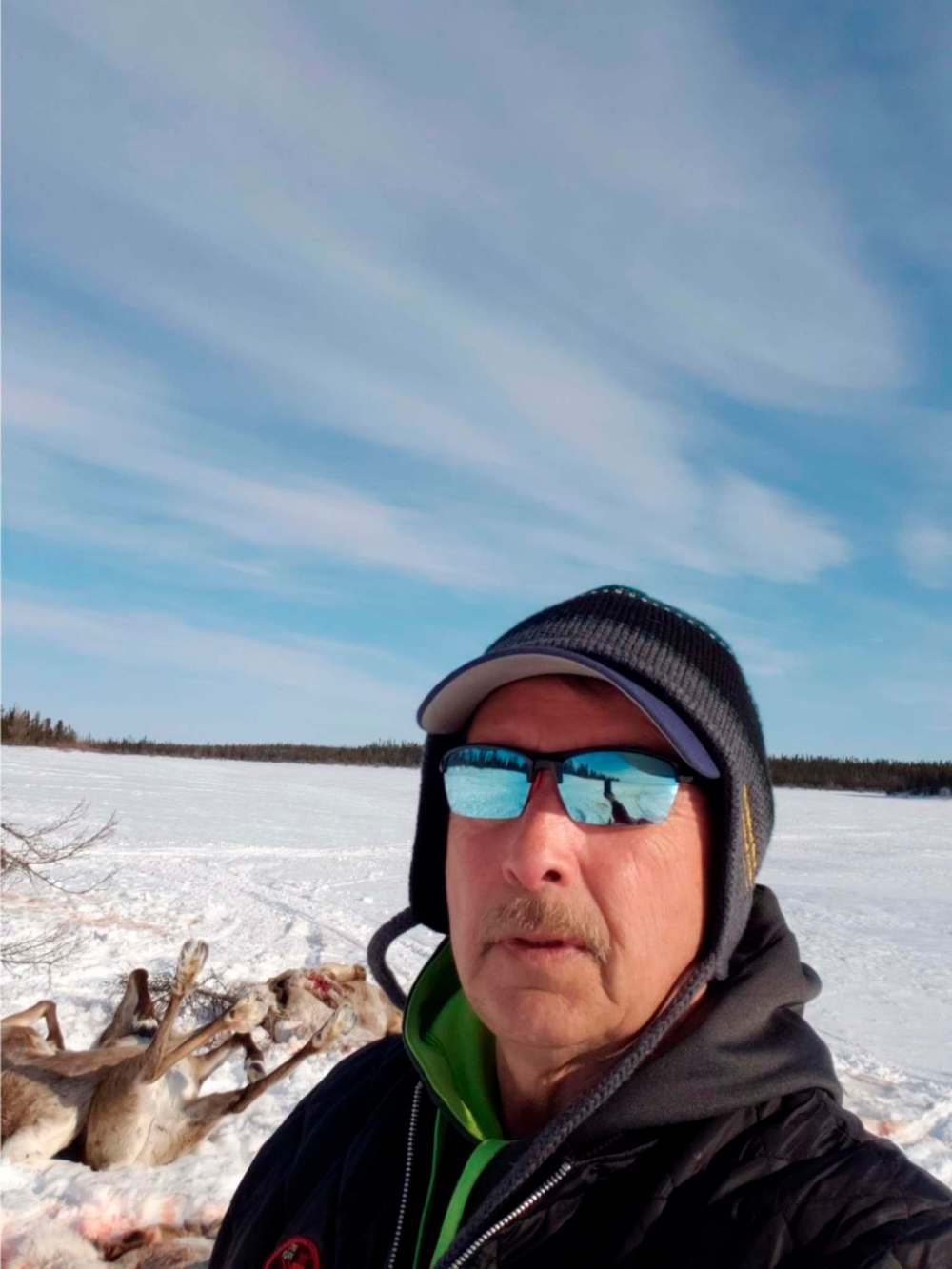
The Sayisi Dene people are traditionally nomadic caribou hunters; a threat to the animals is a threat to their way of life that’s only just been re-established.
Without a doubt, over-harvesting has been a problem in some communities, Bussidor says. This is a big reason for bringing a wide range of communities together to create the Indigenous protected area — so that everyone has an understanding and a stake in the outcome of the project, he says.
Mineral exploration and development has also been cited as a factor in the shrinking population. And environmental factors are also playing a role in stressing the caribou. Many of the issues the animals face — wildfires, pollution, increased predation, increased instances of disease, parasites and weather, as outlined in the 2014 management plan drawn up by the Beverly and Qamanirjuaq Caribou Management Board — are all influenced by climate change.
“Caribou are desperate animals now,” Bussidor says.
He recounts a story of a trip he took to Nunavut by boat, near Ranger Seal Lake, where they came upon a herd of about 1,000 caribou galloping in a circle. “And they’re spinning, galloping in a circle, just in one place. It was like a little dust devil.”
The sound of the hooves on the ground was incredible. “And that was just to protect themselves from the insects,” he says.
“When we harvest caribou, we find the insects that burrow into the caribou’s skin. There’s always a cluster in the throat — those warble flies, when they mature, they fly out of the nose and the mouth of the caribou. That can’t be a very pleasant experience for them to have a cluster of warble fly larvae in your throat.
“It’s total misery for them in the summer — and I know that because I’ve seen it. That spinning herd of caribou, I’ve never seen anything like it.”
Summers are longer and hotter now, resulting in more insects and subsequent changes in caribou behaviour. A 2012 paper in Ecological Applications considered the impact of mounting insect populations on a different barren ground caribou herd and concluded that while the increasing number of insects wasn’t the main cause for the population decline, it’s not helping the situation.
“The direct costs of blood loss and parasitic loading, combined with indirect costs of behavioural modication due to insect harassment, however, are stressors that could accelerate declines or dampen recovery. High pregnancy rates and good calf survival are critical for herd recovery after periods of decline, and both may be negatively affected by parasites,” the paper reads.
As a result of changing weather patterns, migration patterns are also shifting. From 2004 to 2016, the start of migration advanced by two weeks and the end shifting by a week, according to research conducted by Conor Mallory at the University of Alberta.
On top of all of that, Bussidor adds that winter is becoming more challenging for the animals. Wet snow has become common early in the season, which then hardens “like concrete” before soft snow falls on top, he says.
While that small shift might seem meaningless to most, for a caribou, it means it can’t burrow down through the snow to eat the moss beneath it. In 2018, it was particularly bad, he recalls, “All the hunters found in their stomachs were spruce needles.”
These instances are called “icing events” and have led to mass starvation and die-offs for caribou in the past, Mallory wrote in The Conversation. “On the other hand, longer autumns and earlier springs shorten the winter period of food scarcity. This should benefit caribou, but the net effect will depend on the balance of these changes in a given region.”
● ● ●
Manitoba Conservation is not currently tracking the changes in snow conditions, or insects, or migration patterns and are, therefore, not able to elaborate on the information from Indigenous communities and researchers.
“But those are all things that get talked about when we talk about climate change, all of those things could be factors,” says Vicki Trim, a regional wildlife manager with Manitoba Conservation, as well as a board member of the Beverly and Qamanirjuaq Caribou Management Board.
Also of concern is the number and severity of wildfires, since they destroy critical winter habitat for the caribou.
“In northern Saskatchewan they had quite a few forest fires. So, the Beverly caribou used to come down into northern Saskatchewan in the winter, but there’s been such a destruction of habitat that the thought is that the caribou just aren’t coming down anymore,” Trim says. “We could end up in a situation where there just isn’t enough winter habitat for barren land caribou.”
Trim says the caribou’s changes in behaviour have become much more pronounced over the past five years.
“It used to be a fairly regular pattern of them coming down in the fall, and Indigenous hunters, and we also have a licensed hunt for that population, and they would have the opportunity to harvest because what they did was quite typical every year, like when they would come down and when they would leave,” she says.
“But for the last five years, it’s definitely been different. So there’s definitely a change being talked about in terms of where they’re going and when. But exactly what that can be attributed to, at this point, is unknown.”
There’s no doubt how one part of an ecosystem can have great spillover effects from one animal species to another. But the story of the Sayisi Dene and the caribou offer an obvious example of how one animal can have enormous spillover effects into a human community, too.
Caribou for Sayisi Dene go beyond the material food-source reality; they offer a spiritual connection. It is a sign of a life they’re trying to rebuild, a sign of strength and hope. Their fates have been tied together for centuries in a delicate balance.
Changes in this population of caribou can have direct health implications in the Dene and other Indigenous communities. Diabetes is a growing problem, Bussidor says.
Niki Ashton, NDP MP for Churchill — Keewatinook Aski, says it’s a deteriorating connection she is incredibly worried about.
“It’s critical that we as Manitobans know what the people in the North are already facing,” Ashton says. “Climate change is here, it’s affecting our livelihoods, our way of life.”
Human Rights Watch recently released an extensive report outlining how climate change is one of the key factors affecting food security in remote First Nations, threatening the ability to continue traditional cultural practices.
Bussidor is happy to see the advancement of the protection of the Seal River watershed, but more work is needed.
“For us, we’re a small community trying to revive our culture,” he says. “It’s scary. We all have kids, we all have grandkids, we want to have a secure future for them. I just can’t see a future without caribou. It would be a sad existence if it ever came to that.”
sarah.lawrynuik@freepress.mb.ca
History
Updated on Monday, November 9, 2020 5:00 PM CST: Replaces quote