

Lived lives
Winnipeg writer Deborah Schnitzer explores life lessons from women in their Third Act.
Opinion
The freedom to create can be a balm for the soul
5 minute read Monday, Oct. 5, 2026My mother-in-law, Malka, came to Toronto in 1958 from postwar Poland. She came with unbearable losses authored by the Third Reich fascist fantasies that had destroyed her world.
Opinion
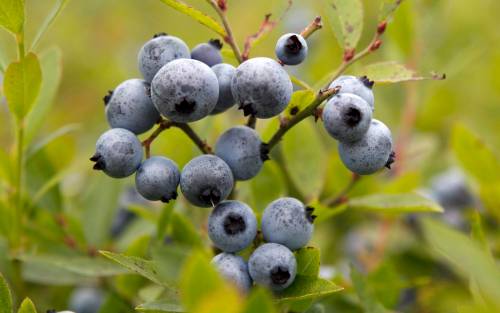
Picking berries, sharing wonders in a muted woodland
4 minute read Preview Monday, Sep. 7, 2026Opinion
Hopes, memories persist long after ceremonies end
5 minute read Monday, Aug. 10, 2026In my time, we did not have graduation ceremonies for pre-kindergarten, kindergarten or grade school. There may have been cookies and juice before we went to high school after Grade 8, but we were never gowned, portraited and diploma-ed. I vaguely remember a white poplin dress with a yellow bow somewhere along the way, but it is an image that drifts in and out of focus with a context I can’t verify.
I must have had some ceremony at the end of high school, but as a misfit, plump and bewildered, high school was no picnic and I have brushed away the particulars.
I did not attend my undergraduate university ceremony as I was readying myself for a May wedding my mother was not pleased to design. When I received my doctorate, years later, I had two boys and a husband who understood every one of my misgivings about whether or not I could succeed.
During that last graduation, I opened the manila envelope given to me as I walked across the stage only to find a rather severe notice stating I would not be degreed unless I returned outstanding library books.
Opinion
CMHR exhibition leads to more questions than answers
4 minute read Monday, Jul. 6, 2026I am thinking about the word “opinion,” the ones I interrogate and revise, as well as ones I have abandoned over time.
Opinion
The summer at home that spawned my manifesto
5 minute read Monday, Jun. 1, 2026In 1968, as one of four children and supported by a generous government tuition-reduction program, I followed my two elder brothers, who were away in their second and fourth years of university.
Opinion
Don’t fret about the future, live fully in the here and now
4 minute read Monday, May. 4, 2026In a recent interview, Isabella Ducrot, a 95-year-old Italian artist whose paper and textile explorations have become widely admired, cheerfully acknowledges that she does not have a future. Rather she has a present. This is how she measures her life. This is where she finds happiness.
Opinion
Keeping a promise, I’ll share a story that we need to hear
5 minute read Tuesday, Apr. 7, 2026I promised my late husband, Mendel, I would write a novel dedicated to the memory of his half-brother and half-sister, who were murdered in a Nazi extermination camp when they were nine and 10.
Opinion
Grandparents and grandchildren can grow together
4 minute read Monday, Mar. 2, 2026When my now five-year-old grandson was younger, we enjoyed an easygoing relationship, the kind often represented as idyllic in popular media culture — harmonious, reciprocal, restorative.
We would walk the woods together, gather berries, cavort. He ran towards me when I appeared at his door, asked me to sit beside him at meals. We shared bowls of purple grapes while we built garages out of magnet tiles, “assisted” one another in the garden, drew pictures, consulted about the weather and planned possible treats.
Over the last several months, however, our relationship has changed as his personality and behaviour develop. He is less favourably inclined towards me and more unforgiving if I misstep or mistake boundaries that are important to him.
I had picked him up for years from his daycare, for example, but when he moved to a new school this fall, he became increasingly upset if I, rather than his mother or father, came to get him.
Opinion
Path forward unclear in tumultuous times
5 minute read Monday, Feb. 2, 2026I open my front door to feed the birds. A hazy day with a sprinkling of mist, a chipmunk high up in a tree branch, upside down, enjoying a snow shower, a freshly shovelled walk.
Opinion
Accepting a difficult gift in the face of overwhelming loss
5 minute read Monday, Jan. 5, 2026While mortality is the gift we are given at birth, its evolution within a world prescribed by illnesses, chronic and incurable, seems so unnatural, so at odds with the “natural causes” we hope might define our decline.
Opinion
The hunt to find outliers of store-bought sameness
4 minute read Monday, Dec. 1, 2025I rarely enter a shopping mall; even more rarely do I set foot in women’s clothing stores because, at 75, I am hard pressed to identify anything else I would ever need to purchase.
Opinion
Eldest son’s birthday an occasion to mark circle of life
5 minute read Monday, Nov. 3, 2025In October, I flew to Kingston for my eldest son Ben’s 46th birthday. It is not only incredible how swiftly nature takes her course, but also how incredible circles can be completed within one’s lifetime.
Forty-six years ago Ben was born at the end of Yom Kippur, the Day of Atonement. Now, 46 years later, I will celebrate with him in the synagogue where he is the cantor about to sing Kol Nidre to open Yom Kippur, the last of the Jewish High Holidays which begin with the Rosh Hashanah, the New Year 10 days earlier.
On Yom Kippur reflection, absolution and reconciliation intersect — an at-one-ment promise sought within the community and with the divine. I am not devout, but I believe in spiritual presence, participate in and am astonished by the unseen, deeply feel energies and connections I neither birth nor author on my own.
Within the 46-year circle this moment signifies, I remember Ben’s birth.
Opinion
In praise of rituals to mark victories, both real and imagined
4 minute read Monday, Oct. 6, 2025For the first time in many years, I returned to my birthplace for a get-together with women I had gone to school with. We had all turned into 75. We wanted rituals to mark this passage.
I had not been fond of school. I stood out as one who was heavier than most, wallpaper rather than wallflower, both visible because I was too large and invisible for the same reason. The outlier experience left me aching to discover a “good-enough” that could belong to some kind of crowd, even as I eschewed the “good-enough” culture and politic defining who had value as “in” and who did not and was thus, “out.”
These rules defining “good enough,” arbitrary and often tyrannical, disfiguring and dismissive, seem still to prevail as gatekeeping tactics defining worth and worthlessness.
All of us gathered had suffered under reductive insider-outsider schemas throughout the vagaries that come with growing up and growing old. All but one had lost life partners to illness and/or addiction; all had lost siblings and/or struggled through problematic familial bonds; many had children who endured life-changing accidents and/or mental illness; some had grandchildren with neurological and genetic challenges.
Opinion
A gory story and other relics of safely distant childhood
5 minute read Tuesday, Sep. 2, 2025In my childhood, I roamed through rough-and-tumble capers in a kind of free fall. Leaving us to our own devices, my parents intervened only if one of us came home bruised or bloodied, if the school called them because of our delinquency, if a report card disgraced. Their interventions rarely coincided with our interpretation of events.
We did not have play dates. After-school lessons were few. Parenting guides did not clearly assess whether or not children were at risk if left unsupervised, whether a child needed added support, whether a teacher’s punishment was fair-minded.
It seems so much more is known about at-risk circumstances, behaviours and practices nowadays. Parents, for example, are encouraged to implement and monitor boundaries that promote safe environments, understand more fully the range and complexity of childhood experiences, and collaborate proactively within educational systems.
In the “freedom” (mayhem) of my childhood, pivotal and sometimes harrowing events distinguished our unsupervised play. At four, running full steam ahead on the dock in front of the family cottage, I slammed my foot into a fairly substantial, rusted boat mooring. My three brothers were running after me. I don’t remember if we were playing a game or if they were out for blood.
Opinion
Parenting lessons can be learned by listening to children
5 minute read Monday, Aug. 11, 2025There are so many times when children say or do things that inadvertently or intentionally help adults navigate challenging terrain.
I recall two such pivotal instances of my own.
In the first, I am desperate to finish Chapter 2 of my dissertation. I realize I need further research materials, but any visit to the University of Manitoba library will involve a seven-hour round trip by car from Fisher River Cree Nation, where we live.
I bargain with my three-year-old. He will go to a YMCA drop-in daycare near the university. They have a pool. He likes water. I will go to the library. I promise my swift return to the daycare, a happy ride home, even an ice cream.
Opinion
Learning to live differently, expand repertoire
5 minute read Monday, Jul. 7, 2025I have just turned into a 75-year-old. In reviewing the landscape from this (ad)vantage, I discover surprises that will sustain for however many years I might have left in the galaxy.
My first surprise: I am adaptable. Ten years ago, my late husband and I went shopping to replace the cars we owned that were well past due. For the first time ever, I got a “brand new car,” a small car, spiffy and fire-engine red.
A standard, it made me feel like I was really driving, though family and friends noted with varying measures of chagrin that I was not only a jumpy, bumpy gear shifter, but also given to enthusiastic responses to side shows en route — an impressive rock formation, fetching storefront exhibit, a summer biker dressed as Dracula.
This past month, coincident with the marking of my 75th year, I let the small car go and took over the Subaru I had given to my youngest son after the death of his father. It is much bigger, an automatic, with all the bells and whistles my children feel make me safer on the road, both in terms of other drivers and their own children, whom I transport as befits my expanding role of Baba as up they grow.
Opinion
Recalling a far different dream in Trump’s America
5 minute read Monday, Jun. 2, 2025I continue my calling, as it were, reaching out to various organizations that conceive U.S. President Donald Trump has been anointed by God, coincident, of course, with his own sense of being divinely appointed.
When I call evangelical circles that support Trump’s “ministry,” and note, as so many have done publicly, the destruction of democratic freedoms that distinguishes Trump’s American Dream, I provoke nothing more from believers than “we are praying for the president.” No engagement with the Trumpification of America, no grasp of how women’s lives — along with many other lives — are being diminished, supervised by obscene patriarchal visions that would maintain or return them to servitude.
To reverse the declining American birth rate, for example, Trump announced that women are to be rewarded with $5,000 for producing babies, contingent on a live birth after delivery. In this Trump has named himself the “fertilization president.” Another recent proposal would gift $1,000 to American babies born as part of a “Trump account.”
Such campaigns are shockingly similar to the Mother’s Cross of Honour program in Nazi Germany initiated to reverse the sinking German birth rate by rewarding suitable Aryan women for producing “Hitler’s children” and thus ensuring the proliferation of the “master race” and its dream of world domination.
Opinion
Longing for a fifth wave of feminism, humanism, peace
4 minute read Monday, May. 5, 2025As a human being, an old one at that, I am required to advocate for present and future generations and their right to care for and live within a world that honours the miracle of life itself, its diversity and its sanctity.
Opinion
Ring, ring: My phone call should be important to you
4 minute read Monday, Apr. 7, 2025I have spent the last several weeks writing emails, leaving phone messages on comment lines and/or talking to agents within various American institutions protesting the purge of democratic principles; I am enraged by the corrupt, obscene and perverse Trumpite “orders” meant to cleanse America and make her “great” again.
Opinion
Holding space for third act of wonder, gratitude and grief
4 minute read Monday, Mar. 3, 2025Since my husband’s death in March 2017, I have been marking my life’s passage. I have my rituals. A candle and incense, an urn, family photos — an altar of sorts, immersed in memory.
I hold this space dear.
I do not light the candle or incense at the same time every day. Rather, the moment announces itself variously: twilight, a grandchild’s visit, preparation for an event I am hosting; an early morning snowfall.
The light and the incense gentle the air, and animate my appreciation for the presentness of the past.
Opinion
External shame no match for internal esteem
4 minute read Monday, Feb. 3, 2025As a fat child, I was a disgrace.
In school, shame and isolation might prevail in any setting, on any given day. In my kindergarten class, I was a freak, twice the height and girth of my peers.
In Grade 1, my desk fell over when I tried to rise to sing God Save the Queen — a too-tight fit in the desk warranted a ruler on the back of my hand for disruptiveness. My nickname in middle school was “Hippo.” In gym class, trussed in a clown-like, dark green jumper, I was the obstacle in tumbling: students somersaulted over my crouched form.
Yet, it is transformative to remember that even in my disgrace for being neither “normal” nor “pleasing,” for having exceeded the limits ordained by acceptability standards, I seem to have had a sense of myself that existed apart from the stigma assigned.
Opinion
One holiday secret kept, another painfully snuffed
5 minute read Monday, Jan. 6, 2025Lived livesWinnipeg writer Deborah Schnitzer explores life lessons from women in their Third Act.
In this new year, as holiday hoopla subsides, I welcome the time for further reflection, particularly because in 2024 Hanukkah and Christmas fell on the same day.
I found myself rehearsing the “same-day” story of my childhood I habitually performed for friends and family. I called that version “Tuesday Night,” relishing it as an expression of my mother’s generosity in the face of what I believed to be my father’s frugality. Today, I understand it differently.
My childhood story went like this:
Opinion
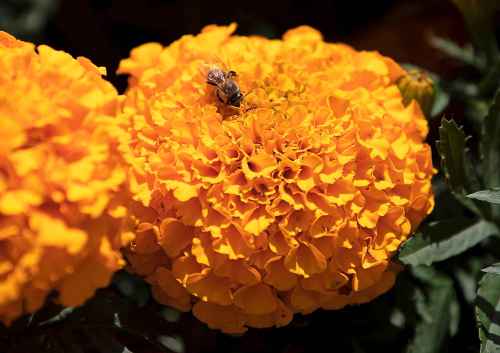
Gratitude for experimentation, mothers and marigolds
4 minute read Preview Monday, Dec. 2, 2024Opinion
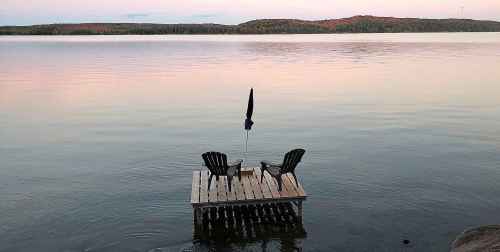
Cottage sale evokes magic memories, fanciful fantasies
4 minute read Preview Monday, Nov. 4, 2024Opinion
Searching for Somethings in grandson’s Nothing
5 minute read Monday, Sep. 30, 2024We recently lost a most precious family member, a woman of remarkable grace, ability, and heart: my son’s mother-in-law, my co-Baba.
None of us knows how to manage such a loss. We all grieve as we must. We try to support one another, to explain to grandchildren what has happened.
In the past months, the littlest one, at three, has known something has been changing as his Baba’s illness took hold, because there were appointments that meant he could not visit, for example, and a process that altered his Baba’s appearance. He was unsettled, aware, wondering.
When his Baba died, he thought of his absent Zaida Nummy, the name his older sister had created for my husband, Mendel, gone before this little boy was born but whose recorded voice still answers calls on my landline.
Opinion
Family road trip leads to rediscovered well of laughter
5 minute read Tuesday, Sep. 3, 2024Lived livesWinnipeg writer Deborah Schnitzer explores life lessons from women in their Third Act.
As a new widow, I did not think I would ever laugh again — not from that deep spring of well-being where all seems right with the world, where senses of humour are perfectly allied, funny bones synched by often harebrained experiences, stories oft told at family gatherings.
With my husband Mendel gone, I found myself bereft of those legendary and life-giving funny-boned memories. Time and again, I confronted profound disruption: there was only one person on earth with whom I lived such madcap moments, those revelatory and side-splitting adventures. The time when … the time after that…
For example: Lake Louise, our honeymoon, running in circles in a rented canoe, arguing over who was to steer; a rescue boat appearing alongside, fearful the lake’s freezing temperature would do us in if/when we capsized.
Opinion
A cinnamon twist on past, present and presence
4 minute read Monday, Jul. 8, 2024My granddaughter is interested in cuisine. She is the composer of juices and compotes, a keen attendant to her other baba, expert baker, the maker of jams and pickles, pies and sweet buns, author of perfectly designed Sunday dinners, a brilliant baba of culinary — and all other — distinctions.
Though my own interest in cooking has been intermittent (as my grown children consistently remind me), there were moments of inspiration in my past that led to an apple strudel of epic proportions; an adaptation of challah shaped as a broomed witch for Halloween; an elaborate vegetable biryani accompanied by a lively assortment of condiments that startled us all.
I enjoy the memory of such triumphs and the recipes shared as legacy, experiences handed down through generations. My son-in-law’s Nona, at 102, is legendary within his family. Her handmade pasta astonishes. A recipe spoken at gatherings may call for the “idea of butter,” her phrasing as poetic as any cooking instruction I’ve encountered.
My own Grandma Dave enjoys her immortality in her roast-chicken stuffing, a concoction of flour, oatmeal, raw onion, salt, shmaltz and Crisco, so tantalizing my husband and I downed it in one sitting, relegating the chicken itself to another day.
Opinion
Long-lost words a reminder of hope and nuance
5 minute read Monday, Jun. 3, 2024Lived livesWinnipeg writer Deborah Schnitzer explores life lessons from women in their Third Act.
The recovery of a lost document can be revelatory. Mine has been so.
In preparation for our second-born son’s wedding, my husband Mendel and I composed speeches full of wonder at our good fortune in being present, in becoming mishpocha (Yiddish for family by marriage) and in seeing younger love resonant. As Mendel so often spoke without filters — a predisposition received by some with good humour, by others with alarm — I strongly advised he let me look at his first draft as part of my campaign to preserve the “dignity” of the occasion, convinced my sense of dignity would not coincide with his.
Twelve years later, a lost document in hand, I recover meanings my initial misgivings obscured.
Opinion
Aunt Helen knew aging was not for the faint of heart
4 minute read Monday, May. 6, 2024‘No one gets out alive.”
That’s what my Aunt Helen would tell me as she faced the end of her own life. You might have had an Aunt Helen of your very own. Wise, full of mirth, though well acquainted with loss, for her eldest son had died of cancer in the prime of his life.
She was an adept juggler of competing claims, independent of mind, enraged by discrimination in any form, and, at any moment, willing to challenge its barbarity.
Magnificently ahead of the time in which she was born, opposed to domestic servitude, my Aunt Helen discovered her own strength and meaning, and, naturally and without apology, transgressed stifling convention wherever it stood in her way or in the way of others.
Opinion
Rooted in love: lifetime of memories in bloom
5 minute read Monday, Mar. 4, 2024An understanding of life comes often with a reviewing of the backstory that brought us to the present moment.
Opinion
Writing life stories in whatever words, images they offer
6 minute read Monday, Feb. 5, 2024In the early days of knowing my husband Mendel, he told me fragments of his story. One day, we were sitting on the hillside at a large university campus, just before our first year of study came to a close.
Opinion
Learning to carry my grandmother’s story of loss and pain
6 minute read Tuesday, Jan. 2, 2024I am small in the kitchen of my family cottage by a river I love more than any other.
Opinion
A rhythmically impaired daughter’s musical miracle
6 minute read Monday, Dec. 4, 2023December is a time for ceremonies celebrating the miraculous. The miracle I wish to share with you has to do with the piano.
Sister Mary Margaret gave piano lessons at the Sacred Heart Convent in my hometown and I was her student for many years. We approached each other with good will, insofar as I had no musical ability other than a facility with my fingers, and she had much compassion for my facility — and the impact of my forceful, musically gifted mother who, though Jewish, believed the convent capable of working miracles, even on behalf of her ungifted, tone-deaf daughter.
Sister Mary Margaret could see that I was stuck but trying. She had an upside-down smile that could have been a frown but really wasn’t, and an outfit not unlike a penguin’s, which is very much how I saw her when I began lessons at the age of eight, her habit running its white wimple across her forehead, creasing her skin so tightly I often ached to loosen its grip.
I also knew the crease would remain if the wimple were removed, just as the remainder framing her cheek, her chin and then fanning into her neckerchief would, if removed, retain its trace. Sister Mary Margaret was the forever bride of Christ and her vows were rings round every part of her being, including the cross circling under the black crepe veil, the hem of the cape that rounded her shoulders, the hoop of her pleated skirt.
Opinion
Magical memories of a just-in-case man
5 minute read Monday, Nov. 6, 2023My daughter-in-law texted one Saturday with images of metal cutters, wondering if my late husband, Mendel, might have had anything like this in his collection.
Like him, she is a fixer; when Mendel was alive they shared an appreciation for Canadian Tire, Home Depot, Rona — the dream palaces for DIY humans.
I looked through the snips I had stored in the back hall closet and took a picture of the three that seemed as if they might do. I texted the photos, telling her I would go into the garage to check out the remainder of Mendel’s just-in-case warehouse.
She texted back with a single word: “Poland.”
Opinion
Passing on proclivity for picking in the lakeside hills
5 minute read Monday, Oct. 2, 2023My grandson, almost three, is a collector. His collections over the summer months have involved countless (and welcome) explorations while we visit our cousins’ lakeside cottage.
I did not know he would be a collector. I only know that his habit of rising at 5:15 a.m. creates some measure of difficulty for adults longing for more sleep. His parents take their turns for the first couple of hours, but though they adore him, their enthusiasm wanes.
Their son is not a quiet and retiring little fella. His voice is big, his questions endless, his joie-de-vivre 11 out of 10, and his range of early morning protests extensive. (I shy away from using “tantrum” because he has a sense of purpose and/or desire that while in itself quite reasonable, as far as he can tell, simply doesn’t coincide with the good of the common space he shares.)
To preserve some peace, I am up, preparing for our foray into the woods. We have developed rituals for this walkabout. There has to be a graham cracker (a whole one, not a half); a bucket (sometimes a basket); snacks (though he may have already had two or three breakfasts); hats doused in spray for the mosquito bites (as he calls all manner of bugs); running shoes; and, if I am lucky, something other than his pyjamas.
Opinion
If only Barbie film captured complexity of women’s lives
6 minute read Tuesday, Sep. 5, 2023When I was a little girl, I was given an Aunt Jemima rag doll, a racist representation of happy Black enslavement, akin to the Lucky Jew figurines and dolls, popular in Poland, where, since the Second World War, real Jews are few, having been mostly exterminated, while the dolls and figurines thrive.
Opinion
Confronting the impacts of academic marginalization
6 minute read Monday, Jul. 3, 2023I think back to my first-year experience at the University of Western Ontario in 1968. A small-town girl on her first big adventure under her own steam, I brought with me my high school track record: good-enough grades that allowed admission; a penchant for playing hooky motivated by a robust quarrel with the norms that defined clever, pretty, popular; and an interest in being the class clown as a further form of protest.
University I thought might provide more amenable terrain. However, the sheer expanse of the manicured campus, the spread of its buildings and tunnels, the volume of baby boomers bursting its seams, and the demands of six full courses overwhelmed. I was a stranger in yet another foreign landscape and could not figure out how I could possibly fit in, let alone flourish.
Of course, I figured everyone else had the tool box and the guide book I could not access, though I understand now, having taught in university systems for 30 years, that many students suffer the same assumptions.
Universities may have become more aware of the needs of their first-year populations, more literate and responsive to the challenges faced, but in 1968 there was very little that acknowledged the fraught nature of this transition, nothing in place to support it, and a crass acceptance of a patriarchal model that prized a stiff upper lip in the face of the obstacle course the academy relied upon to separate chaff from wheat.
Opinion
Experiencing the mother of all reality checks
6 minute read Monday, Jun. 5, 2023I remember being in what I felt was the 10th or 11th month of a second pregnancy while living in Fisher River Cree Nation in Manitoba’s southeastern Interlake. We had been living there for eight years. My husband was the school’s principal and I was the mother of an almost four-year-old, travelling back and forth to Winnipeg trying to finish a doctorate.
Opinion
Bonding over books traces stories of our own lives
5 minute read Monday, May. 8, 2023I’ve been a book club facilitator for about 25 years, starting with one club whose connection remains constant, adding others for measures within those 25 years.
I am such a flawed keeper of history, I don’t have exact figures. I think back to how I might have archived this experience — dates, titles, locations — but when I began, I did not really have any idea that I would have the pleasure of maintaining this effort for a quarter of a century.
I met with one club recently, in the afternoon. We are wont to meet in the day now. Aging women, most of us have retired from paid work or from hands-on parenting. When I began facilitating, on the threshold of 50, with club members in their later 60s and early 70s, I was the youngest by far.
Arts & Life
Bride’s nuptial mutiny on a sea of green, yellow chiffon
7 minute read Thursday, Apr. 6, 2023Wedding season begins in April, peaks in May, and runs its celebratory course through the summer months. That’s the season’s known trajectory. Many of us have married within it; many have superintended in advance every detail of the overall wedding vision only to encounter the unsettling yet sometimes revelatory interplay between the planned and the unplanned, the expected and the unexpected.