

Oscar-winning documentary gets extended-play treatment

Advertisement
Read this article for free:
or
Already have an account? Log in here »
To continue reading, please subscribe:
Monthly Digital Subscription
$0 for the first 4 weeks*
- Enjoy unlimited reading on winnipegfreepress.com
- Read the E-Edition, our digital replica newspaper
- Access News Break, our award-winning app
- Play interactive puzzles
*No charge for 4 weeks then price increases to the regular rate of $19.95 plus GST every four weeks. Offer available to new and qualified returning subscribers only. Cancel any time.
Monthly Digital Subscription
$4.99/week*
- Enjoy unlimited reading on winnipegfreepress.com
- Read the E-Edition, our digital replica newspaper
- Access News Break, our award-winning app
- Play interactive puzzles
*Billed as $19.95 plus GST every four weeks. Cancel any time.
To continue reading, please subscribe:
Add Free Press access to your Brandon Sun subscription for only an additional
$1 for the first 4 weeks*
*Your next subscription payment will increase by $1.00 and you will be charged $16.99 plus GST for four weeks. After four weeks, your payment will increase to $23.99 plus GST every four weeks.
Read unlimited articles for free today:
or
Already have an account? Log in here »
Hey there, time traveller!
This article was published 30/01/2016 (3627 days ago), so information in it may no longer be current.
The story of Sixto Rodriguez as depicted in the Academy Award-winning 2012 documentary Searching for Sugar Man was one that intrigued the world.
The plot centred around Rodriguez, a musician based out of Detroit in the ’60s and ’70s, who was never able to gain traction in the United States despite numerous industry professionals comparing his songwriting chops to those of Bob Dylan — but perhaps even better.
But more than a story about a musician who somehow sadly flew so far under the radar, the film — and now the book, Sugar Man: The Life, Death and Resurrection of Sixto Rodriguez — are about a man who unknowingly became the soundtrack for a revolution half a world away. His first album, Cold Fact, became immensely popular in South Africa during the time of apartheid, unbeknownst to the singer himself.
The film follows two South African men as they search for Rodriguez (the name Sugar Man references a line in one of his songs), who was presumed to be dead. Once they discover he’s alive and well and living in Detroit, they take him to South Africa to perform for thousands of fans and to give him a taste of the life he should have had.
Written by Craig Bartholomew Strydom and Stephen (Sugar) Segerman, two men who play a large role in the film, Sugar Man is an exhaustively detailed account of all that happened before, during and after the time frame covered in the film. Segerman’s first encounter with a Rodriguez song while doing his mandatory time in the army, Rodriguez’s multiple stints in local politics, the eventual suicide of director Malik Bendajelloul not long after the film won an Academy Award — every conversation, every email, Sugar Man covers it all.
The book is broken up into four sections — the mystery, the man, the music and the movie — which is very helpful given the amount of voices and storylines that weave together to create the narrative picture as a whole.
On occasion, however, all the details and historic references do become overwhelming, and are not always necessary in order to move the story forward. In certain instances, it feels more productive to skim over those parts instead of reading word for word.

The most interesting tidbits are those excluded from the film (or that hadn’t happened until after the film was made), namely the fact that after his initial shows in South Africa, Rodriguez toured the country several more times in the early and mid-2000s with varying success, and the surprising falling out between Segerman and Rodriguez spurred by Segerman’s move into a more managerial role.
For those who loved the documentary, Sugar Man: The Life, Death and Resurrection of Sixto Rodriguez is an excellent companion piece that bookends the film beautifully, answering any and all questions one may have about the lives of all those involved, both pre- and post-documentary.
In the prologue of the book, Strydom and Segerman say the film was “the search for the man who didn’t know he was lost.” This book proves to be the rest of the story we didn’t know we were missing.
Erin Lebar is a multimedia producer at the Free Press.
Our newsroom depends on a growing audience of readers to power our journalism. If you are not a paid reader, please consider becoming a subscriber.
Our newsroom depends on its audience of readers to power our journalism. Thank you for your support.
Book review
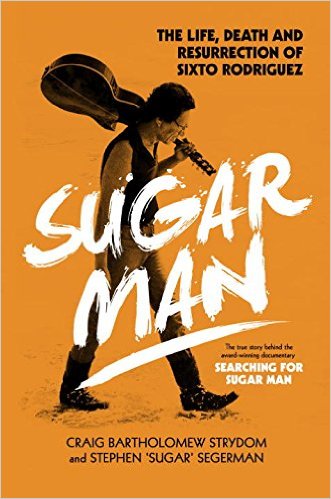
Sugar Man: The Life, Death and Resurrection of Sixto Rodriguez
By Craig Bartholomew Strydom and Stephen ‘Sugar’ Segerman
Transworld, 382 pages, $30
Our newsroom depends on a growing audience of readers to power our journalism. If you are not a paid reader, please consider becoming a subscriber.
Our newsroom depends on its audience of readers to power our journalism. Thank you for your support.
Advertisement Advertise With Us
Advertisement Advertise With Us