

Palestinian in Israel offers wit and humour in columns
Advertisement
Read this article for free:
or
Already have an account? Log in here »
To continue reading, please subscribe:
Monthly Digital Subscription
$0 for the first 4 weeks*
- Enjoy unlimited reading on winnipegfreepress.com
- Read the E-Edition, our digital replica newspaper
- Access News Break, our award-winning app
- Play interactive puzzles
*No charge for 4 weeks then price increases to the regular rate of $19.95 plus GST every four weeks. Offer available to new and qualified returning subscribers only. Cancel any time.
Monthly Digital Subscription
$4.99/week*
- Enjoy unlimited reading on winnipegfreepress.com
- Read the E-Edition, our digital replica newspaper
- Access News Break, our award-winning app
- Play interactive puzzles
*Billed as $19.95 plus GST every four weeks. Cancel any time.
To continue reading, please subscribe:
Add Free Press access to your Brandon Sun subscription for only an additional
$1 for the first 4 weeks*
*Your next subscription payment will increase by $1.00 and you will be charged $16.99 plus GST for four weeks. After four weeks, your payment will increase to $23.99 plus GST every four weeks.
Read unlimited articles for free today:
or
Already have an account? Log in here »
Hey there, time traveller!
This article was published 13/02/2016 (3612 days ago), so information in it may no longer be current.
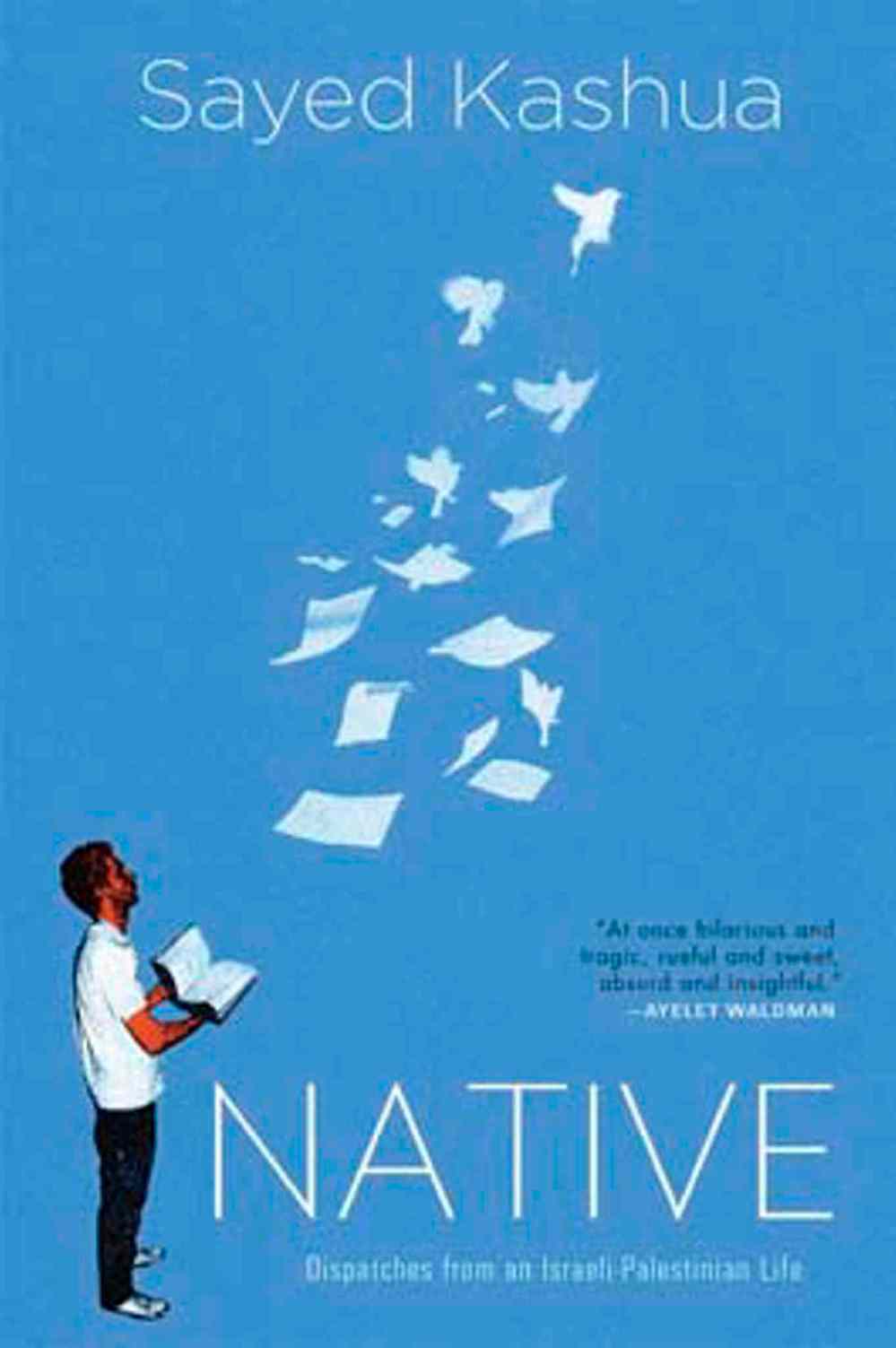
Sayed Kashua has devoted his career to telling the stories of Palestinian citizens of Israel. Writing in Hebrew as an Arab, he gives his readers a rare glimpse at what life is like for this particular Middle Eastern minority.
This book is a collection of his columns published in Haaretz, the liberal Israeli paper often likened to the New York Times. He has also published the autobiographical novel Dancing Arabs and Second Person Singular, a novel about an Arab lawyer living in the Jewish part of Jerusalem. Additionally, he wrote the script for the hilarious Israeli sitcom Arab Labor, some episodes of which are available free online.
Born in a small Arab village, Kashua proved to be a brilliant student and won scholarships to attend an elite private school in Jerusalem — one of only a handful of Arab students. He then attended the Hebrew University of Jerusalem; he has communicated in Hebrew since his first school days and publishes in Hebrew.
His family lost their land in the 1948 war of independence, in which his grandfather died. His father chose the route of resistance, was a communist for some years and spent time in prison.
But Sayed has chosen a different life for himself and his family, living in a predominantly Jewish area and sending his children to Hebrew language schools.
Sayed portrays himself as a rather bumbling husband and father. His wife and kids are regular characters in his pieces; he clearly loves them, and they love him in a long-suffering, supremely unimpressed way.
His writing, however, is principally devoted to showing Israelis what life as a minority is like, and he does so in an interesting way. The columns collected in this book are funny and self-deprecating, but with a kick. In one, for example, he describes how delighted he is to actually be chatting with a pretty girl in a bar, concentrating on saying all the right things and impressing her. She doesnt realize hes Arab; she proceeds to tell him all about how she doesnt really like Arabs and why.
In another piece he gives a hilarious description of going through security at the airport. He tries and fails to pass as Jewish, and receives all sorts of special scrutiny.

After his suitcase is x-rayed the security woman asks him to open it. I complied proudly. I have underwear and socks that are designated exclusively for the airport. Hugo Boss and Calvin Klein. To impress the guards. An Arab yes, but an Arab with class.
Kashua still writes for Haaretz although he now lives in the U.S., teaching at the University of Illinois. The last column in the book is also the last column he wrote in Israel — perhaps the saddest in the book.
Titled Farewell, it tells us that he and his family are leaving Israel for good and will not return. He says that throughout his career he wanted to tell the Israelis a story, the Palestinian story. Surely when they read it they will understand, when they read it they will change, all I have to do is write… one day the Palestinians would be willing to forgive and together we would build a place worth living in.
But, he says, he has finally realized that he has lost his little war. In the over-heated Middle East, reasonable people on both sides have a hard time making their voices heard.
Jim Blanchard is a local historian who writes about Winnipeg.
History
Updated on Saturday, February 13, 2016 10:42 AM CST: Adds image