Female scientists faced inertia in a culture of resistance
Advertisement
Read this article for free:
or
Already have an account? Log in here »
To continue reading, please subscribe:
Digital Subscription
One year of digital access for only $1.44 a week*
- Enjoy unlimited reading on winnipegfreepress.com
- Read the E-Edition, our digital replica newspaper
- Access News Break, our award-winning app
- Play interactive puzzles
*Billed as $5.77 plus GST every four weeks. After 52 weeks, price increases to the regular rate of $19.95 plus GST every four weeks. Offer available to new and qualified returning subscribers only. Cancel any time.
To continue reading, please subscribe:
Add Free Press access to your Brandon Sun subscription for only an additional
$1 for the first 4 weeks*
- Enjoy unlimited reading on winnipegfreepress.com
- Read the E-Edition, our digital replica newspaper
- Access News Break, our award-winning app
- Play interactive puzzles
*Your next Brandon Sun subscription payment will increase by $1.00 and you will be charged $17.95 plus GST for four weeks. After four weeks, your payment will increase to $24.95 plus GST every four weeks.
Read unlimited articles for free today:
or
Already have an account? Log in here »
Hey there, time traveller!
This article was published 04/07/2015 (4126 days ago), so information in it may no longer be current.
Rage, or a healthy dose of righteous indignation, can inspire some finely honed revenge. That’s pretty much what this book is about. Author and journalist Rachel Swaby does a good job of ensuring 52 women of science dating back to the 1600s are finally given a bit of press — or at least press that does them justice.
Telecommunications companies owe Yvonne Brill a lot — billions, probably — for the propulsion system she invented to keep satellites spinning in orbit. The Winnipeg-born rocket scientist earned a university degree in math and chemistry at age 20, having been denied admission to the University of Manitoba’s engineering faculty because of her gender. She wanted to pursue graduate studies in chemistry, but rampant sexism and discrimination in the field in 1940s U.S. made it a dead end.
And when she died at the age of 88 in 2013, her obituary in the New York Times led with the fact she was a good wife, the world’s best mom and made a mean beef stroganoff.
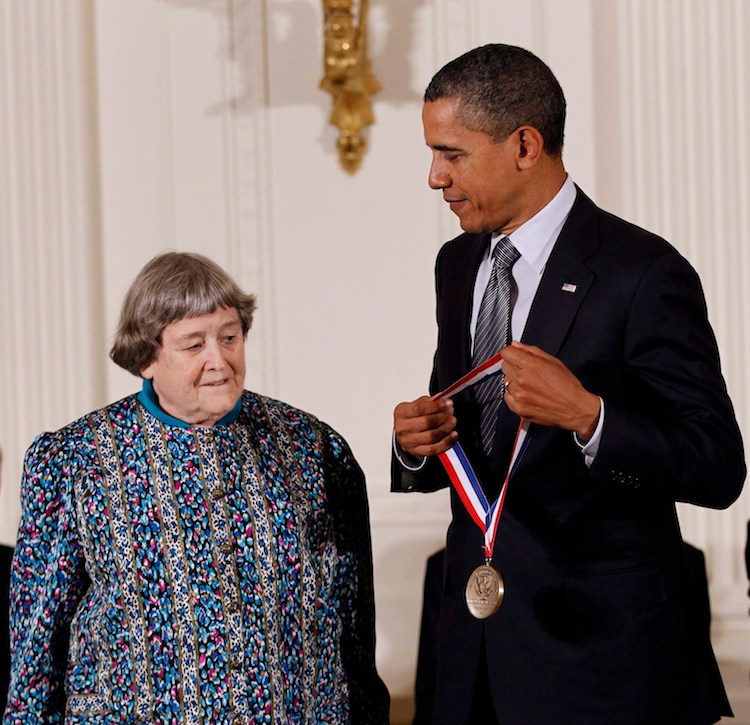
Swaby’s profiles contrast the monumental roadblocks of the 52 women with their heroic achievements. Inevitably, it was colleagues, uniformly men, who committed the offences — fraud, unbridled envy, discrimination and, in some cases, thievery. Even those who commit their lives to the scientific method can be easily blinded by bias and bigotry.
Marie Curie, a double Nobel laureate, does not make Swaby’s list — we know too much about the Polish physicist and chemist, the only Nobel winner to score in multiple sciences. (Swaby does write about Curie’s Nobel-winning daughter, Irène Joliot-Curie.)
Unlike Curie, most of these women have passed into relative obscurity, despite the fact the world is in their debt.
The group includes women such as Rosalind Franklin, whose work allowed James Watson and Francis Crick to unravel the mystery of DNA structure. Franklin died at 37 of ovarian cancer, four years before Watson and Crick picked up their Nobel Prize.
And while the Royal Swedish Academy refuses to name winners posthumously, Swaby makes a convincing case Franklin would not have shared the stage with Watson and Crick. After all, Franklin’s work was passed to the pair without her knowledge — it was, in effect, stolen. Watson, in his book The Double Helix, admits to as much: “she did not directly give us her data.”
Some names will be familiar — Austrian Hedwig Keisler, better known to America as actress Hedy Lamarr, co-invented a frequency-hopping technology to help the Allies’ weaponry evade detection in the Second World War. It laid the ground for Wi-Fi, barcode readers and GPS. As a med student, Virginia Apgar secretly performed a forbidden autopsy on an infant so she could find and admit to an error she thought she had made in surgery. That autopsy led, eventually, to her development of the scoring scale used to detect possible congenital issues in newborns. The Apgar evaluation became standard practice in the moments after birth, and is now performed in hospitals worldwide.
Swaby does not set out to make all men villains. Some men, in the face of widespread, widely acceptable sexism, nurtured female scientists. But the stalwart supporters in no way make up for the evildoers, cheaters and serial cads.
Women were also able to enter and flourish in fields at times or in countries that were dead ends in others: chemistry in mid-century America repelled Yvonne Brill, but was a heady environment ripe for exploration by German counterparts.
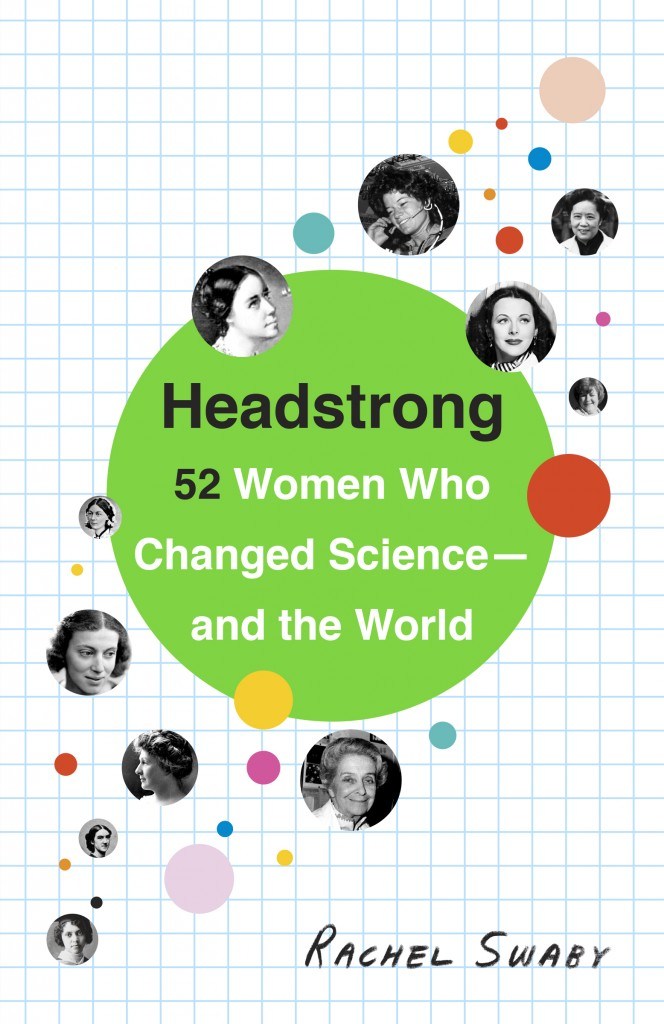
Why come back to Brill? She was more than brilliant — she was extraordinary. And an obituary writer no one will remember reduced her, first and foremost, to a good cook.
We can admire good cooks, but the best of them can’t compete with a rocket scientist who charted new frontiers in aerospace.
Swaby’s book is more than a list of injustices. It is a repudiation of the notion that, historically, female role models have been tough to find for schoolkids and aspiring scientists.
Catherine Mitchell is a Free Press editorial writer who was turned off physics when a Grade 10 teacher purposely burned her fingers.
History
Updated on Saturday, July 4, 2015 9:29 AM CDT: Formatting.