Birds of a feather don’t necessarily flock together: research

Advertisement

Advertise with us

A new study suggests modern cityscapes may be turning birds into better problem solvers. The McGill University research, published recently in Behavioral Ecology, found city birds were different from their rural counterparts in several ways.

Read this article for free:


By clicking the button above, an account will be created and you will begin to receive some of our recommended newsletters. You may opt out of any newsletter by visiting your Email and Communication Preferences page or by clicking "unsubscribe" at the bottom of any email.

or

Already have an account? Log in here »

To continue reading, please subscribe:

Digital Subscription

One year of digital access for only $1.44 a week*

  • Enjoy unlimited reading on winnipegfreepress.com
  • Read the E-Edition, our digital replica newspaper
  • Access News Break, our award-winning app
  • Play interactive puzzles

*Billed as $5.77 plus GST every four weeks. After 52 weeks, price increases to the regular rate of $19.95 plus GST every four weeks. Offer available to new and qualified returning subscribers only. Cancel any time.

To continue reading, please subscribe:

Add Free Press access to your Brandon Sun subscription for only an additional

$1 for the first 4 weeks*

  • Enjoy unlimited reading on winnipegfreepress.com
  • Read the E-Edition, our digital replica newspaper
  • Access News Break, our award-winning app
  • Play interactive puzzles
Start now

*Your next Brandon Sun subscription payment will increase by $1.00 and you will be charged $17.95 plus GST for four weeks. After four weeks, your payment will increase to $24.95 plus GST every four weeks.

Hey there, time traveller!
This article was published 02/04/2016 (3853 days ago), so information in it may no longer be current.

A new study suggests modern cityscapes may be turning birds into better problem solvers. The McGill University research, published recently in Behavioral Ecology, found city birds were different from their rural counterparts in several ways.

“We found that not only were birds from urbanized areas better at innovative problem-solving tasks than bullfinches from rural environments, but that, surprisingly, urban birds also had a better immunity than rural birds,” first author Jean-Nicolas Audet, a PhD candidate at McGill, said in a statement.

Audet and his colleagues tested 53 bullfinches from different parts of Barbados — something he was inspired to do after being terrorized by bold city birds at a restaurant.
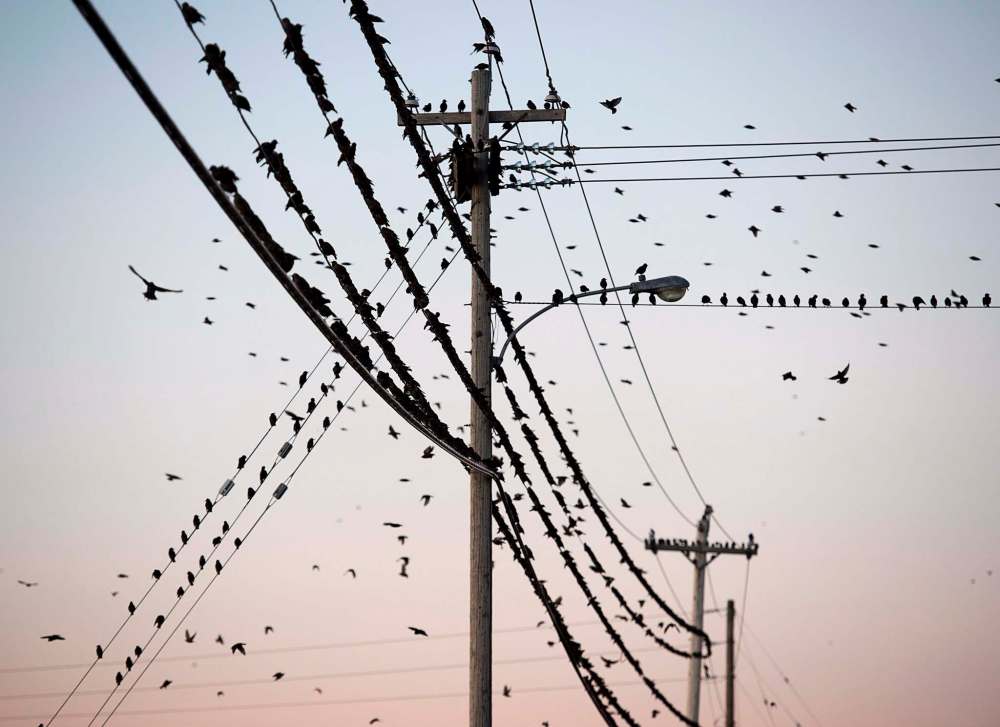
ANDREW VAUGHAN / THE CANADIAN PRESS
A new study suggests cityscapes may be turning birds into better problem solvers.
ANDREW VAUGHAN / THE CANADIAN PRESS A new study suggests cityscapes may be turning birds into better problem solvers.

“Barbados bullfinches are always watching and trying to steal your sandwich,” Audet told CBC News.

So what’s the difference between a bold city bruiser and a demure country bird? According to cognitive tests, an awful lot: The city birds really were more bold by some measures (they were quicker to eat food presented to them in a familiar dish by a human who then hid, meaning they cared less about how likely a human was to interrupt their meal), and better at solving problems — getting to food that had been placed in jars or drawers, for example.

They weren’t any better or worse at learning to distinguish between different coloured dishes that gave them access to food, and they were actually more cautious about obtaining food with unfamiliar objects nearby than their rural cousins were (a trait referred to as neophobia).

But surprisingly, there was one other area where they came out ahead: They had stronger immune systems. Audet and his colleagues thought it might make sense for better cognitive abilities to be associated with weaker immune systems, because the birds don’t have infinite resources to fuel their brains and bodies. But it seems that city birds really can have it all.

Taken all together, these traits seem to serve a pretty obvious purpose. When humans are around, it means birds have more reason to learn to access food in new and challenging places. A bird in the country is pretty much always going to find seeds in the same sorts of places, but a city bird can, for example, learn to snatch sandwiches off restaurant plates. That’s where the boldness comes in, too. And perhaps a fear of novel objects is just part of the same routine: A city bird encounters new and strange dangers more often than one in a rural environment, so it needs to be smart about sussing out situations before blundering in.

Fifty-three birds from one country is a pretty small sample size, so we can’t assume that these findings are true for birds all over the world — or even for birds all over Barbados. But the results suggest humankind’s influence might have a profound effect on the behaviour (and health) of urban birds. It’s especially interesting in Barbados, where birds likely aren’t isolated enough from one another to become different species, or even to change much from generation to generation.

“Barbados is a very small island, and it would be surprising if urban and rural bullfinches were geographically isolated, even if the island has a high population density and the original vegetation of the island has been destroyed and replaced by sugar cane and other anthropogenic plants for over 350 years,” the authors write in the study. “Enhanced boldness, problem solving, and immunocompetence in urbanized bullfinches might all be experience-driven responses to environmental variation in food, human disturbance, and pathogens.”

In other words, these changes probably aren’t due to long-term natural selection: They’re made on the fly.

— The Washington Post

Report Error Submit a Tip

More Stories

Province looks to keep nearly $1M from traffic stop

Erik Pindera 4 minute read Preview

Province looks to keep nearly $1M from traffic stop

Erik Pindera 4 minute read Yesterday at 2:01 AM CDT

The RCMP constable could see that Alireza Haghgoo was nervous. The 22-year-old, seated as a passenger in a rental Nissan SUV the Mountie pulled over for speeding outside Brandon in late July, was breathing heavily and tapping his foot constantly.

Read
Yesterday at 2:01 AM CDT

Feds hold back on stable health funding

Editorial 4 minute read Preview

Feds hold back on stable health funding

Editorial 4 minute read 2:00 AM CDT

The federal government wants provinces to improve health care, expand treatment services and find better ways to deliver care. But it’s refusing to provide provincial governments with the one thing they need most to plan for the future: stable, predictable funding.

That’s not a serious way to manage public health care.

Provincial and territorial health ministers gathered in Winnipeg last week hoping to secure long-term federal funding commitments to help manage mounting pressures on their health-care systems. They left with little more than a promise to keep talking.

Ottawa agreed to extend a $1.2-billion annual funding agreement for mental-health and substance-use treatment, home care and community care by one year. That’s welcome, but it hardly provides the certainty provinces need to maintain existing programs, never mind expand services to meet growing demand.

Read
2:00 AM CDT

Surprising announcement opens door slightly for accountability in police HQ saga

Dan Lett 5 minute read Preview

Surprising announcement opens door slightly for accountability in police HQ saga

Dan Lett 5 minute read Yesterday at 4:07 PM CDT

Early Monday afternoon, it looked as if former Mayor Sam Katz, former chief administrative officer Phil Sheegl and contractor Armik Babakhanians were going to finally and successfully escape the long arm of the law for their roles in the Winnipeg Police Service headquarters scandal.

Read
Yesterday at 4:07 PM CDT

Katz ‘violated public trust,’ Sheegl lacked ‘moral compass,’ police HQ inquiry commissioner concludes

Joyanne Pursaga 8 minute read Preview

Katz ‘violated public trust,’ Sheegl lacked ‘moral compass,’ police HQ inquiry commissioner concludes

Joyanne Pursaga 8 minute read Updated: Yesterday at 7:29 PM CDT

The final report from the public inquiry into the scandal-plagued Winnipeg Police Service headquarters construction project concludes that former mayor Sam Katz and former city CAO Phil Sheegl broke public trust and engaged in unethical conduct.

And the report, released Monday by inquiry commissioner Garth Smorang, says the cost of the project — transforming a downtown Canada Post office tower and warehouse into the police HQ — soared, in part, because main contractor Caspian Projects overcharged the city by more than $40 million in expenses.

The project’s initial $135-million initial price tag rose to about $209 million in the end. The city purchased the complex in 2009; construction was completed in 2016.

Smorang’s report concludes Katz “violated the public trust” and council code of conduct, and Sheegl suffered from a “complete lack of a moral compass.”

Read
Updated: Yesterday at 7:29 PM CDT

Waters remain murky in unchartered Hellebuyck trade request territory

Ken Wiebe 4 minute read Preview

Waters remain murky in unchartered Hellebuyck trade request territory

Ken Wiebe 4 minute read Yesterday at 6:18 PM CDT

ST. LOUIS — The thing about being in unchartered waters is that the answer to the next question isn’t always readily apparent either above or below the surface.

Winnipeg Jets head coach Scott Arniel has been doing his best to ensure the upcoming two-game road trip against Central Division opponents doesn’t include a three-ring circus. But with news coming over the weekend that the suspension for goalie Connor Hellebuyck is set to expire on Friday, the club has to prepare for the next step in that process.

The problem, as Arniel conceded during his session on Monday afternoon before the team departed for Missouri, is that some of the hypotheticals need to be eliminated from the equation before the proper response can be determined.

“When it comes to Helly’s scenario, honestly I don’t really have a lot of information,” said Arniel. “I know everybody knows (about) Friday. That’s all we know.”

Read
Yesterday at 6:18 PM CDT

Be careful with old flame’s power games

Maureen Scurfield 5 minute read 2:00 AM CDT

DEAR MISS LONELYHEARTS: I just ran into the short-haired girl I was crazy in love with back in high school. She wore all black clothes, kind of looked like a guy, but used dark lipstick and dyed her hair different weird colours. She always looked like a scary, powerful woman and she loved to tease me, because I was shy back then.

She was standing there in the sun, and I liked her new look — blue-black hair, dressed in a black suit, hot-looking and powerful as ever! But after we started talking, she suggested we go catch up over a drink and lunch.

After eating and drinking a lot on my tab, she was a bit tipsy and confessed she already has a boyfriend she quite likes, because he doesn’t bow down to her.

To get even, I told her I had a girlfriend, “but that could change.” Then I paid the tab. She finally liked something about me!