

Logging would harm caribou herd: environmentalists
Advertisement
Read this article for free:
or
Already have an account? Log in here »
To continue reading, please subscribe:
Monthly Digital Subscription
$1 per week for 24 weeks*
- Enjoy unlimited reading on winnipegfreepress.com
- Read the E-Edition, our digital replica newspaper
- Access News Break, our award-winning app
- Play interactive puzzles
*Billed as $4.00 plus GST every four weeks. After 24 weeks, price increases to the regular rate of $19.95 plus GST every four weeks. Offer available to new and qualified returning subscribers only. Cancel any time.
Monthly Digital Subscription
$4.99/week*
- Enjoy unlimited reading on winnipegfreepress.com
- Read the E-Edition, our digital replica newspaper
- Access News Break, our award-winning app
- Play interactive puzzles
*Billed as $19.95 plus GST every four weeks. Cancel any time.
To continue reading, please subscribe:
Add Free Press access to your Brandon Sun subscription for only an additional
$1 for the first 4 weeks*
*Your next subscription payment will increase by $1.00 and you will be charged $16.99 plus GST for four weeks. After four weeks, your payment will increase to $23.99 plus GST every four weeks.
Read unlimited articles for free today:
or
Already have an account? Log in here »
Hey there, time traveller!
This article was published 23/09/2009 (6051 days ago), so information in it may no longer be current.
WINNIPEG – Two environmental groups say logging could destroy a newly-discovered caribou habitat up north and they want the province to stop it.
The Wilderness Committee recently got a copy of a new provincial map detailing where caribou herds roam. Overlaid on the map is the location of past and future logging areas. Surveillance data show new caribou activity between Thompson and The Pas, northeast of Grass River Provincial Park, an area where Tolko has permission to log, thanks to a 2006 amendment to the company’s logging rights.
“If the province is authorizing logging in a caribou habitat, it’s illegal, in our interpretation, under the federal and provincial acts,” said Eric Reder of the Wilderness Committee.
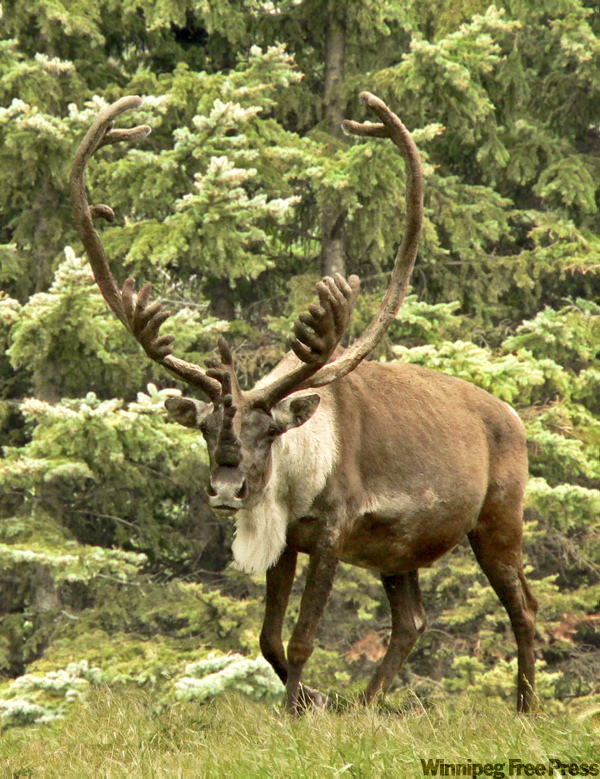
Caribou are listed as an at-risk species under federal and provincial legislation, which mandates that their habitats be protected.
The Wilderness Committee and the Canadian Parks and Wilderness Society want a halt to all industrial logging in caribou habitats, which would cover huge swaths of northern Manitoba. And, to protect the new caribou area, they want the province to bar any logging in the area until more data can be collected on the herd to ensure it is protected.
But Vince Crichton, Manitoba Conservation’s manager of game, fur and problem wildlife, says before that would be considered, the province needs to do more studies. It’s been only a year since the herd was discovered and it could have made a one-time-only stop in the area.
Provincial staff are heading out again this winter to collect more data in the region, including counting the number of bulls and calves.
Crichton said any proposed logging is subject to an environmental review, and the province works with logging companies to ensure habitats are protected.
Tolko says it has not started logging in the area and won’t do so for several years. No roads have been built through the area yet, though a controversial road through the nearby Grass River provincial park might eventually be extended.
The company and the province work together to determine where critical caribou habitats lie and ensure any logging leaves a big enough corridor for the caribou to roam, said Tolko’s Doug Hunt.
It’s also not clear whether Manitoba’s caribou population is growing or shrinking.
Ron Thiessen of the Canadian Parks and Wilderness Society said half of Canada’s caribou range has disappeared due to logging, mining and oil and gas exploration in the last 50 years.
“They are in trouble across the length and breadth of the Canadian range and Manitoba is no exception,” he said.
But the province says the herds have been stable over the last four years at between 1,800 and 3,200 animals.
maryagnes.welch@freepress.mb.ca
History
Updated on Wednesday, September 23, 2009 4:44 PM CDT: Adds comments from environmentalists and Manitoba Conservation.