

Eating in
Hurried, hungry consumers benefiting from growing meal-kit service
Advertisement
Read this article for free:
or
Already have an account? Log in here »
To continue reading, please subscribe:
Monthly Digital Subscription
$1 per week for 24 weeks*
- Enjoy unlimited reading on winnipegfreepress.com
- Read the E-Edition, our digital replica newspaper
- Access News Break, our award-winning app
- Play interactive puzzles
*Billed as $4.00 plus GST every four weeks. After 24 weeks, price increases to the regular rate of $19.95 plus GST every four weeks. Offer available to new and qualified returning subscribers only. Cancel any time.
Monthly Digital Subscription
$4.99/week*
- Enjoy unlimited reading on winnipegfreepress.com
- Read the E-Edition, our digital replica newspaper
- Access News Break, our award-winning app
- Play interactive puzzles
*Billed as $19.95 plus GST every four weeks. Cancel any time.
To continue reading, please subscribe:
Add Free Press access to your Brandon Sun subscription for only an additional
$1 for the first 4 weeks*
*Your next subscription payment will increase by $1.00 and you will be charged $16.99 plus GST for four weeks. After four weeks, your payment will increase to $23.99 plus GST every four weeks.
Read unlimited articles for free today:
or
Already have an account? Log in here »
Hey there, time traveller!
This article was published 20/08/2016 (3524 days ago), so information in it may no longer be current.
The arrival of a new combatant is cranking up the heat in the already-competitive convenience-food market.
Chefs Plate, a Toronto-based company that bills itself as Canada’s leading meal-kit-delivery service, is now offering its services in Manitoba’s two largest cities — Winnipeg and Brandon.
Its arrival earlier this summer came just a few months after M&M Meat Shops, best known for its wide variety of frozen meats and other dinner options, changed its name to M&M Food Market and added more than 100 new products to its shelves. The new additions range from appetizers and fresh fruits and vegetables to cakes and pies. The company’s goal is to grab a larger share of the convenience-food market here and elsewhere in Canada.
Chefs Plate is also in the midst of an aggressive cross-country expansion, which saw it also expand into Alberta and British Columbia markets in June. Company co-founder Jamie Shea said in an interview the goal is be offering its service from coast to coast by the end of the year from meal-assembly plants in Toronto and in the Vancouver area.
The company’s expansion is part of a global trend that has seen more than 100 meal-kit companies spring up in the U.S. market in just a few short years, according to a recent New York Times article. Another Associated Press article quotes food-industry analyst Technomic Inc. as saying the U.S. meal-kit market could grow to as much as $6 billion over the next four years, as celebrity cooks such as Martha Stewart and Jamie Oliver join forces with burgeoning U.S. meal-kit companies like Marley Spoon and HelloFresh.
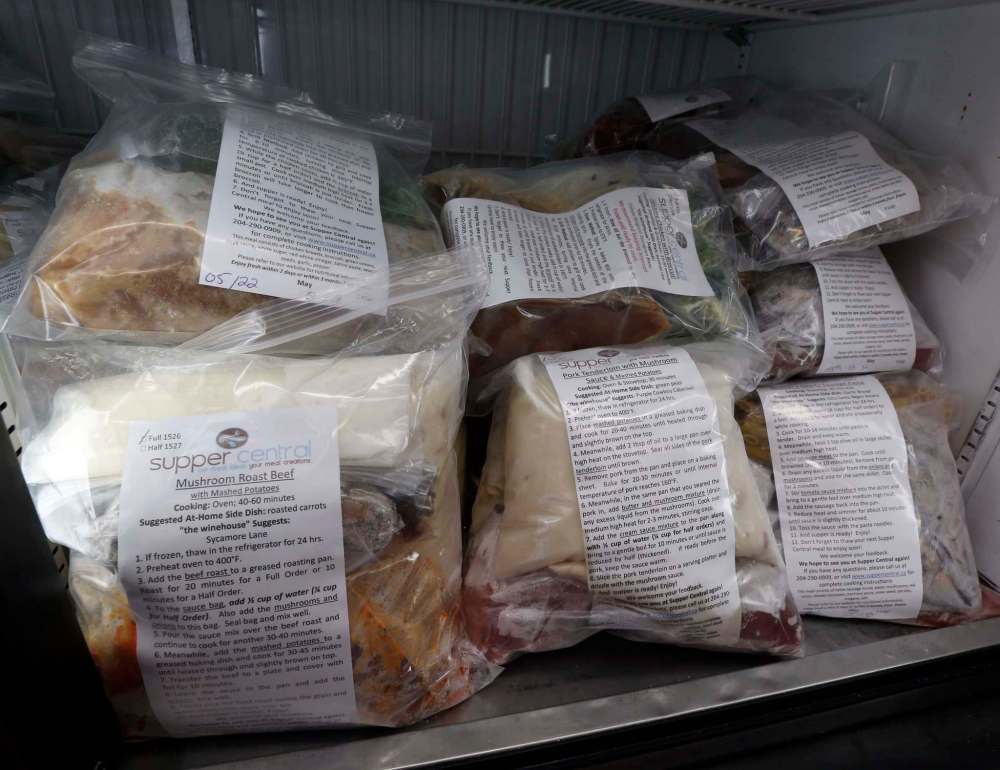
For the uninitiated, meal kits are a kind of bridge between the ready-to-serve meals that a growing number of grocery stores and other convenience-food retailers are now offering, and a traditional, made-from-scratch, home-cooked dinner. The kits include all of the ingredients, packaged in exact proportions, needed to make a gourmet-quality meal. There are even step-by-step instructions on how to prepare and cook the meal.
Chefs Plate, for example, offers two-person meal kits and four-person family kits. The meals cost $9.75 to $10.95 each, so a two-person kit costs twice those amounts, and a family kit costs four times those amounts.
The kits are designed to appeal to harried consumers who hunger for a nutritious, healthy meal, but don’t feel like eating in a restaurant or ordering in a restaurant meal, and don’t have the time go grocery shopping and then spend an hour or more in the kitchen preparing and cooking a meal.
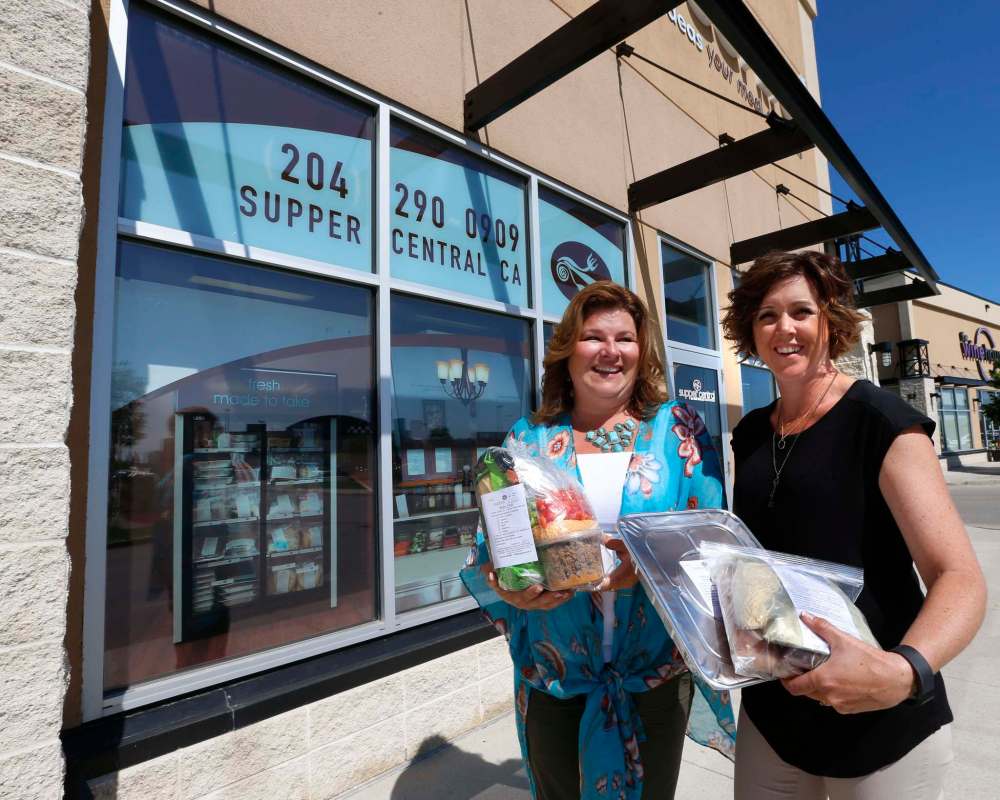
While Chefs Plate is new to the Manitoba market, the meal-kit concept is not. Supper Central, a meal-kit/meal-assembly service co-founded by local entrepreneurs Lori Vassart and Crystal Anderson, has been in business here for more than seven years. In that time, they’ve seen their company’s sales grow to an average of 450 meals per week, Vassart said in an interview.
Vassart didn’t sound the least bit worried about the arrival of Chefs Plate in Manitoba, or about the liklihood that other meal-kit companies may soon follow. As far as she’s concerned, the more the merrier, because it raises public awareness of the concept.
“We have a whole big city here, with a lot of people who could benefit from a service like this. So I think raising the awareness of businesses like this is only beneficial.”
Shea said Chefs Plate’s customers typically include young professionals, families with one or two working parents, empty-nest couples and seniors. It’s a similar story for Supper Central. One of its longtime customers is Winnipegger Shirley Dyck, who works full time and doesn’t always have the time or energy to whip up a meal from scratch for herself or for guests.
“I’ve been going to them for at least six years. It’s just the convenience,” Dyck explained during a recent interview.
She said she orders online from Supper Central’s monthly menu and tells them what day and time she’ll be picking it up, even though the company also has a delivery service. Dyck said she orders an average of three or four “half-meal” packages per month, at a cost of $15 to $17 each. She said she gets three single servings out of each package. What she doesn’t use right away, she freezes.
“That’s about $5 a meal. You can’t go get a burger and fries for that much, and the food is always absolutely delicious.”
Shea and Kelley Main, head of the marketing department at the University of Manitoba’s Asper School of Business, see grocery stores, not restaurants, as the primary competition for meal-kit services.
“The restaurant has the social aspect of going out,” Main explained. “This has the aspect of eating at home. So to me, that is different (from going to a restaurant).”
Prof. Sylvain Charlebois, a food-policy expert with Dalhousie University, agreed grocery stores could be adversely affected if meal kits gain in popularity here the way they have in the United States and Europe.
“But I’m more concerned about the restaurants who are delivering meals and the takeout people serving pizzas and burgers,” he added. “They may be undermined by a more healthy offering.”
Because everything is pre-portioned, Main said meal kits may also appeal to consumers who are worried not only about what they’re eating, but how much they’re eating.

“They (the meal-kit companies) are telling you what the right proportion is,” she noted.
Charlebois said the concept may also appeal to millennials, who value their time but want to eat well, as well as working parents who not only see it as an easier way of provide a nutritious meal for their family, but also an opportunity to spend more time in the kitchen with their children. An added bonus is the children are also learning how to prepare and cook a meal at the same time.
Dwayne Marling, Restaurant Canada’s vice-president for Manitoba and Saskatchewan, said meal-kit companies have been in Canada for a few years now, and so far the restaurant industry seems to holding its own.
“Certainly there is the potential for some displacement… but where the disruption will be I don’t think has entirely shaken out yet,” he said. “But it is really illustrative of how the lines continue to blur between restaurants, delis, grocery stores and meal-delivery services.”
murray.mcneill@freepress.mb.ca