

TFSA turmoil
With the Liberals in power, how will their promise to roll back tax-free savings contributions affect you?
Advertisement
Read this article for free:
or
Already have an account? Log in here »
To continue reading, please subscribe:
Digital Subscription
One year of digital access for only $1.44 a week*
- Enjoy unlimited reading on winnipegfreepress.com
- Read the E-Edition, our digital replica newspaper
- Access News Break, our award-winning app
- Play interactive puzzles
*Billed as $5.77 plus GST every four weeks. After 52 weeks, price increases to the regular rate of $19.95 plus GST every four weeks. Offer available to new and qualified returning subscribers only. Cancel any time.
To continue reading, please subscribe:
Add Free Press access to your Brandon Sun subscription for only an additional
$1 for the first 4 weeks*
- Enjoy unlimited reading on winnipegfreepress.com
- Read the E-Edition, our digital replica newspaper
- Access News Break, our award-winning app
- Play interactive puzzles
*Your next Brandon Sun subscription payment will increase by $1.00 and you will be charged $17.95 plus GST for four weeks. After four weeks, your payment will increase to $24.95 plus GST every four weeks.
Read unlimited articles for free today:
or
Already have an account? Log in here »
Hey there, time traveller!
This article was published 31/10/2015 (4007 days ago), so information in it may no longer be current.
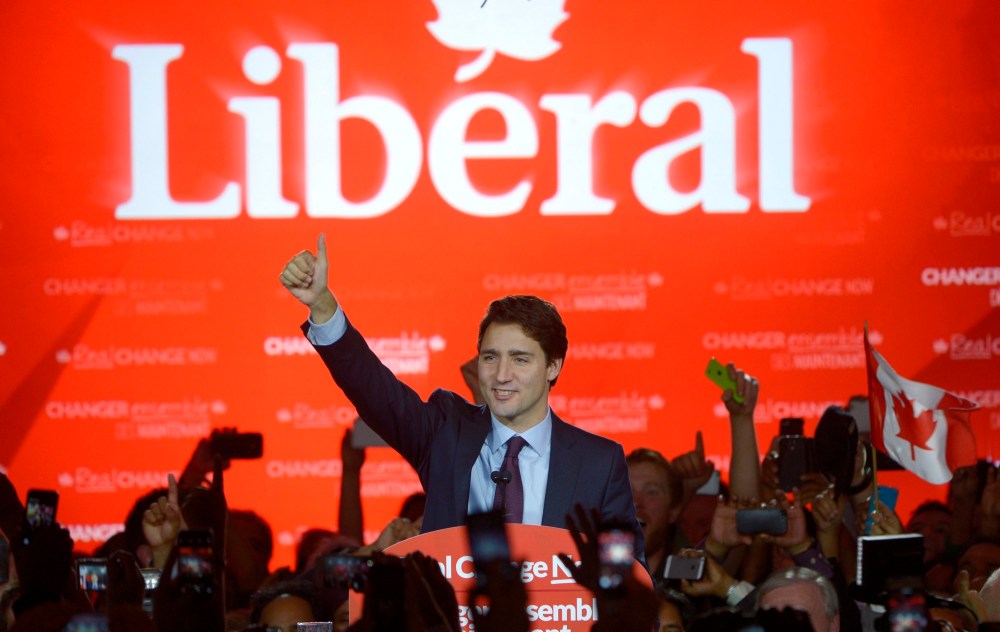
The Liberals were elected, and the $10,000 annual contribution limit for your tax-free savings account is presumably gone.
Their platform called for rolling back the yearly amount Canadians could contribute to this tax-sheltered account to its original $5,500 ceiling after the Conservative government had almost doubled it a few months before calling an election.
The new federal government is expected to follow through on the promise. So what does that mean for Canadians?
Undoubtedly, if you had $10,000 a year to save in this account, this is a bad turn of events because the TFSA is the best vehicle to save for the long term.
Money grows tax-free and can be withdrawn without being taxed. For retirees or individuals with low incomes from taxable sources, the withdrawals do not affect income-tested benefits such as the guaranteed income supplement and old age security. In many instances, the TFSA is a better deal than an RRSP, says Daryl Diamond, author of Your Retirement Income Blueprint: A Six-Step Plan to Design and Build a Secure Retirement.
“Quite often investors are swayed to using RRSPs by the ‘lure of the deduction,’ ” he says.
“But unless the investor is deducting the contribution at a higher tax rate than they will be taxed at when they withdraw it, the TFSA provides some superior advantages in terms of flexibility and tax efficiency as well as being potentially more survivor- and estate-friendly.”
While the Liberals haven’t said when the rollback will happen, many expect the $10,000 annual contribution for 2015 — as well as allowing that room to carry forward for those unable to use it this calendar year — will remain in place.
The $10,000 limit could also remain in place for 2016.
“If the promised reduction is part of the first federal budget under the new Liberal government, then this would not be introduced until spring of this coming year,” Diamond says. “This would technically allow Canadians to enter 2016 with the annual contribution limit still sitting at $10,000.”
In that case, Canadians could have two years grandfathered with $10,000 as the contribution limit for their TFSA — though that’s far from a sure thing.
What is clear, however, is if you haven’t already contributed the maximum for the year, and you’ve got the cash on hand, you should do it now, says tax expert Evelyn Jacks, president of the Knowledge Bureau in Winnipeg.
“It makes sense from a wealth-building point of view, but also because we could lose this gem — or aspects of it — soon,” says the author of Essential Tax Facts: Simple Ways to Put More Money in Your Pocket… at Tax Time, and All Year Long.
Given the TFSA is such a great savings vehicle, and the $10,000 limit enhances its capabilities, you might be wondering why the Liberals pledged to roll it back.
Prof. Jonathan Rhys Kesselman at the School of Public Policy at Simon Fraser University in Vancouver says the higher limit is benefits a small portion of Canadians.
“As of 2013, about 1.9 million persons had maxed out their cumulative TFSA limit; this was only 6.7 per cent — one out of 15 — of all Canadians eligible to have a TFSA,” says Kesselman, considered one of the architects of the TFSA plan.
No statistics are available for 2015 yet, but one could infer the number contributing $10,000 annually would be even smaller.
The TFSA is more advantageous to high-income Canadians because they have more capacity to save.
“It is worth emphasizing that TFSA maximizers have been disproportionately concentrated at upper incomes, particularly individuals with incomes over $150,000, along with some seniors at more moderate incomes but have lots of taxable assets they can transfer into their TFSA.”
This outcome runs contrary to why Kesselman and economist Finn Poschmann recommended in 2001 the government create a TFSA-style plan, which was to assist low-income Canadians to save for the future.
The long-term effect of the TFSA on government coffers is another concern. While $10,000-limit increase is expected to cost the government about $1 billion in revenue over four years, the impact grows exponentially over decades, he says.
The previous annual maximum of $5,500, increasing by $500 with inflation every few years, will take away 0.6 per cent of the gross domestic product from federal and provincial revenue by 2080, a recent report by the parliamentary budget officer shows.
That’s about 10 times the annual cost to revenue — about $1.2 billion — at the start of 2015.
The report further states doubling the contribution limit would have a much more profound effect, eliminating about $39 billion in government revenue by 2080.
Governments have often changed course on tax legislation because it took away revenue from its coffers, says certified financial planner MaryAnn Kokan-Nyhof of Desjardins Financial Security Investments in Winnipeg.
“Over the years various governments have changed tax rules, introducing and repealing as part of their overall management of taxation of Canadians,” she says. “There is no doubt that they (government) will generate more tax revenue as a result of the reduction or elimination of any previous tax credit or program, such as this one (the TFSA).”

In terms of the political fallout for the Liberals, few voters will be negatively affected by the limit rollback while most — about 95 per cent of Canadian adults — will likely feel no immediate impact.
Regardless of the annual limit, the TFSA will remain one of the best ways to save.
“The TFSA is a must for people who want to build a tax-free income for their future,” Jacks says, adding it is particularly valuable for young savers.
“Socking the money away at the best possible returns to earn income, tax-free, for their lifetime will make them rich.”
joelschles@gmail.com