

Making cheese to please
Dairy operation to produce fresh varieties
Advertisement
Read this article for free:
or
Already have an account? Log in here »
To continue reading, please subscribe:

Digital Subscription
One year of digital access for only $205*
- Enjoy unlimited reading on winnipegfreepress.com
- Read the E-Edition, our digital replica newspaper
- Access News Break, our award-winning app
- Play interactive puzzles
*First annual payment billed as $205.00 + GST for one year. This annual subscription will automatically renew at $233.00 + GST every 52 weeks (10% off the regular annual price of $259.35). Offer available to new and qualified returning subscribers only. Cancel any time.
To continue reading, please subscribe:
Add Free Press access to your Brandon Sun subscription for only an additional
$1 for the first 4 weeks*
- Enjoy unlimited reading on winnipegfreepress.com
- Read the E-Edition, our digital replica newspaper
- Access News Break, our award-winning app
- Play interactive puzzles
*Your next Brandon Sun subscription payment will increase by $1.00 and you will be charged $17.95 plus GST for four weeks. After four weeks, your payment will increase to $24.95 plus GST every four weeks.
Read unlimited articles for free today:
or
Already have an account? Log in here »
Hey there, time traveller!
This article was published 21/04/2011 (5606 days ago), so information in it may no longer be current.
Whiteshell Dairy Foods Ltd. might not sound like a cheese company making the sort of fresh, un-aged cheese that especially appeals to Europeans and Central and South Americans.
But considering that the proprietor is a proud immigrant from Spain via South America, it makes sense.
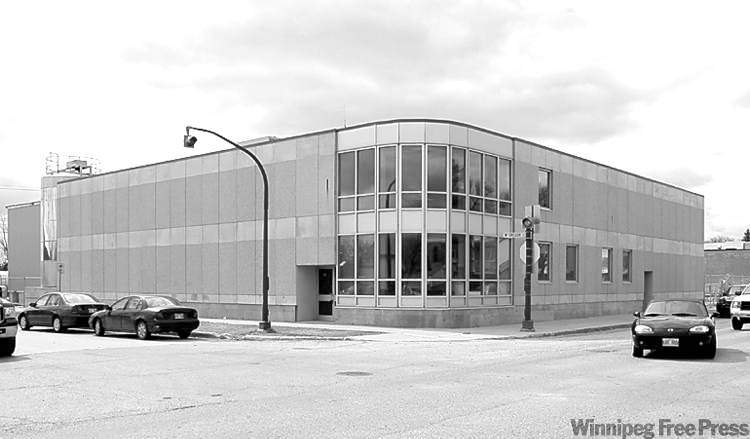
The new dairy operation — the first new commercial cheese plant in the province in recent memory — is a couple of months away from opening on the former site of the People’s Co-op dairy at Dufferin Avenue and McGregor Street in the North End, complete with storefront retail where customers will be able to watch the cheese being made.
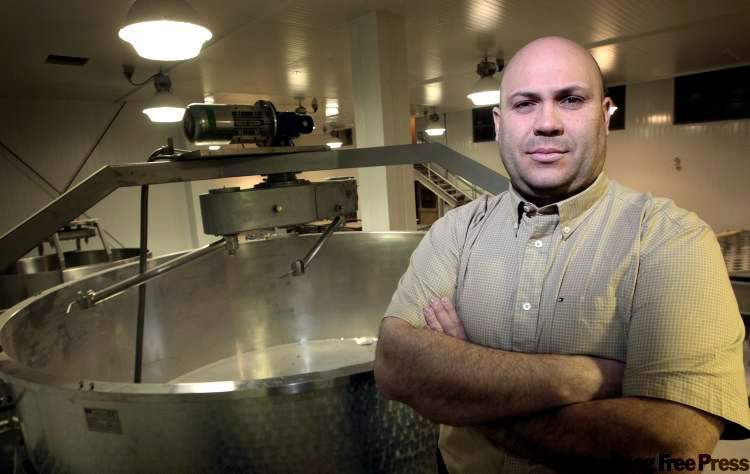
Packed with more than $2 million worth of new, state-of-the-art European equipment, it’s set up to run like an old-fashioned artisan cheese plant with copper-lined vats for Parmesan and plans for six different types of stretched mozzarella, various types of goat and sheep-milk cheese and some varieties that are not made anywhere else in Western Canada.
Some of Whiteshell’s varieties will be shipped to stores and restaurants the day after they’re made.
Soft, fresh cheese is a traditional breakfast food for many international households and Pedro Campayo, Whiteshell’s proprietor, said he believes there is a good, untapped market for a Canadian supplier.
Campayo is an artisan cheese maker who comes from a cheese-making family. Born in Spain, he was raised in Venezuela where his family owned cheese companies for 40 years, controlling about 25 per cent of the market.
Trained as an electrical engineer — he’s worked in the oil industry in Venezuela and ran a Fiat truck plant in Madrid — Campayo moved to Winnipeg initially in 2000 to escape the political uncertainties in Venezuela.
Why Winnipeg?
“You see cold weather in a tropical country only on the Discovery Channel,” he said. “I wanted to go to the coldest place. People said I should go to Winnipeg.”
He couldn’t find work here after he finished his English language training at the University of Manitoba, so he took a senior position with Fiat in Spain. But he returned to the city a couple of years later and worked as a technician in the food science department at the U of M for the past five years.
“My wife thought I was crazy,” he said. “But I really like it here.”
Arnie Hydamaka, a food sciences professor at the U of M, remembers when Campayo first started to work in the department, running the university’s pilot cheese plant.
“He was on the phone every 10 minutes with his father (Jose) in Venezuela getting instructions,” he said. “He must have had a good long-distance plan.”
But over time he honed his craft and eventually was teaching certificate courses at the U of M in pasteurization and cheese making where some of his students were inspectors for the Canada Food Inspection Agency. That is the same agency that is monitoring the commissioning of his new plant in a 34,000-square-foot building that was built a decade ago but never occupied.
Campayo probably has an advantage in that he knows the inspectors and what they need to see.
“When you open something new you have to follow 100 per cent of the rules and that’s what I’m doing,” he said.
As a new Canadian (he became a citizen 18 months ago), starting a highly regulated dairy operation meant financing was not available, despite Campayo’s credentials and his exhaustive inquiries.
Luckily there was family money behind him to get the $4.4-million enterprise up and running.
In many respects, Campayo is probably the most likely person around to start such a business — he has the old-world artisan skills, the family heritage in the industry and he’s targeting a market that does not have any obvious competition.
The family support also extends to the supply of equipment. His father, Jose Campayo, sold his large automated cheese business in Venezuela, but still owns a supply company that includes distribution of the European equipment necessary for a commercial cheese operation.
Dave Shambrock, executive director of the Manitoba Food Processing Association, agrees with industry experts that Campayo’s approach to the market is the right one.
“The market is very predisposed to these innovative global tastes,” Shambrock said. “We are taking the best of some international tastes and integrating that so it is still a local product.”
Dairy Farmers of Manitoba, the organization responsible for managing the supply of milk in the province, is particular about allocating supply to commercial customers. Brent Achtemichuk, general manager of the association, confirmed Whiteshell has received the allocation it applied for, an important acknowledgement that the business plan is sound.
Campayo has not made a kilogram of cheese yet at the Dufferin plant but said he’s already received many calls from prospective customers, including one from Korea who wants 100,000 kilograms of mozzarella.
“I am not worried about finding customers because there is no one making this kind of cheese here,” Campayo said.
Hydamaka said, “There is a gap in the market. Pedro has the backing, he has the tech skills that his father passed on and targeting the ethnic market is a great angle.”
martin.cash@freepress.mb.ca
Factory facts
Whiteshell Dairy Foods Ltd.
June 2011 — scheduled opening
25 — number of employees expected at full capacity
75,000 litres of milk — plant’s daily production capacity
Types of cheeses that will be made — Edam, Gouda, Parmesan, mozzarella (six different types), pecorino (a northern Italian variety), manchego (a Spanish cheese that uses sheep milk), feta, Provolone and queso blanco (fresh cheese).
Whiteshell will be the newest cheese producer in Manitoba, and the smallest

Existing cheese production in the province:
Bothwell Cheese Inc. — New Bothwell
Parmalat Dairy & Bakery Inc. — Grunthal
Saputo Dairy Products — Winkler
Notre Dame Creamery Ltd. — Notre Dame de Lourdes