

New mortgage rules a factor in house price decline
Advertisement
Read this article for free:
or
Already have an account? Log in here »
To continue reading, please subscribe:

Digital Subscription
One year of digital access for only $205*
- Enjoy unlimited reading on winnipegfreepress.com
- Read the E-Edition, our digital replica newspaper
- Access News Break, our award-winning app
- Play interactive puzzles
*First annual payment billed as $205.00 + GST for one year. This annual subscription will automatically renew at $233.00 + GST every 52 weeks (10% off the regular annual price of $259.35). Offer available to new and qualified returning subscribers only. Cancel any time.
To continue reading, please subscribe:
Add Free Press access to your Brandon Sun subscription for only an additional
$1 for the first 4 weeks*
- Enjoy unlimited reading on winnipegfreepress.com
- Read the E-Edition, our digital replica newspaper
- Access News Break, our award-winning app
- Play interactive puzzles
*Your next Brandon Sun subscription payment will increase by $1.00 and you will be charged $17.95 plus GST for four weeks. After four weeks, your payment will increase to $24.95 plus GST every four weeks.
Read unlimited articles for free today:
or
Already have an account? Log in here »
Hey there, time traveller!
This article was published 18/04/2017 (3429 days ago), so information in it may no longer be current.
A more stringent mortgage stress test is being blamed for a slight decline in house prices in the first three months of 2017.
In its latest quarterly house prices survey released on Tuesday, real estate company Royal LePage said the aggregate price of a home in Winnipeg declined by 0.9 per cent to $274,844 in the first quarter of the year.
Michael Froese, managing partner of Royal LePage Prime Realty in Winnipeg, said new mortgage rules the federal government introduced last October in a bid to cool down some of the country’s overheated housing markets were a major contributor to the price decline in Winnipeg.
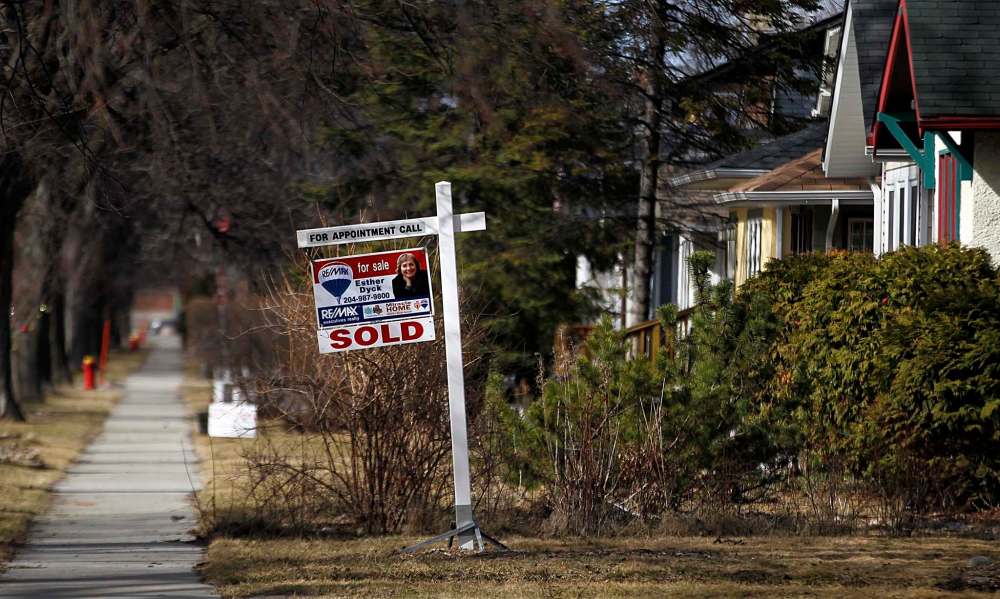
“The impact of the new mortgage stress test is impossible to ignore. It has effectively caused a knee-jerk reaction in the market, impacting activity and contributing to declining house prices,” Froese said.
“However, given that our region is home to a very stable, diverse economy, which has helped insulate the housing market from significant downward price adjustments over the long term, we expect to see market factors bounce back as the year progresses.”
Frose said Winnipeg remains the most affordable major city centre in Canada, offering prospective homeowners — particularly first-time buyers — a great deal of value for their dollar. He also noted Winnipeg’s resale-homes market is coming off its best year on record for unit sales.
“Although home values dipped slightly in January and February, March saw a surge of activity, helping to buoy prices in Winnipeg,” he added. “Sales in the first quarter of 2017 also remain consistent with the same time last year, and are above the 10-year average for the quarter.”
Aggregate prices are calculated using a weighted average of the median values of homes in the three main property categories: bungalows, two-storey homes, and condominiums.

The Royal LePage survey found while the median price of a two-storey home was down from a year earlier, the median price for a bungalow and a condo both increased.
It said the price of a two-storey home dropped 4.9 per cent to $278,866, while the price of a bungalow increased 3.3 per cent to $277,377 and the price of a condo inched upwards by 1.9 per cent to $241,126.
Nationally, Canada’s residential real estate market saw substantial price growth in the first quarter of 2017, increasing 12.6 per cent year-over-year to $574,103. The price of a two-storey home rose 13.9 per cent year-over-year to $681,728, and the price of a bungalow increased 11 per cent to $490,018. During the same period, the price of a condominium increased 8.9 per cent to $372,638.
Royal LePage said while the majority of housing markets in Canada posted modest gains in Q1, price appreciation across much of Ontario significantly outpaced the rest of the country. However, the pace of year-over-year home price appreciation in greater Vancouver was noticeably lower than the historic highs witnessed in 2016, it added.
murray.mcneill@freepress.mb.ca