

‘BPA-free’ bottles leach chemical: study
Advertisement
Read this article for free:
or
Already have an account? Log in here »
To continue reading, please subscribe:
Monthly Digital Subscription
$1 per week for 24 weeks*
- Enjoy unlimited reading on winnipegfreepress.com
- Read the E-Edition, our digital replica newspaper
- Access News Break, our award-winning app
- Play interactive puzzles
*Billed as $4.00 plus GST every four weeks. After 24 weeks, price increases to the regular rate of $19.95 plus GST every four weeks. Offer available to new and qualified returning subscribers only. Cancel any time.
Monthly Digital Subscription
$4.99/week*
- Enjoy unlimited reading on winnipegfreepress.com
- Read the E-Edition, our digital replica newspaper
- Access News Break, our award-winning app
- Play interactive puzzles
*Billed as $19.95 plus GST every four weeks. Cancel any time.
To continue reading, please subscribe:
Add Free Press access to your Brandon Sun subscription for only an additional
$1 for the first 4 weeks*
*Your next subscription payment will increase by $1.00 and you will be charged $16.99 plus GST for four weeks. After four weeks, your payment will increase to $23.99 plus GST every four weeks.
Read unlimited articles for free today:
or
Already have an account? Log in here »
Hey there, time traveller!
This article was published 30/07/2009 (6102 days ago), so information in it may no longer be current.
OTTAWA — Health Canada scientists have found bisphenol A leaching into liquid in plastic baby bottles marketed to parents as being free of the toxic chemical.
The study says "traces" of the toxin were found in "BPA-free" bottles while internal correspondence between a department official and the lead scientist went further, characterizing the amounts in two brands as "high readings."
Manufacturers of non-polycarbonate plastic baby bottles, however, were quick to challenge the "shocking" results, saying there must be a problem with the way the agency conducted the research.
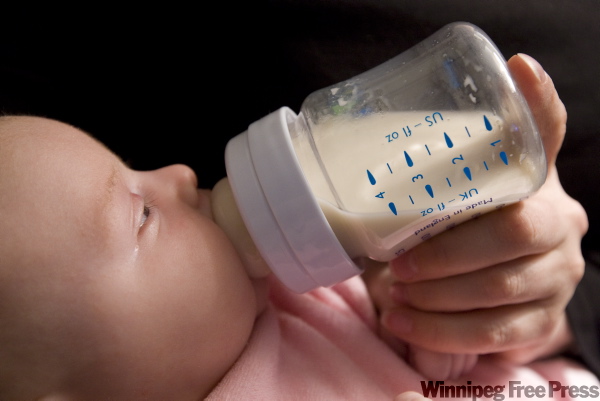
Government scientists conducted the tests on non-polycarbonate bottles last year after Health Canada announced an imminent ban on polycarbonate plastic baby bottles.
By then, the market had already been flooded with "BPA-free" alternatives made of substitute plastics without any bisphenol A, which were pitched as an option for parents concerned about health risks.
Bisphenol A, a hormone disrupter that can cause reproductive damage and may lead to prostate and breast cancer in adulthood, is used as a building block in polycarbonate plastic, but not in the substitutes, such as polypropylene.
The test results surprised Health Canada scientists, according to records released to Canwest News Service under the Access to Information Act.
"This bottle is labelled polypropylene which should contain no BPA," the lead scientist wrote to a colleague, recommending another analysis be done to "verify the claim."
The brand mentioned in the correspondence is blacked out on the grounds that the information could result in financial loss or prejudice the competitive advantage of a company.
The records show Health Canada tested about nine different brands of baby bottles using non-polycarbonate plastic for possible leaching of BPA, chosen because they’re made with a type of plastic that does not use the chemical as a building block.
In a recently published summary of the test results, researchers suggest the "traces of BPA found to migrate from these bottles could be artifacts of the manufacturing process."
And since these "BPA-free" bottles leached less than polycarbonate plastic bottles under conditions designed to simulate repeated normal use, the government researchers concluded these bottles made of polysulfone, polystyrene or polypropylene (non-PC) are a "reasonable alternative" to the banned polycarbonate (PC) bottles.

University of Missouri’s Frederick vom Saal, a leading researcher into bisphenol A and other endocrine disrupters, said even if trace amounts can be explained away as a result of environmental contamination, companies need to revisit their manufacturing processes.
— Canwest News Service