

English essayist extended prose range
Advertisement
Read this article for free:
or
Already have an account? Log in here »
To continue reading, please subscribe:
Monthly Digital Subscription
$0 for the first 4 weeks*
- Enjoy unlimited reading on winnipegfreepress.com
- Read the E-Edition, our digital replica newspaper
- Access News Break, our award-winning app
- Play interactive puzzles
*No charge for 4 weeks then price increases to the regular rate of $19.00 plus GST every four weeks. Offer available to new and qualified returning subscribers only. Cancel any time.
Monthly Digital Subscription
$4.75/week*
- Enjoy unlimited reading on winnipegfreepress.com
- Read the E-Edition, our digital replica newspaper
- Access News Break, our award-winning app
- Play interactive puzzles
*Billed as $19 plus GST every four weeks. Cancel any time.
To continue reading, please subscribe:
Add Free Press access to your Brandon Sun subscription for only an additional
$1 for the first 4 weeks*
*Your next subscription payment will increase by $1.00 and you will be charged $16.99 plus GST for four weeks. After four weeks, your payment will increase to $23.99 plus GST every four weeks.
Read unlimited articles for free today:
or
Already have an account? Log in here »
Hey there, time traveller!
This article was published 30/01/2010 (5810 days ago), so information in it may no longer be current.
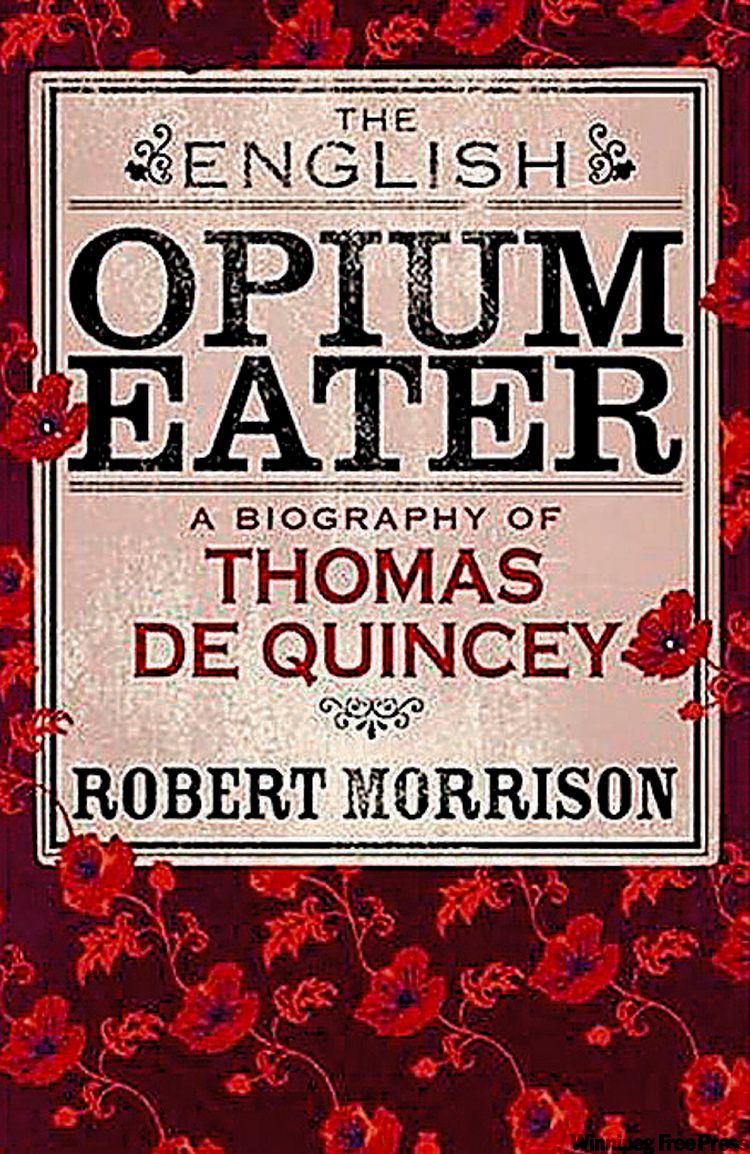
The English Opium Eater
A Biography of Thomas De Quincey
By Robert Morrison
Weidenfeld and Nicolson, 462 pages, $38
In Britain, the first half of the 19th century was an age of great prose writing.
Such luminaries as Leigh Hunt, Charles Lamb, William Hazlitt and Thomas Carlyle entertained and instructed readers of the newspapers and magazines of the day.
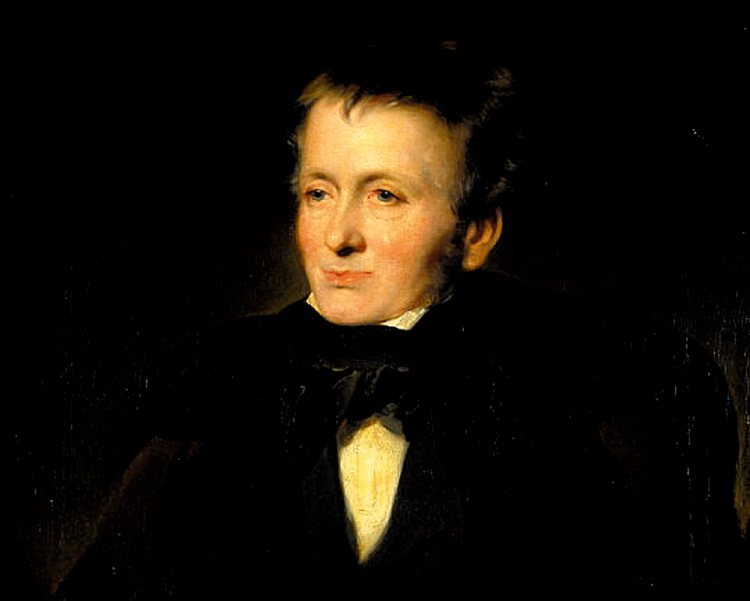
But perhaps the greatest stylist of the era was Thomas De Quincey (1785-1859). He is best known for his autobiographical Confessions of an English Opium-Eater, published in 1821 and revised in 1856.
De Quincey was a prolific contributor to the British periodical press for more than 40 years; he had a wide range of interests, and wrote about politics, history, philosophy, economics, literary theory and classical scholarship.
De Quincey maintained his productivity despite — or perhaps because of — the hardship and turmoil that beset him.
His remarkable life is recounted in this admirable biography by Robert Morrison, a professor of English at Queen’s University in Kingston, Ont.
This is not the first biography of De Quincey, but it is the first to appear in nearly 30 years, and, Morrison says, it incorporates newly available sources.
Morrison depicts the principal themes of De Quincey’s life: his ambivalent relationship with his great contemporaries, the poets William Wordsworth and Samuel Taylor Coleridge; his addiction to opium, which alternately stimulated and tormented him; his struggle with debt; and, through it all, his devotion to the craft of writing.
Indeed, although frequently impoverished and harassed by creditors, De Quincey would never compromise his literary standards; he would not submit inferior work merely to make money.
To a considerable extent, Morrison says, De Quincey’s financial problems were self-inflicted. He was irresponsible with funds.
Despite having a large family, he constantly purchased books and rented several lodgings simultaneously. And, of course, his need to buy opium was a drain on his resources.
De Quincey’s straitened circumstances, Morrison suggests, were a goad to his literary efforts: "The more addled he was by poverty, debt, and addiction, the more pressure he was under to deliver, with the result that he usually did. The chaos that seemed to be keeping him from writing was actually driving him to it."
This biography is well-paced and gripping. But it has one shortcoming: Morrison’s ideologically loaded diction.
He describes conservatives or conservatism as "virulent," "truculent," "intolerant," "hardline," "bellicose," "shrill," "overheated," and "adamantine." Edmund Burke was an "archconservative."
Liberals and radicals, however, were apparently paragons of moderation and tolerance. London Magazine was "polished, dispassionate and liberal in tone."
William Hazlitt’s radicalism was not "virulent," but "unswerving." Leigh Hunt was not a "virulent" liberal, but an "iconic" one.

Morrison does not seem to grasp that, in De Quincey’s day, the Tories were the party of "compassion," while the liberals opposed social legislation.
Hence Morrison thinks that it is anomalous that De Quincey, as a conservative, could express "sympathy for the disenfranchised, the impoverished, and the abused." In fact, such sympathy was entirely consistent with the conservatism of De Quincey’s time.
Readers should be wary of Morrison’s loaded language. But he has nevertheless written an excellent account of an essayist who "extended the range and possibilities of English prose."
Graeme Voyer is a Winnipeg writer.