

Architect denies responsibility for IGF design flaws
Advertisement
Read this article for free:
or
Already have an account? Log in here »
To continue reading, please subscribe:
Monthly Digital Subscription
$0 for the first 4 weeks*
- Enjoy unlimited reading on winnipegfreepress.com
- Read the E-Edition, our digital replica newspaper
- Access News Break, our award-winning app
- Play interactive puzzles
*No charge for 4 weeks then price increases to the regular rate of $19.00 plus GST every four weeks. Offer available to new and qualified returning subscribers only. Cancel any time.
Monthly Digital Subscription
$4.75/week*
- Enjoy unlimited reading on winnipegfreepress.com
- Read the E-Edition, our digital replica newspaper
- Access News Break, our award-winning app
- Play interactive puzzles
*Billed as $19 plus GST every four weeks. Cancel any time.
To continue reading, please subscribe:
Add Free Press access to your Brandon Sun subscription for only an additional
$1 for the first 4 weeks*
*Your next subscription payment will increase by $1.00 and you will be charged $16.99 plus GST for four weeks. After four weeks, your payment will increase to $23.99 plus GST every four weeks.
Read unlimited articles for free today:
or
Already have an account? Log in here »
Hey there, time traveller!
This article was published 21/07/2015 (3811 days ago), so information in it may no longer be current.
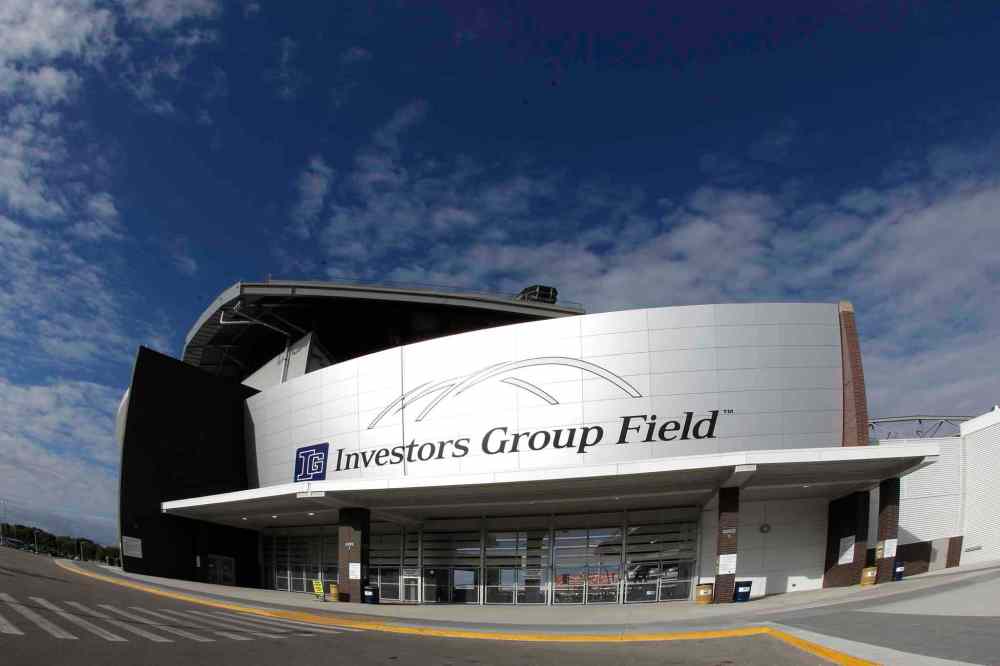
Investors Group Field was designed as a warm-weather football stadium that wouldn’t house outdoor concerts, its architect claims in response to a lawsuit over problems with the two-year-old CFL facility.
In a statement of defence against a claim filed by Triple B Stadium, architect Ray Wan denies responsibility for dozens of alleged design and construction deficiencies at the venue — and blames the owner for cracked concrete slabs throughout its concourses.
Triple B, a shell company representing the city, province, University of Manitoba and Winnipeg Football Club, owns Winnipeg’s $209-million, 33,500-seat football stadium. In a statement of claim filed in March, the corporation alleges Wan and construction company Stuart Olson are responsible for 42 “operational and design defects” that include slopes that drain water into the building, the absence of winterization and concrete slabs so weak they are “a problem for moving kegs of beer.”
Stuart Olson fired back in May, alleging in a statement of defence Triple B Stadium and the Selinger government rushed Investors Group Field to completion and “knowingly approved a design without regard for the problems” at the Canadian Football League facility.
Stuart Olson also filed a cross-claim against Wan, who did not respond to requests for comment at the time. In a statement of defence and cross-claim filed in June, Wan rejects most of Triple B’s allegations and asks for the lawsuit to be dismissed, with costs.
The architect claims he designed the stadium under an agreement reached with original stadium builder Creswin Properties and later assigned to the shell company.
Triple B took over “without any revisions to the original design for a two-/three-season facility,” the statement of claim alleges. “The plaintiff asked for a two-/three-season facility, not a four-season facility, to be constructed.”
Wan also rejects responsibility for cuts into the stadium concrete and staircases that had to be installed well after construction started in order to allow concertgoers access to the field.
“Field-level seating became an issue when the plaintiff chose to explore the use of Investors Group Field for outdoor concerts, which was not contemplated in the original design,” reads the statement of the defence.
These claims corroborate statements made to the Free Press by former Triple B chairman Phil Sheegl, who disclosed stadium-design issues in 2013.
Wan also suggests Triple B is responsible for cracked concrete at the stadium, which he describes as “restricted to the topping or wearing slab only and not the structural slab.”
He alleges the cracked concrete slabs — which are being replaced over the course of a year at an expected cost of tens of millions of dollars — “is indicative of drying, shrinkage and restrained cracking that occurred during the curing process and is largely a construction-sequencing issue.”

Wan also claims Triple B failed to submit a list of concession vendors and their loading requirements during the stadium’s design and construction process. Triple B then “ignored the loading requirements and made modifications not contemplated in the design,” Wan alleges, “specifically with respect to the location and number of concessions, which has resulted in wear and tear on the surface level of the concrete flooring.”
Wan claims Triple B agreed to only use hand-operated pallet jacks on the concourse but wound up using heavier, electric-powered jacks.
Wan also alleges Triple B made “numerous changes to selection of materials during the course of construction,” and states delays in 2010 contributed to what the building’s owner calls a “poor co-ordination of building services” in its statement of claim.
Wan alleges Stuart Olson is responsible for some of the water damage at the stadium, due to what the architect describes as the “improper application and installation of the flooring assembly” and the builder’s “failure to properly seal the penetration.”