

Province asks PUB to study alternatives to proposed dams
Advertisement
Read this article for free:
or
Already have an account? Log in here »
To continue reading, please subscribe:

Digital Subscription
One year of digital access for only $205*
- Enjoy unlimited reading on winnipegfreepress.com
- Read the E-Edition, our digital replica newspaper
- Access News Break, our award-winning app
- Play interactive puzzles
*First annual payment billed as $205.00 + GST for one year. This annual subscription will automatically renew at $233.00 + GST every 52 weeks (10% off the regular annual price of $259.35). Offer available to new and qualified returning subscribers only. Cancel any time.
To continue reading, please subscribe:
Add Free Press access to your Brandon Sun subscription for only an additional
$1 for the first 4 weeks*
- Enjoy unlimited reading on winnipegfreepress.com
- Read the E-Edition, our digital replica newspaper
- Access News Break, our award-winning app
- Play interactive puzzles
*Your next Brandon Sun subscription payment will increase by $1.00 and you will be charged $17.95 plus GST for four weeks. After four weeks, your payment will increase to $24.95 plus GST every four weeks.
Read unlimited articles for free today:
or
Already have an account? Log in here »
Hey there, time traveller!
This article was published 16/11/2012 (5064 days ago), so information in it may no longer be current.
The Selinger government asked the Public Utilities Board today to look at alternatives to the proposed Keeyask and Conawapa generating stations, two new northern dams that are key to Manitoba Hydro’s ambitious plan to sell more surplus power to the United States.
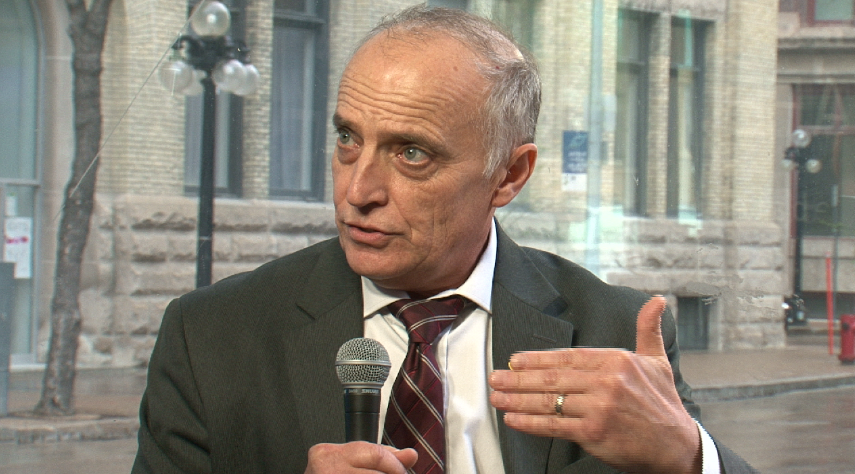
“Building Keeyask and Conawapa represents a major economic development opportunity for our province,” Innovation, Energy and Mines Minister Dave Chomiak, minister responsible for Manitoba Hydro, said in release today. “The purpose of the Needs For and Alternatives To (NFAT) review is to provide an independent assessment of the need for new generation and to compare the benefits of building new hydro generation to alternatives such as natural gas.”
The NFAT review will be conducted by a sub-panel of the Public Utilities Board (PUB) in order to give the board the capacity needed to conduct the review while meeting its other responsibilities. Panel members are expected to be announced and detailed terms of reference will be provided by the province to the PUB in the new year.
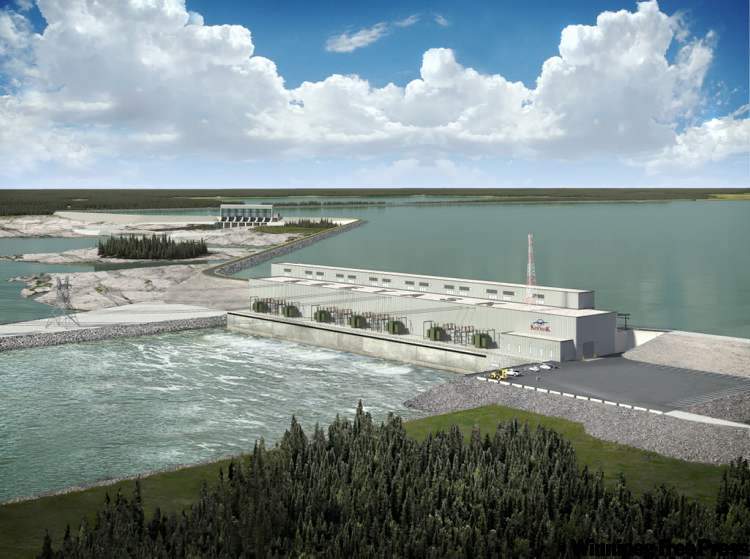
The PUB has said in earlier orders that Manitoba Hydro should revisit its plans to build Keeyask and Conawapa because of lower revenue due to the availability of cheap natural gas. The PUB has already suggested Hydro could build a natural gas-fired plant to supply Manitobans with power cheaper than building the two northern dams.
The NFAT review does not include the Bipole III, which is currently the subject of an environmental review before the province’s Clean Environment Commission (CEC).
“The estimated $13.3-billion investment in Manitoba’s north that would result from Keeyask and Conawapa would propel the province’s economy for decades to come and provide clean, low-cost and reliable power for future generations of Manitobans,” Chomiak said. “Moving forward with these projects is an important decision and Manitobans need to be assured that they are in the best long-term interest of the province.”
Progressive Conservative Leader Brian Pallister said Friday the Selinger government only announced the NFAT now reduce criticism from the opposition benches as the legislative readies itself to go back into session Monday. That day features a speech from the throne to outline the government’s priorities for the next year.
Meanwhile, the province also asked the CEC to hold public hearings on the proposed Keeyask project.
How soon those hearing would start is unknown as the CEC is already in the middle of its Bipole III hearing, which is to be adjourned for about two months to allow Manitoba Hydro to do further consultations on changes to the line’s preferred route.
The CEC is also to hold hearings on the Lake Winnipeg Regulation, the level or range Manitoba Hydro keeps the lake to provide enough water to power its northern dams.
The hearings CEC would follow a public review of the environmental impact statement, which was submitted to the province in early July, Conservation Minister Gord Mackintosh said.
The Keeyask Hydropower Limited Partnership, comprised of Manitoba Hydro, the Tataskweyak and Fox Lake Cree Nations, and the War Lake and York Factory First Nations, filed an Environment Act proposal on the generation project in December 2011.
The environmental impact statement is available on the Manitoba Conservation website at www.gov.mb.ca/conservation, along with the terms of reference for the CEC public hearings.
The notices of the PUB and CEC hearings came on the same day Manitoba Hydro released its second-quarter report for the 2012-13 fiscal year.
The province’s power utility said it incurred a net loss on consolidated electricity and natural gas operations of $43 million for the first six months of the year compared to net income of $13 million for the same period last year.

The net loss was comprised of an $18-million loss in the electricity sector and a $25-million loss in the natural gas sector.
The loss in the electricity sector was blamed on decreased revenues from export electricity sales and higher operating expenses mainly due to accounting changes and pension-related cost increases.
The reduced electricity sector revenues and higher expenses were consistent with expectations for the second quarter. The loss in the natural gas sector is the result of seasonal variations in the demand for natural gas and should be recouped over the winter heating season.
Manitoba Hydro said it continues to experience low export market prices as a result of low natural gas prices and lower demand for electricity due to economic conditions in the US.
It said these low export prices are projected to result in continuing downward pressure on net income in 2012–13. Based on current water flows and export market conditions, Manitoba Hydro is forecasting that financial results will improve over the remaining six months of the fiscal year and net income should exceed $30 million for 2012–13.