

Bail fail: Judges weary of watching alleged offenders thumb their noses at court

Advertisement
Read this article for free:
or
Already have an account? Log in here »
To continue reading, please subscribe:
Monthly Digital Subscription
$1 per week for 24 weeks*
- Enjoy unlimited reading on winnipegfreepress.com
- Read the E-Edition, our digital replica newspaper
- Access News Break, our award-winning app
- Play interactive puzzles
*Billed as $4.00 plus GST every four weeks. After 24 weeks, price increases to the regular rate of $19.95 plus GST every four weeks. Offer available to new and qualified returning subscribers only. Cancel any time.
Monthly Digital Subscription
$4.99/week*
- Enjoy unlimited reading on winnipegfreepress.com
- Read the E-Edition, our digital replica newspaper
- Access News Break, our award-winning app
- Play interactive puzzles
*Billed as $19.95 plus GST every four weeks. Cancel any time.
To continue reading, please subscribe:
Add Free Press access to your Brandon Sun subscription for only an additional
$1 for the first 4 weeks*
*Your next subscription payment will increase by $1.00 and you will be charged $16.99 plus GST for four weeks. After four weeks, your payment will increase to $23.99 plus GST every four weeks.
Read unlimited articles for free today:
or
Already have an account? Log in here »
Hey there, time traveller!
This article was published 01/06/2013 (4687 days ago), so information in it may no longer be current.
The Canadian justice system is built on the premise every person is presumed innocent unless proven guilty.
Yet some folks bristle at the notion of bail — particularly when those accused of violent crimes or with troubling legal track records are given another shot at freedom.
Unfortunately, many alleged offenders don’t make the most of their opportunities.
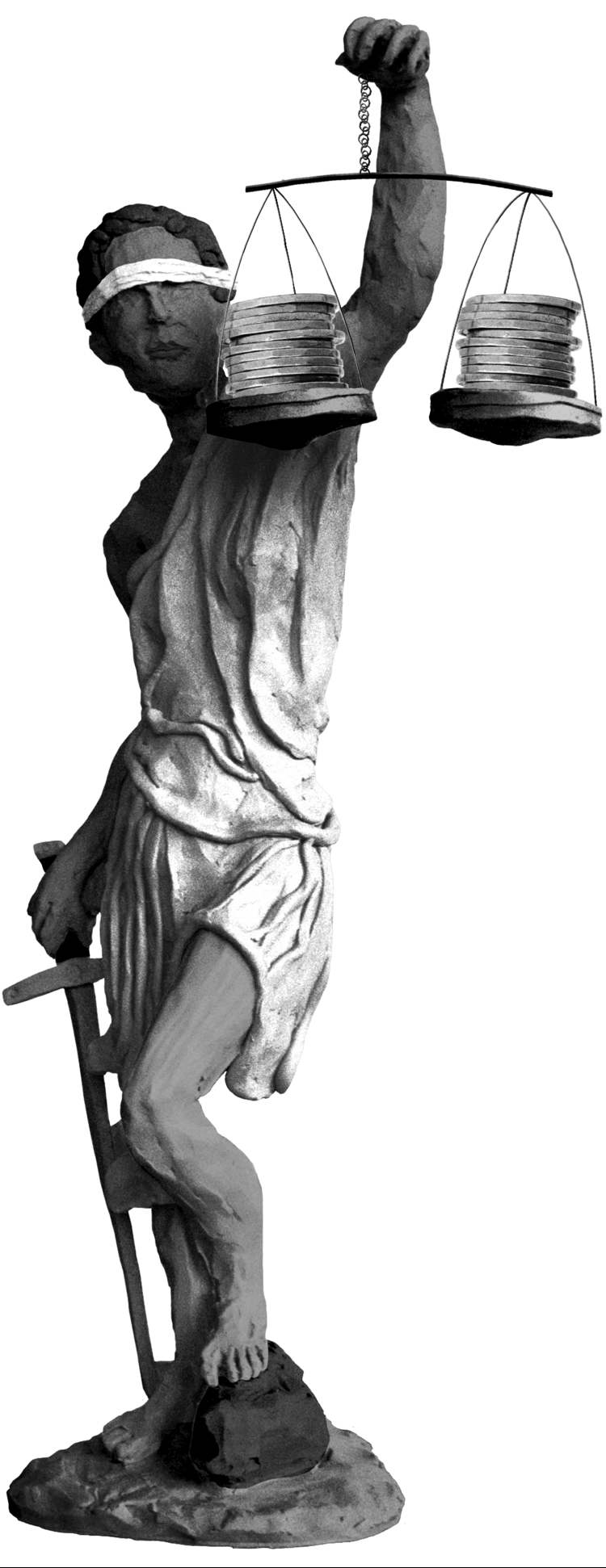
During a two-day span, 261 individuals, charged with 799 total breaches, represented 45 per cent of all offenders in court, a Free Press survey found.
This show the kinds of challenges facing overworked police officers, who are often forced to get involved in the revolving door of justice by arresting — and rearresting — the same people on a regular basis.
The numbers create the impression a court order often isn’t worth the paper it’s written on.
So what happens to those who make a mockery of the system? Breaches are typically treated as an afterthought to the substantive criminal charges that required the court order in the first place. Short sentences of a few weeks or months, often served concurrently to other penalties, seem to be the going rate for breaches.
However, there is another way the justice system can strike back at scofflaws. Officials are regularly targeting bail-breachers by hitting them where it really hurts — in their bank accounts. And even loved ones who put their money where their mouths are by promising to keep the accused on the straight and narrow as “sureties” are being forced to pay a heavy price.
— — —
Chad Hrynchuk screwed up bad. And now the convicted Winnipeg criminal is about to drag his father down with him.
Hrynchuk is the first person to appear on the “Estreatal” docket this Monday morning. It’s the monthly Court of Queen’s Bench special sitting for offenders who essentially blew their chance at bail and are now the subject of financial-revocation proceedings initiated by the Crown.
Justice Robert Dewar is not impressed. He hears how Hrynchuk was arrested on weapons charges but released from custody in July 2012 after agreeing on a $2,000 recognizance in addition to numerous strict conditions. His father, Jack, helped sway the judge’s opinion at the time by agreeing to post a $10,000 surety.
Hrynchuk was rearrested shortly after his release because he refused to live with his father, as his court-ordered conditions required. He also gave police a bogus name, resulting in an additional charge of obstruction. Hrynchuk pleaded guilty to the breaches in January 2013 and was given a one-year suspended sentence. He was also handed four years in prison for his original criminal offences.
Now he is appearing before Dewar, pleading with the judge not to impose further financial penalties on him and his father.
“Essentially it would be an attempt to get blood from a stone,” says defence lawyer Jeremy Kostiuk. He claims his client has no current source of income, isn’t set for prison release until 2015 and can’t pay the penalty anytime soon.
Dewar isn’t buying it.
“That’s not an unusual circumstance. What’s important in this kind of a process is to ensure when someone signs a condition and obtains release on the basis of that condition, they need to follow it,” he says.
Dewar revokes the recognizance and orders Hrynchuk to pay the $2,000. But he gives the man’s father a temporary break by agreeing to adjourn his aspect of the hearing until the next court sitting on June 24 to allow him more time to speak with his lawyer.
— — —
“I was like, ‘Holy crap, I didn’t go.'”
That’s about all Joseph Simon can muster in explaining why he breached his bail and missed two court-ordered appointments with a supervisor earlier this year. He claims he got busy working on his truck one day and lost track of time. On the second occasion, he figured he could just report a few days later.
“I know it doesn’t sound too good. I wasn’t on the run or anything,” he tells Dewar.
Simon is no stranger to the courts. He was originally arrested in 2008 on drug and weapons charges. He has a history of breaching bail, including a 2010 offence which cost him a $500 recognizance. He convinced a judge to give him another shot last December by posting $1,500 cash and a $5,000 recognizance.
It didn’t take long to mess that up. Dewar orders him to forfeit the cash and pay half of his recognizance. Simon’s mistakes just cost him $4,000.
— — —
Lavina Moneyas figured she could keep her friend, Rorey Favel, in line. She agreed to post a $2,000 surety on his behalf to convince a judge to allow him out on bail last year after he was charged with drug trafficking.
But when Moneyas found out Favel wasn’t following court orders — specifically, having contact with a woman he wasn’t supposed to — she remained silent. Now it’s going to cost her.
“One of the purposes of signing as a surety is to put the heat on Mr. Favel. He has to know it’s not just him who has to pay the consequences but someone else as well,” says Dewar.
Moneyas pleads her case, claiming she was trying her best.
“I think I shouldn’t pay because I believe I’ve done what I took on seriously. I checked on him every once in a while to make sure he was abiding by most rules,” she says.
Not good enough, says Dewar, who orders her to pay the $2,000.
“If I didn’t do that, people will just go and get sureties expecting if there’s a breach some judge will permit the surety out of it,” he says, adding “next time you should be going to the police.”
Dewar then imposes the same penalty on Favel, who had agreed on a $2,000 recognizance. He remains silent when asked if he has anything to say.
— — —
Kayla Murdock hoped she could right a couple of wrongs by turning herself in to police earlier this year.
She had posted a $2,000 recognizance and her father, Grant Barthelette, agreed to post a $1,000 surety after her arrest on drug-related charges. Murdock then failed to attend court in January and didn’t show up to her bail supervision a couple weeks later.
“I was under the impression that if I turned myself in it would be waived or partially taken off or whatever,” Murdock explains.
Dewar sees it differently, ordering the full amounts to be paid by both.
“There will be no reduction. If the courts were too lenient about relaxing these consequences, then people will just say anything they want to get out on interim release,” says Dewar. “It’s not just you who suffers, but the people who go to bat for you.”
— — —
Cory Tymchyshyn was released on bail for a murder charge after his father agreed to post a $100,000 surety, one of the largest ever seen in Manitoba judicial history. And now Tymchyshyn stands accused of violating his November 2011 bail conditions, which also included a $5,000 recognizance.
Both son and father appear in court, but their lawyers request an adjournment. They acknowledge the potentially huge consequences and need more time to study legal precedents and prepare arguments. Dewar gives them until September.
Dewar grants a similar adjournment to Johnny Petriw and his father, who posted a $50,000 recognizance and $10,000 surety to get him out on bail after he was charged in a 2011 drunken-boating fatality.
Petriw has now pleaded guilty to reduced charges from that crime, along with breaching his July 2012 bail by fleeing the Behavioural Health Foundation after starting up a sexual relationship with a female client at the facility.
The Petriw men appear in court without a lawyer.
“You’re talking about a significant amount of money here,” says Dewar, advising the pair to seek legal advice.
“I agree, I’m not even sure how to speak on this,” admits the younger Petriw. The father asks if they can just proceed, saying he’s prepared to “deal with whatever you decide to do.” But Dewar insists on an adjournment.
— — —
The day ends on a surprising note when Darryl Mollard appears before Dewar to answer to his bail fail. He had agreed to post a $1,500 recognizance, while his mother, Diana, posted a $2,000 surety after being arrested on an armed-robbery charge.
Mollard was recently rearrested on a curfew-breach charge, which remains before the courts. Dewar suggests they adjourn the hearing until the case is disposed of.
“I’d rather just pay the money I owe,” insists Mollard, who doesn’t take issue with the fact he messed up. His mother agrees and both are ordered to pay the $3,500 total penalty.

“I commend the parties for owning up to their responsibilities,” says Crown attorney Michael Himmelman.
Dewar, no doubt accustomed to seeing a litany of excuses being paraded before him, agrees.
“It’s refreshing,” he says.
The total haul on this particular day? Just under $18,000 in penalties imposed on six different bail violators and three sureties. Another $175,000 involving two other bail-breachers and three sureties remains in limbo.
www.mikeoncrime.com
Mike McIntyre is a sports reporter whose primary role is covering the Winnipeg Jets. After graduating from the Creative Communications program at Red River College in 1995, he spent two years gaining experience at the Winnipeg Sun before joining the Free Press in 1997, where he served on the crime and justice beat until 2016. Read more about Mike.
Every piece of reporting Mike produces is reviewed by an editing team before it is posted online or published in print — part of the Free Press‘s tradition, since 1872, of producing reliable independent journalism. Read more about Free Press’s history and mandate, and learn how our newsroom operates.
Our newsroom depends on a growing audience of readers to power our journalism. If you are not a paid reader, please consider becoming a subscriber.
Our newsroom depends on its audience of readers to power our journalism. Thank you for your support.
Mike McIntyre is a sports reporter whose primary role is covering the Winnipeg Jets. After graduating from the Creative Communications program at Red River College in 1995, he spent two years gaining experience at the Winnipeg Sun before joining the Free Press in 1997, where he served on the crime and justice beat until 2016. Read more about Mike.
Every piece of reporting Mike produces is reviewed by an editing team before it is posted online or published in print — part of the Free Press‘s tradition, since 1872, of producing reliable independent journalism. Read more about Free Press’s history and mandate, and learn how our newsroom operates.
Our newsroom depends on a growing audience of readers to power our journalism. If you are not a paid reader, please consider becoming a subscriber.
Our newsroom depends on its audience of readers to power our journalism. Thank you for your support.
Advertisement Advertise With Us
Advertisement Advertise With Us