

Sunday Special: Brand-new zoo
Asia, the Arctic, the forest and the plains -- all in a day
Advertisement
Read this article for free:
or
Already have an account? Log in here »
To continue reading, please subscribe:
Digital Subscription
One year of digital access for only $1.44 a week*
- Enjoy unlimited reading on winnipegfreepress.com
- Read the E-Edition, our digital replica newspaper
- Access News Break, our award-winning app
- Play interactive puzzles
*Billed as $5.77 plus GST every four weeks. After 52 weeks, price increases to the regular rate of $19.95 plus GST every four weeks. Offer available to new and qualified returning subscribers only. Cancel any time.
To continue reading, please subscribe:
Add Free Press access to your Brandon Sun subscription for only an additional
$1 for the first 4 weeks*
- Enjoy unlimited reading on winnipegfreepress.com
- Read the E-Edition, our digital replica newspaper
- Access News Break, our award-winning app
- Play interactive puzzles
*Your next Brandon Sun subscription payment will increase by $1.00 and you will be charged $17.95 plus GST for four weeks. After four weeks, your payment will increase to $24.95 plus GST every four weeks.
Read unlimited articles for free today:
or
Already have an account? Log in here »
Hey there, time traveller!
This article was published 19/07/2009 (6307 days ago), so information in it may no longer be current.
As weird as it sounds, the people responsible for the Assiniboine Park Zoo are actually happy to hear visitors complain.
For decades, Manitoba’s largest zoo has foundered into decline, the victim of insufficient funding from a City of Winnipeg that’s been struggling to find a way to meet its infrastructure commitments.
Founded in 1904, the Assiniboine Park Zoo features many enclosures and exhibits that date back to the 1930s, ’40s and ’50s, when zoos served as mere collections for animals and did not place naturalistic settings — never mind education and conservation — at the top of their priorities.
Today, zoo visitors encounter empty enclosures, outmoded cages and rundown support facilities. Many complain, underscoring why the Assiniboine Park Conservancy plans to spend $90 million on a zoo makeover over the next 10 years — mainly with public money, but also with individual and corporate donations.
"When I hear complaints, I feel sad for the people I know work so hard for the zoo with very limited resources," said the conservancy’s Margaret Redmond, whose non-profit agency has been handed the task of launching a $180-million Assiniboine Park makeover that will also include a new conservatory and duck pond, plus new facilities for recreation and families.
She said complaints about the zoo merely underscore why the conservancy exists: to restore the entire park to a place of pride within the city.
Zoo officials are planning to renovate or replace almost every enclosure and exhibit in the 105-year-old facility, even after the 10-year makeover is complete, said zoo co-ordinator Gordon Glover, noting even new zoos must spend money on maintenance and upgrades.
The plan for a brand-new Assiniboine Park Zoo involves a lot more education about the environment, as modern zoos strive to bring ecological messages to young people who may have no first-hand experience with nature.
And as more of the world’s wild places suffer at the hands of human encroachment, industrial pollution and climate change, zoos are increasingly responsible for maintaining populations of species that are disappearing from the wild, or have already been extirpated from many places.
"At this point, the only ethical reasons to keep animals in zoos are education and conservation," Glover said. "Even now, we’re involved in a lot of breeding programs relative to other zoos, and especially relative to our budget."
The zoo’s makeover will not be sketched out in detail until later this year at the earliest, after the conservancy begins its fundraising campaign. Questions such as new admission prices remain up in the air, though Redmond promises it will still be cheaper to take a family to the zoo than it will to take them all to a movie.
In the meantime, here’s what Glover and his staff are planning:
The new zoo layout
By the time the $90-million makeover is well underway, the Assiniboine Park Zoo will look like a very different place.
The zoo’s northern boundary will be moved further south to create more green space along the Assiniboine River, as the new Assiniboine Park plan calls for more utilization of natural features such as the old-growth forest along the waterway.
The existing main entrance on the east side of the zoo will likely be closed and relocated to the south side, along Corydon Avenue. This should reduce motor-vehicle traffic inside Assiniboine Park and also create a new commercial and marketing opportunity: a restaurant that will operate outside of zoo hours and possibly provide a glimpse of a zoo exhibit.
Eventually, almost every enclosure or building in the zoo will be renovated or replaced, along with many of the existing walkways. Once zoo officials know precisely what exhibits are going where, they intend to come up with pathways that will allow visitors to make a linear trip through the zoo, without having to double back to see specific exhibits.
The zoo is also planning to renovate or build new structures that provide more places for visitors to warm up inside during the winter. A zoo in Winnipeg must become more of a four-season facility, Glover said.
Only the largest structures in the zoo, such as the Tropical House, will largely remain unchanged. The Kinsmen Discovery Centre near the existing zoo entrance, however, will be appended with a new petting zoo similar to the old Aunt Sally’s Farm.
Right now, the general plan for the zoo is to group new and existing animal enclosures into four broad geographic areas. Their precise boundaries have yet to be determined, but the general content and location have been sketched out.
Asia exhibit area
Animals from Asia will be grouped together in the northwest quadrant, which is currently occupied by enclosures for big cats, camels and other species.
A new interior building for monkeys and gibbons may go up at the walkway intersection where pony rides are offered now. This would replace a primate enclosure considered one of the most inadequate and depressing facilities in the existing zoo.
Visitors to the current primate enclosure often express dismay at the placement of toys, clothing and other human artifacts in the gibbon exhibit. But they don’t realize that animal enrichment — the placement of objects to stimulate creatures that would otherwise stagnate in captivity — is more important than esthetics.
"It does look unsightly. It looks bad. If we could afford natural elements, we’d put them in," Glover said. "Animal enrichment is THE mantra in zoos right now. If it’s a choice between keeping the critters happy and keep people happy, the critters win every time. I hope that never changes."
The new primate building would likely also contain some other small Asian animals and would most certainly include an indoor viewing area.
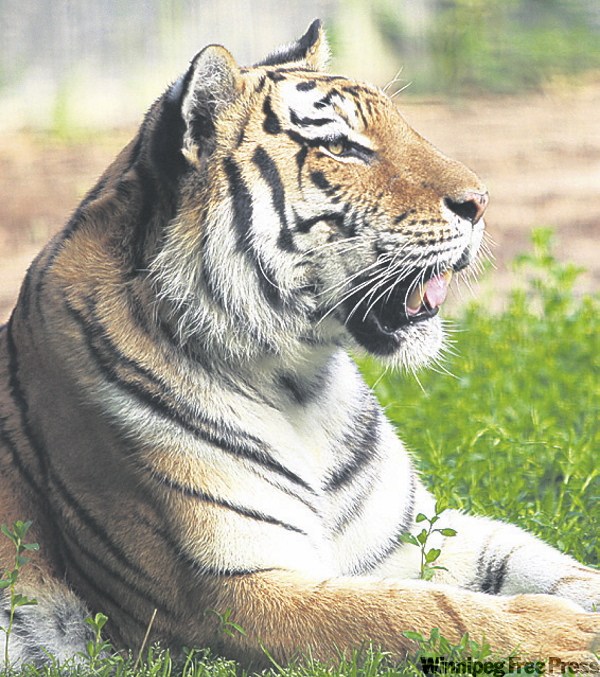
The Asian exhibit area will also include an exhibit for red pandas — which the Assiniboine Park Zoo has bred very successfully — and probably feature a new enclosure for brown bears, as what we call grizzlies in North America are also found in eastern Russia. As well, the enclosure for Amur tigers — the massive carnivores formerly known as Siberian tigers — will probably be enlarged to give the huge cats more room to move around.
The zoo is already in the midst of renovating the former giant panda exhibit into an enclosure for endangered Asian lions, which the zoo hopes to breed. The $1-million project, funded in part by the Zoological Society of Manitoba, is the last major improvement being conducted under the existing zoo management and is intended to serve as a developmental bridge to the Assiniboine Park Conservancy, Glover said.
The exhibit, which will include an indoor viewing area with washrooms, may house African lions until the Asian cats are available, he added.
Prairie exhibit area
Bison, pronghorns, prairie dogs and other animals that inhabit the Canadian Prairies and U.S. Great Plains will be grouped together in a new exhibit designed to highlight North America’s grasslands, arguably the most endangered ecosystem on the continent.
This exhibit area will roughly encompass the south-central portion of the existing zoo. A larger prairie dog enclosure is almost a certainty. And the bison enclosure also offers an obvious corporate-sponsorship opportunity in the form of MTS, though park officials are nowhere near ready to get into such specifics.
Boreal forest exhibit area
Black bears, wolverines, cougars, red foxes and other North American forest creatures will occupy the southeast quadrant of the zoo, possibly along with a few more indigenous species the zoo does not have right now.
Glover said he’d love to see the zoo develop an enclosure for moose, as the big ungulates require a lot of space — and room is something the Assiniboine Park Zoo has in spades. Wolves are also on the wish list, but the wild canines not only need space, but an enclosure with enough vertical height to allow the pack animals to feel dominant.
Arctic exhibit area
One of the most anticipated aspects of the revitalized zoo is the Arctic exhibit area, which will include a new facility called the International Polar Bear Conservation Centre.
Right now, the Assiniboine Park Zoo can’t house polar bears because its existing bear enclosures don’t meet Manitoba Conservation standards for the species — and officials at this zoo are some of the people responsible for drawing up those regulations.
The new conservation centre will include a new polar bear enclosure that will have an underwater viewing area. It will also be attached to an education centre that will be connected to Wapusk National Park near Churchill, either literally through the use of closed-circuit cameras, or simply through interactive displays that will highlight the ecology and culture of Canada’s North.
The conservation centre will also renovate the existing zoo bear enclosures into a rescue centre to house orphan polar bear cubs from around the world. Orphan polar bears — which would die of starvation or cannibalistic predation in the wild — will not be on display to the public, Glover said. Rather, the cubs will be acclimatized to life in captivity before being sent to other zoos.
No adult polar bears will be kept in the rescue centre, said Bob Williams of Polar Bears International, which will help plan and raise funds for the entire conservation centre.
"It will be wonderful if we never have to use (the rescue centre), but we have to be ready," Williams said.
The Arctic exhibit area would also feature creatures such as caribou, Arctic foxes, snowy owls and possibly some northern birds the zoo does not have right now, such as ptarmigan.
Other exhibits
Obviously, some existing zoo animals will not make sense as part of an Asian, Arctic or North American exhibit area. Hence the need for the zoo to create a few individual exhibits for countries or geographic areas.
An Australian exhibit featuring wallabies, kangaroos and other marsupials is a likely candidate for an individual country area that will likely rise in the southwest corner of the zoo.
The zoo’s northeast corner, meanwhile, will be home to paddocks for horses that will provide "green transportation" throughout Assiniboine Park, Glover said.
The plan is to use interpretive information to connect the horse exhibit to wild horses in the Asian exhibit area, thereby creating a bridge between wild and domesticated animals, he added.
What happens next?
The makeover will create a logistical nightmare for the zoo, which will be forced to figure out what animals it wants to keep, what animals to ship to other zoos and how to move animals around during the reconstruction.

Some creatures can be placed in temporary quarters, while others will need to be housed in other zoos.
Glover, however, is looking forward to the impending headache.
"It’s tremendously exciting. I’ve been here for 25 years and we’ve been talking about this for 15 years," he said. "We’re in this position because we didn’t maintain the zoo properly before. We can’t wait to get started."
bartley.kives@freepress.mb.ca