

City spinning wheels on trash
Implementation of curbside organic-waste collection delayed
Advertisement
Read this article for free:
or
Already have an account? Log in here »
To continue reading, please subscribe:
Monthly Digital Subscription
$1 per week for 24 weeks*
- Enjoy unlimited reading on winnipegfreepress.com
- Read the E-Edition, our digital replica newspaper
- Access News Break, our award-winning app
- Play interactive puzzles
*Billed as $4.00 plus GST every four weeks. After 24 weeks, price increases to the regular rate of $19.95 plus GST every four weeks. Offer available to new and qualified returning subscribers only. Cancel any time.
Monthly Digital Subscription
$4.99/week*
- Enjoy unlimited reading on winnipegfreepress.com
- Read the E-Edition, our digital replica newspaper
- Access News Break, our award-winning app
- Play interactive puzzles
*Billed as $19.95 plus GST every four weeks. Cancel any time.
To continue reading, please subscribe:
Add Free Press access to your Brandon Sun subscription for only an additional
$1 for the first 4 weeks*
*Your next subscription payment will increase by $1.00 and you will be charged $16.99 plus GST for four weeks. After four weeks, your payment will increase to $23.99 plus GST every four weeks.
Read unlimited articles for free today:
or
Already have an account? Log in here »
Hey there, time traveller!
This article was published 26/08/2015 (3875 days ago), so information in it may no longer be current.
Curbside organic-waste collection in Winnipeg won’t happen for another three to five years, as the city has put off a neighbourhood pilot project and is now seeking public opinion and expert advice before it launches a city-wide program.
In 2011, council approved a waste-minimization strategy aimed at cutting the proportion of trash sent to city landfills in half by 2020. At the time, Winnipeg was the most wasteful city in Canada.
The resulting plan, which included replacing trash cans and blue boxes with rolling garbage and recycling bins, has been implemented with some success. For example, the city is on track this year to meet an interim target of diverting 30 per cent of the city’s residential waste away from the Brady Road Landfill.
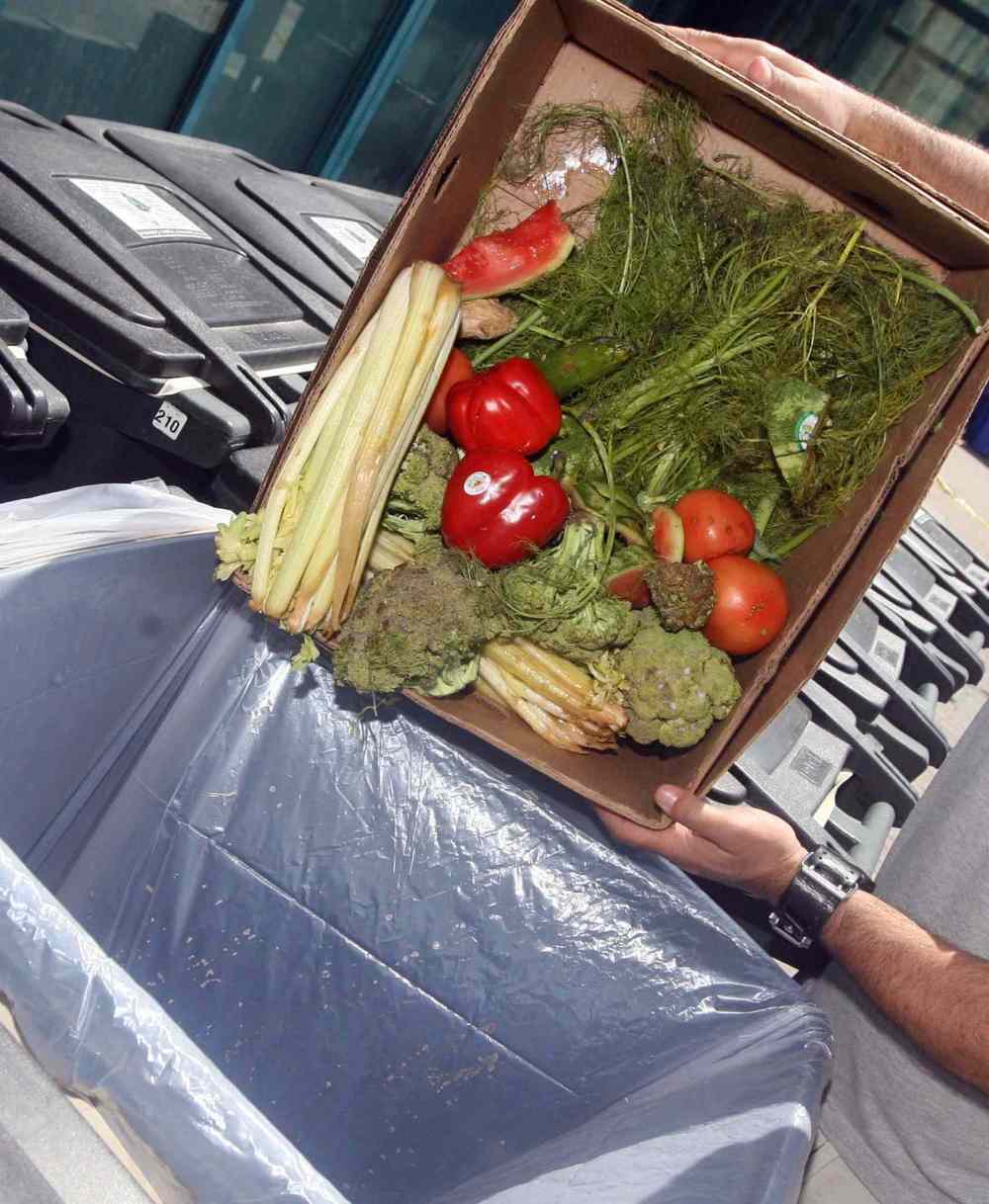
But the organic-waste component of the plan has fallen behind schedule. A curbside-collection pilot project was supposed to be conducted in 2014 as a prelude to the city-wide collection of organic waste by 2017.
Now, the pilot project has been delayed until late 2016 at the earliest, according to a request for proposals issued by the city, while a city-wide-collection program won’t happen until 2018 at the earliest.
Acting solid-waste manager Randy Park confirmed the pilot project was put off to allow solid-waste engineers more time find out what forms of residential organic waste — which includes kitchen scraps, dirty diapers, kitty litter and yard waste — Winnipeggers are willing to separate from the rest of their trash and wish to see collected at the curb.
He also confirmed 2017 is no longer the target year for city-wide organic-waste collection.
“We took a step back and said no, we’re going to delay the implementation of any sort of pilot program,” Park said Tuesday in an interview.
The city has scheduled a Sept. 9 symposium to help gauge public opinion about organic-waste-collection options.
“We know it’s important to the public. We don’t want to be the worst diverters in the country,” Park said. “We really just need to get initial thoughts about what people want to see.”
Right now, household organic waste makes up approximately 40 per cent of the overall waste stream, with kitchen waste making up the bulk of the organic waste. The more forms of organic waste collected at the curb, the higher the cost of collection, said Park, suggesting the city must strike a balance between respecting public wishes and keeping a lid on costs.
“There will be costs. The question is how do we match those costs with the program people want to see,” he said.
In 2011, city waste-management engineers estimated it would cost $45 million to $65 million to start up a city-wide organic-waste-collection program, depending on the technology the city employs. They also estimated it would cost $5.9 million a year to collect organic waste.
‘We know it’s important to the public. We don’t want to be the worst diverters in the country’ — acting solid-waste manager Randy Park
Park said those figures were accurate for 2011. He said several organic-waste-collection options — along with projected costs — should be presented to city council in mid-2016.
Other Canadian cities, including Ottawa, Toronto and Vancouver, already collect organic household waste.

“We are behind other cities in Canada, so we have a good opportunity to do it right,” said Tracy Hucul, executive director of the non-governmental Green Action Centre, which intends to send representatives to the Sept. 9 symposium.
She said the popularity of yard-waste collection suggests Winnipeggers are willing to separate more organic waste from their trash, adding she does not believe the so-called “yuck factor” presents a significant obstacle.
“I think it’s really temporary. We already take it and out it into the garbage,” she said. “There’s really no difference if we just put it in a different place.”
Public education will be an important component of a successful organic-waste-collection program, added South Winnipeg-St. Norbert Coun. Janice Lukes, who is responsible for garbage collection in her role as the chairwoman of council’s public works committee.
bartley.kives@freepress.mb.ca
Time for some trash talk
COULD curbside organic-waste pickup come to Winnipeg?
The city is still considering how to keep household organic-waste materials such as vegetable peels, coffee grounds, dirty diapers and kitty litter away from landfills, where its decomposition creates greenhouse gases.
Winnipeggers are invited to attend a symposium Sept. 9 to offer opinions about what forms of organic waste the city should collect — and maybe how much they’d be willing to pay for it.
The event is slated for the West End Cultural Centre (586 Ellice Ave.) from 5:30 p.m. to 7:30 p.m. You may register in advance at http://wfp.to/x2t or by calling 311. The symposium also will be live-streamed.
Related Articles
City's organic trash talk taking too long
Advertisement Advertise With Us
Advertisement Advertise With Us
History
Updated on Wednesday, August 26, 2015 7:28 AM CDT: Replaces photo