

Feds eye gaps in native firefighting
Fires on reserves claim 11 children in last five years
Advertisement
Read this article for free:
or
Already have an account? Log in here »
To continue reading, please subscribe:
Monthly Digital Subscription
$0 for the first 4 weeks*
- Enjoy unlimited reading on winnipegfreepress.com
- Read the E-Edition, our digital replica newspaper
- Access News Break, our award-winning app
- Play interactive puzzles
*No charge for 4 weeks then price increases to the regular rate of $19.00 plus GST every four weeks. Offer available to new and qualified returning subscribers only. Cancel any time.
Monthly Digital Subscription
$4.75/week*
- Enjoy unlimited reading on winnipegfreepress.com
- Read the E-Edition, our digital replica newspaper
- Access News Break, our award-winning app
- Play interactive puzzles
*Billed as $19 plus GST every four weeks. Cancel any time.
To continue reading, please subscribe:
Add Free Press access to your Brandon Sun subscription for only an additional
$1 for the first 4 weeks*
*Your next subscription payment will increase by $1.00 and you will be charged $16.99 plus GST for four weeks. After four weeks, your payment will increase to $23.99 plus GST every four weeks.
Read unlimited articles for free today:
or
Already have an account? Log in here »
Hey there, time traveller!
This article was published 18/01/2011 (5447 days ago), so information in it may no longer be current.
OTTAWA — The federal government is in the middle of surveying all the gaps in firefighting on Manitoba reserves.
The review arose last May after two-year-old Curtis Laporte died in a fire on Long Plain First Nation. On Sunday, a two-month-old girl in St. Theresa Point became at least the 11th child to die in a house fire on a Manitoba reserve in the last five years.
“One is too many,” said Grand Chief Ron Evans of the Assembly of Manitoba Chiefs. “Eleven is…” He paused, unable to come up with a word to describe the mounting tragedy.
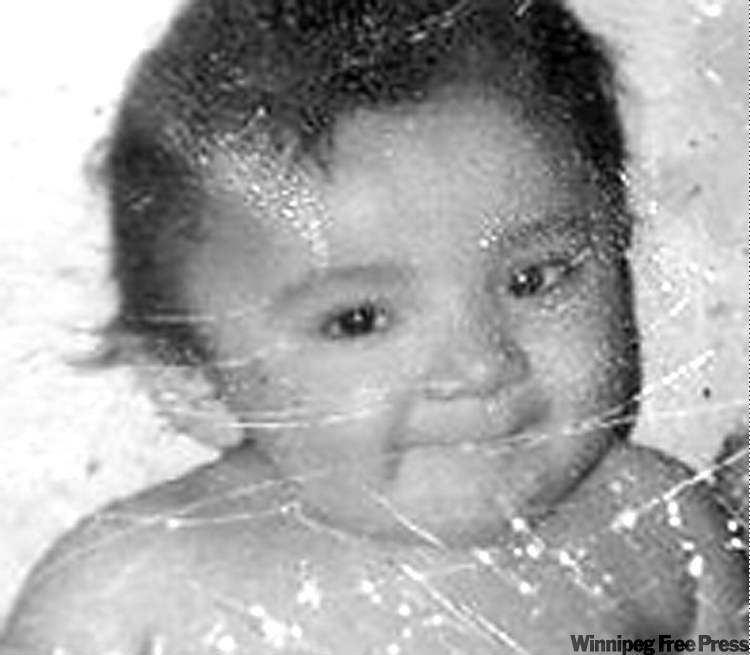
In addition to the fire fatalities involving children, at least 18 adults have also died in house fires on Manitoba reserves since 2005, according to statistics provided by the Office of the Manitoba Fire Commissioner.
A spokesman for the Manitoba regional offices of the department of Indian and Northern Affairs confirmed the firefighting review is underway but could not say when it will be completed.
Following each death, a flurry of finger-pointing erupts over the run-down and overcrowded housing conditions that often are blamed in the deaths.
“These houses are like tinderboxes,” said Manitoba NDP MP Niki Ashton. St. Theresa Point is in her Churchill riding.
Ashton said every time she visits a reserve, the issue of firefighting inevitably comes up as community members fear they are not equipped to deal with fires.
It is not uncommon for fire trucks to run out of water in the middle of a blaze or houses to be destroyed entirely before a crew can even get there.
According to the office of the Manitoba Fire Commissioner, about four per cent of all fires in the province in 2009 took place on reserves. That adds up to about 218 fires.
Evans said the housing issue on reserves is mainly to blame for the deaths. It’s estimated northern Manitoba reserves alone need more than 8,000 homes to address chronic overcrowding. Thousands of existing homes are considered to be in such poor shape in many communities they should be condemned. Statistics Canada reported in 2006 there were 490 homes in St. Theresa Point, 275 of which were in need of major repairs.
Evans and Ashton both said there has to be an emphasis placed on the type of homes built that takes into account the isolation and lack of modern firefighting capacity.
St. Theresa Point doesn’t have running water for people let alone fire hydrants, Ashton noted.

When nine-year-old Hope Richards died in a house fire in Sandy Bay First Nation in February 2009, she was living in a home with 13 other people.
In December 2009, Hope’s foster family was given the gift of a new home from RJ Ecosafe Homes that was built to be as fireproof as possible. Made with recycled steel and fire-resistant materials, the home was said to cost about 10 per cent more than traditional construction. But that price included the potentially life-saving feature that if a fire erupted inside, it would not engulf the structure.
Indian and Northern Affairs Canada is providing $3.27 million to Manitoba reserves for firefighting operations and maintenance in 2010-11. About $1 million of that goes to the Manitoba Association of Native Fire Fighters and tribal councils to provide training, education and technical assistance to First Nations fire crews.
Fifty-seven reserves in Manitoba have their own firefighting capabilities. Five reserves call on the fire services of nearby municipalities.
mia.rabson@freepress.mb.ca