

International award for human rights lawyer Matas

Advertisement
Read this article for free:
or
Already have an account? Log in here »
To continue reading, please subscribe:

Digital Subscription
One year of digital access for only $205*
- Enjoy unlimited reading on winnipegfreepress.com
- Read the E-Edition, our digital replica newspaper
- Access News Break, our award-winning app
- Play interactive puzzles
*First annual payment billed as $205.00 + GST for one year. This annual subscription will automatically renew at $233.00 + GST every 52 weeks (10% off the regular annual price of $259.35). Offer available to new and qualified returning subscribers only. Cancel any time.
To continue reading, please subscribe:
Add Free Press access to your Brandon Sun subscription for only an additional
$1 for the first 4 weeks*
- Enjoy unlimited reading on winnipegfreepress.com
- Read the E-Edition, our digital replica newspaper
- Access News Break, our award-winning app
- Play interactive puzzles
*Your next Brandon Sun subscription payment will increase by $1.00 and you will be charged $17.95 plus GST for four weeks. After four weeks, your payment will increase to $24.95 plus GST every four weeks.
Read unlimited articles for free today:
or
Already have an account? Log in here »
Hey there, time traveller!
This article was published 10/07/2014 (4426 days ago), so information in it may no longer be current.
What do Antonio Banderas, Kofi Annan, Franco Zeffirelli and Winnipeg human rights lawyer David Matas have in common?
They’re all recipients of the Carthage International Award.
Matas is in Rome today where he’s receiving his prize in the “universal peace and defence of human rights” category. Annan, the former secretary-general of the United Nations, won the same award in 2008. Actor Banderas and director Zeffirelli won for their work in arts, culture and entertainment.
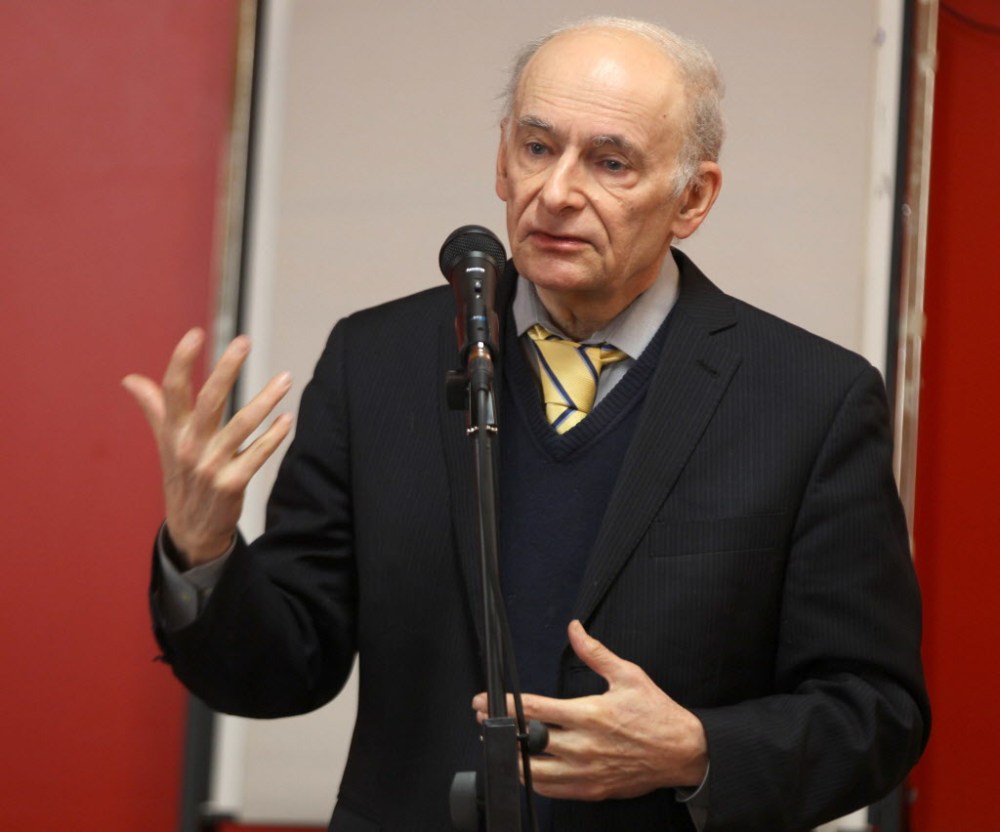
They’re recognized for contributing to “the development and dissemination of culture and knowledge in various fields, in the supreme interest of the elevation and promotion of the progress of peoples, the search for truth, freedom, justice and peace and, therefore, of universal brotherhood,” a translation from Accademia Premio Internazionale Cartagina’s information said.
The Carthage awards are meant to honour the tradition of ancient Carthage as a cultural bridge among the nations of the then-known world in the Mediterranean. The awards began in 2001 and aim to bring that tradition forward to modern times by recognizing those whose activities unite people.
Matas sees the Carthage award as thanks for what is often thankless work.
“Advocating human rights over a prolonged period of time is difficult for a variety of reasons. One reason is that perpetrators often seem impervious to change. I have to wonder sometimes if anyone is listening,” Matas said Wednesday.
The globe-trotting Matas, who began practising law in Manitoba in 1971, has lectured around the world on human rights issues. He’s hunted Nazi war criminals, researched the harvesting of organs of imprisoned Falun Gong members in China, appeared before the Supreme Court of Canada many times and still represents newcomers and refugees in Winnipeg courtrooms.

Matas, who received the Order of Canada in 2009, was nominated for a Nobel Peace Prize in 2010 and has won many awards — most recently, the University of Manitoba’s 2014 Distinguished Alumni Award. In an email from Rome Wednesday, Matas said the recognition is encouraging, especially when it’s international. “Winning this award in a place so far away from Winnipeg, from a jury functioning in a foreign language, is encouraging to me because it means that the concerns about the violations I have been addressing are being heard and taken seriously.”
carol.sanders@freepress.mb.ca
Carol Sanders
Legislature reporter
Carol Sanders is a reporter at the Free Press legislature bureau. The former general assignment reporter and copy editor joined the paper in 1997. Read more about Carol.
Every piece of reporting Carol produces is reviewed by an editing team before it is posted online or published in print — part of the Free Press‘s tradition, since 1872, of producing reliable independent journalism. Read more about Free Press’s history and mandate, and learn how our newsroom operates.
Our newsroom depends on a growing audience of readers to power our journalism. If you are not a paid reader, please consider becoming a subscriber.
Our newsroom depends on its audience of readers to power our journalism. Thank you for your support.
Carol Sanders
Legislature reporter
Carol Sanders is a reporter at the Free Press legislature bureau. The former general assignment reporter and copy editor joined the paper in 1997. Read more about Carol.
Every piece of reporting Carol produces is reviewed by an editing team before it is posted online or published in print — part of the Free Press‘s tradition, since 1872, of producing reliable independent journalism. Read more about Free Press’s history and mandate, and learn how our newsroom operates.
Our newsroom depends on a growing audience of readers to power our journalism. If you are not a paid reader, please consider becoming a subscriber.
Our newsroom depends on its audience of readers to power our journalism. Thank you for your support.
Advertisement Advertise With Us
Advertisement Advertise With Us