

Manitoba’s water bodies threatened, forum hears
'Situation is so dire it needs quick action,' Liberal leader says

Advertisement
Read this article for free:
or
Already have an account? Log in here »
To continue reading, please subscribe:

Digital Subscription
One year of digital access for only $205*
- Enjoy unlimited reading on winnipegfreepress.com
- Read the E-Edition, our digital replica newspaper
- Access News Break, our award-winning app
- Play interactive puzzles
*First annual payment billed as $205.00 + GST for one year. This annual subscription will automatically renew at $233.00 + GST every 52 weeks (10% off the regular annual price of $259.35). Offer available to new and qualified returning subscribers only. Cancel any time.
To continue reading, please subscribe:
Add Free Press access to your Brandon Sun subscription for only an additional
$1 for the first 4 weeks*
- Enjoy unlimited reading on winnipegfreepress.com
- Read the E-Edition, our digital replica newspaper
- Access News Break, our award-winning app
- Play interactive puzzles
*Your next Brandon Sun subscription payment will increase by $1.00 and you will be charged $17.95 plus GST for four weeks. After four weeks, your payment will increase to $24.95 plus GST every four weeks.
Read unlimited articles for free today:
or
Already have an account? Log in here »
Hey there, time traveller!
This article was published 11/02/2013 (4906 days ago), so information in it may no longer be current.
A gurgling baby gently shushed by his mom at a packed meeting may have plenty to cry about when he grows up, a panel of environmental experts warned a standing-room only crowd in Winnipeg on Sunday.
Growing water pollution woes in Manitoba and eroding federal protection of the environment could leave irreparable damage for future generations to face, the Save Lake Winnipeg forum heard at River Heights Community Centre.
“I feel sorry for the young people that are going to be around when that does happen,” said John Shearer, the former senior biologist and operations manager for the soon-to-be-closed Experimental Lakes Area.
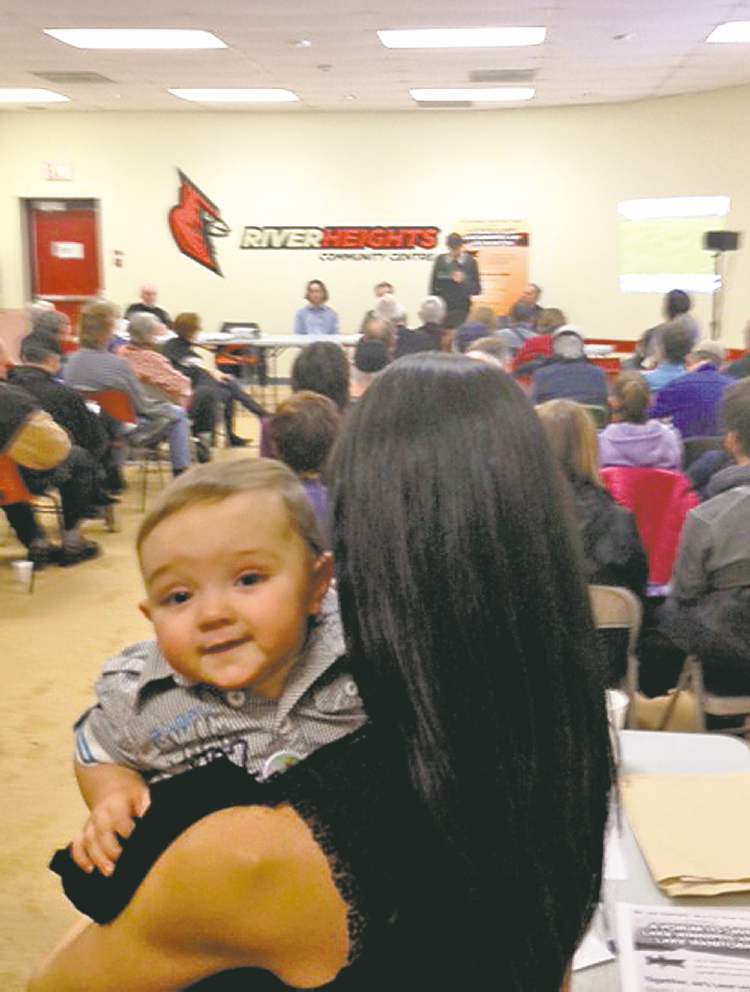
More than 100 people were at the event organized by provincial Liberal Leader Jon Gerrard, including Lake Winnipeg and Lake Manitoba cottagers and First Nations residents.
“This situation is so dire it needs quick action,” said Gerrard.
Nutrients polluting Manitoba’s big lakes from phosphate-laden drainage are resulting in algal blooms overtaking the bodies of water, said University of Manitoba research scientist Greg McCullough.
Phosphorus from Winnipeg and flooding and runoff from North Dakota and Minnesota are taking a toll, he said.
Wetlands that used to hang onto those nutrients are disappearing, said Pascal Badiou, a research scientist with Ducks Unlimited Canada.
“Wetlands are like bathtubs on the landscape to trap water,” he said.
In Manitoba, 90 per cent of the wetlands in the Red River Valley from Winnipeg to North Dakota have been lost, said Badiou.
Wetlands used to suck up the phosphorus now ending up in Lake Winnipeg, he said. Incentives to farmers to restore wetlands are a small part of an “ecosystem triage” needed to save the sick lake, he said.
“We’ve got to stop the bleeding.” Otherwise, the City of Winnipeg investing $1 billion to upgrade its sewage treatment plant to remove nitrogen and phosphorus won’t do much good, Badiou said.
“We’re just going to add back what the City of Winnipeg is removing.”
More wetlands will disappear if any new peat mines licensed by the province go into production, warned Eric Reder, the Manitoba director of the Wilderness Committee.
The committee is urging the province not to allow any new peat mining in the province.
It’s also pressing the federal government to protect Canada’s water and is making it an election issue, Reder said. The passage of omnibus bills C38 and 45 removed protections for Canada’s fisheries, lakes, rivers and streams, he said.

“Our federal government values our industrial development over our water,” said Reder.
Every day from now until the next scheduled federal election in October 2015, the Wilderness Committee is posting a different photo of an unprotected waterway on Facebook: www.facebook.com/1000Waterways.
“They’ve put our waterways in peril,” said Reder.
“It’s an assault on the most cherished resource we have in Canada.”
carol.sanders@freepress.mb.ca
Carol Sanders
Legislature reporter
Carol Sanders is a reporter at the Free Press legislature bureau. The former general assignment reporter and copy editor joined the paper in 1997. Read more about Carol.
Every piece of reporting Carol produces is reviewed by an editing team before it is posted online or published in print — part of the Free Press‘s tradition, since 1872, of producing reliable independent journalism. Read more about Free Press’s history and mandate, and learn how our newsroom operates.
Our newsroom depends on a growing audience of readers to power our journalism. If you are not a paid reader, please consider becoming a subscriber.
Our newsroom depends on its audience of readers to power our journalism. Thank you for your support.
Carol Sanders
Legislature reporter
Carol Sanders is a reporter at the Free Press legislature bureau. The former general assignment reporter and copy editor joined the paper in 1997. Read more about Carol.
Every piece of reporting Carol produces is reviewed by an editing team before it is posted online or published in print — part of the Free Press‘s tradition, since 1872, of producing reliable independent journalism. Read more about Free Press’s history and mandate, and learn how our newsroom operates.
Our newsroom depends on a growing audience of readers to power our journalism. If you are not a paid reader, please consider becoming a subscriber.
Our newsroom depends on its audience of readers to power our journalism. Thank you for your support.
Advertisement Advertise With Us
Advertisement Advertise With Us