

New system helps save turkey farmers from export disaster

Advertisement
Read this article for free:
or
Already have an account? Log in here »
To continue reading, please subscribe:

Digital Subscription
One year of digital access for only $205*
- Enjoy unlimited reading on winnipegfreepress.com
- Read the E-Edition, our digital replica newspaper
- Access News Break, our award-winning app
- Play interactive puzzles
*First annual payment billed as $205.00 + GST for one year. This annual subscription will automatically renew at $233.00 + GST every 52 weeks (10% off the regular annual price of $259.35). Offer available to new and qualified returning subscribers only. Cancel any time.
To continue reading, please subscribe:
Add Free Press access to your Brandon Sun subscription for only an additional
$1 for the first 4 weeks*
- Enjoy unlimited reading on winnipegfreepress.com
- Read the E-Edition, our digital replica newspaper
- Access News Break, our award-winning app
- Play interactive puzzles
*Your next Brandon Sun subscription payment will increase by $1.00 and you will be charged $17.95 plus GST for four weeks. After four weeks, your payment will increase to $24.95 plus GST every four weeks.
Read unlimited articles for free today:
or
Already have an account? Log in here »
Hey there, time traveller!
This article was published 24/12/2010 (5722 days ago), so information in it may no longer be current.
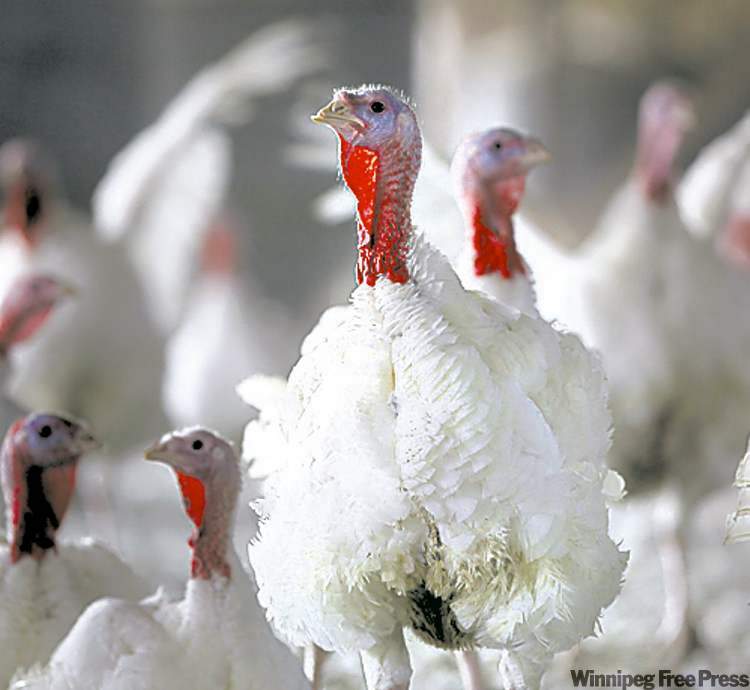
HOLIDAY turkey lovers in Manitoba can take comfort and joy in knowing it’s safe to eat, thanks to new software tracking the source of our poultry and meat.
A $400,000 livestock-tracking system the province installed in the fall was put to the test last month when a mild strain of avian flu hit a turkey farm in the R.M. of Rockwood.
The virus wouldn’t have harmed human health, experts said, but it could’ve paralyzed Manitoba’s poultry exports if it hadn’t been quickly spotted and isolated.
“Having this ‘premises identification system’ was one of the key factors to our being able to respond so quickly,” said Dr. Wayne Lees, Manitoba’s chief veterinarian.
“Anytime an outbreak has continued for any length of time, exports are cut off for longer periods of time and more people are under quarantine and there’s a greater disruption in the industry,” Lees said.
“The fact that you can respond quickly, means you’re able to understand if any other farms are at risk,” Lees said.
In mid-November, a Manitoba turkey farmer noticed some of his birds weren’t eating or laying eggs. He contacted a poultry veterinarian. Some of the birds were tested, with samples sent to the provincial veterinary lab. Within days, results showed it was an H5 influenza and the operation was quarantined.
Two poultry farms that had contact with the infected farm were put under a precautionary quarantine and monitored for signs of illness.

“It was through the premises ID database that the nearby farms who also could have been impacted were quickly identified and notified,” said Leslie Plant, spokeswoman for IBM Canada, which developed the software. “Because all turkey-producing premises in Manitoba were identified and entered into the system, it was much faster to locate which neighbouring operations might also be impacted,” said Plant.
The neighbouring farms were quarantined until an investigation gave them a clean bill of health last week, the Canadian Food Inspection Agency reported.
The infected farm and hatchery remain under quarantine, the CFIA said. All eggs and 8,200 birds were humanely destroyed using carbon dioxide, and disposed of in accordance with provincial environmental regulations, the agency said.
The farm is being cleaned and disinfected, with animal health experts overseeing the process. It remains under quarantine for 21 days following approval of the cleaning and disinfecting of the premises and its equipment.
carol.sanders@freepress.mb.ca
Carol Sanders
Legislature reporter
Carol Sanders is a reporter at the Free Press legislature bureau. The former general assignment reporter and copy editor joined the paper in 1997. Read more about Carol.
Every piece of reporting Carol produces is reviewed by an editing team before it is posted online or published in print — part of the Free Press‘s tradition, since 1872, of producing reliable independent journalism. Read more about Free Press’s history and mandate, and learn how our newsroom operates.
Our newsroom depends on a growing audience of readers to power our journalism. If you are not a paid reader, please consider becoming a subscriber.
Our newsroom depends on its audience of readers to power our journalism. Thank you for your support.
Carol Sanders
Legislature reporter
Carol Sanders is a reporter at the Free Press legislature bureau. The former general assignment reporter and copy editor joined the paper in 1997. Read more about Carol.
Every piece of reporting Carol produces is reviewed by an editing team before it is posted online or published in print — part of the Free Press‘s tradition, since 1872, of producing reliable independent journalism. Read more about Free Press’s history and mandate, and learn how our newsroom operates.
Our newsroom depends on a growing audience of readers to power our journalism. If you are not a paid reader, please consider becoming a subscriber.
Our newsroom depends on its audience of readers to power our journalism. Thank you for your support.
Advertisement Advertise With Us
Advertisement Advertise With Us