

Inked with purpose: lives saved
Tattoos honour kids who turned away from suicide

Advertisement
Read this article for free:
or
Already have an account? Log in here »
To continue reading, please subscribe:
Monthly Digital Subscription
$1 per week for 24 weeks*
- Enjoy unlimited reading on winnipegfreepress.com
- Read the E-Edition, our digital replica newspaper
- Access News Break, our award-winning app
- Play interactive puzzles
*Billed as $4.00 plus GST every four weeks. After 24 weeks, price increases to the regular rate of $19.95 plus GST every four weeks. Offer available to new and qualified returning subscribers only. Cancel any time.
Monthly Digital Subscription
$4.99/week*
- Enjoy unlimited reading on winnipegfreepress.com
- Read the E-Edition, our digital replica newspaper
- Access News Break, our award-winning app
- Play interactive puzzles
*Billed as $19.95 plus GST every four weeks. Cancel any time.
To continue reading, please subscribe:
Add Free Press access to your Brandon Sun subscription for only an additional
$1 for the first 4 weeks*
*Your next subscription payment will increase by $1.00 and you will be charged $16.99 plus GST for four weeks. After four weeks, your payment will increase to $23.99 plus GST every four weeks.
Read unlimited articles for free today:
or
Already have an account? Log in here »
Hey there, time traveller!
This article was published 09/06/2016 (3602 days ago), so information in it may no longer be current.
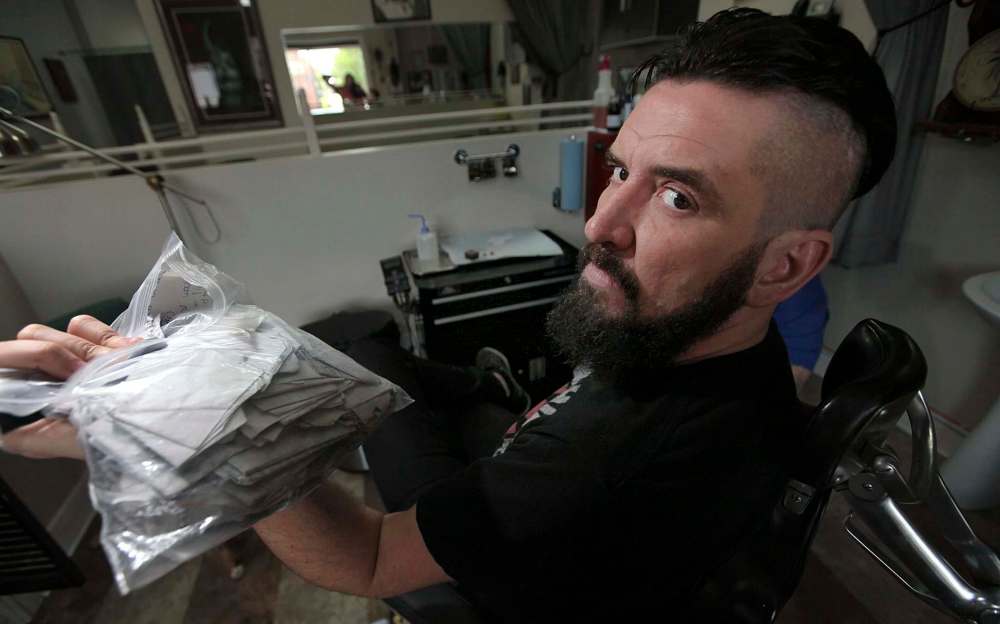
Robb Nash is seated in a chair at the Parlor Tattoos on Main Street, getting a tattoo. The needle zips around his forearm, spelling out names: Paige. Riley. Bree. Taylor. Signatures in telltale teenage penmanship, inked in black and red.
When Nash leaves the studio, his forearm will bear the names of the first 117 kids who handed over their suicide notes to him during the first year of the Robb Nash Project, their signatures lifted from the notes themselves. It’s a permanent reminder of the work he does and why he does it.
Over the past seven years, the Robb Nash Project has performed for thousands of young people at hundreds of schools across the country. He goes where he’s needed, putting on free-of-charge rock shows that spread messages of hope, encouragement and empowerment to middle school and high school students who are suffering — often in silence. His band has performed in many communities in crisis, such as the Pimicikamak Cree Nation in northern Manitoba, which made headlines earlier this year after six young people died by suicide in the span of three months. More than 100 are on suicide watch.
Like the new ink on his arm, Nash has made an indelible impression on many kids. Now, more than 500 students have handed him suicide notes — and that number doesn’t include the kids who have reached out to him via social media. He’s kept many of the notes, but stresses that all suicide letters he receives are dealt with by the appropriate professionals. Nash and his band are not counsellors; they are there, as he puts it, to open a dialogue about suicide and self-harm. He works closely with schools so students can get the follow-up help they need.
Many of his fans have his name or his inspirational lyrics tattooed on their arms. Taylor Bowman, a young woman I first met at one of Nash’s shows last spring, has both. His name is inked on her arm; now hers is inked on his.
“I want to show them that they’re a big part of my life as well,” Nash tells me. “I’m glad I got the second chance when I came back from the dead after a car accident, and this is what I’m trying to do with that second chance.”
At 17, Nash was in a head-on collision with a semi on the highway outside of his hometown of Kleefeld and was pronounced dead on the scene. Incredibly, he survived — his skull is mostly made of metal — but, as he told me last year, he didn’t wake up wanting to change the world. He woke up wanting to burn it down. He was angry and bitter. He felt insignificant.
Through music, he discovered how he could be useful. His story could help others. He could have had a more conventional music career — and for a while, he did — but he wanted to make himself even more accessible and available to his fans. And so, he plays in schools at no cost to either the schools or the students. He gives out his music for free.

Reflecting on the permanence of the tattoo — which will be a one-off; he doesn’t plan to keep adding names — he says he further wants to show young people he’s sincere. “Kids can smell bullshit a mile away. We’re here because we care.”
Nash recalls the first time he received a suicide note. He was at a school that was dealing with the suicide of a student. The note revealed there was a pact with another student, but the principal didn’t know who.

“So we went to do the show right away, and it was a bizarre feeling knowing somebody in the audience was about to take their life and we didn’t know who it was. So we spoke directly. ‘We know someone in the audience is having these dark thoughts.’ And we spoke directly about suicide that day and, sure enough, a young girl came up after the show and she handed me her suicide note, planning to take her life that weekend. What a crazy feeling that was.”
There’s a consistent through-line in all the letters he’s received since: everyone feels alone.
“I want to show them my arm and say, ‘Look, you think you’re alone, but look at all these names on my arm. These are all kids that were in the same place as you. They did not want to be alive anymore. And they ripped up their notes, they found the strength, the kept walking, they got off the train tracks. They’re still here.’
‘I’m glad I got the second chance when I came back from the dead after a car accident, and this is what I’m trying to do with that second chance’– Robb Nash
“These people needed my story. Someone out there needs your story. That’s why you need to keep walking.”
jen.zoratti@freepress.mb.caTwitter: @JenZoratti
Jen Zoratti is a columnist and feature writer working in the Arts & Life department, as well as the author of the weekly newsletter NEXT. A National Newspaper Award finalist for arts and entertainment writing, Jen is a graduate of the Creative Communications program at RRC Polytech and was a music writer before joining the Free Press in 2013. Read more about Jen.
Every piece of reporting Jen produces is reviewed by an editing team before it is posted online or published in print – part of the Free Press‘s tradition, since 1872, of producing reliable independent journalism. Read more about Free Press’s history and mandate, and learn how our newsroom operates.
Our newsroom depends on a growing audience of readers to power our journalism. If you are not a paid reader, please consider becoming a subscriber.
Our newsroom depends on its audience of readers to power our journalism. Thank you for your support.
Jen Zoratti is a columnist and feature writer working in the Arts & Life department, as well as the author of the weekly newsletter NEXT. A National Newspaper Award finalist for arts and entertainment writing, Jen is a graduate of the Creative Communications program at RRC Polytech and was a music writer before joining the Free Press in 2013. Read more about Jen.
Every piece of reporting Jen produces is reviewed by an editing team before it is posted online or published in print – part of the Free Press‘s tradition, since 1872, of producing reliable independent journalism. Read more about Free Press’s history and mandate, and learn how our newsroom operates.
Our newsroom depends on a growing audience of readers to power our journalism. If you are not a paid reader, please consider becoming a subscriber.
Our newsroom depends on its audience of readers to power our journalism. Thank you for your support.
Advertisement Advertise With Us
Advertisement Advertise With Us
History
Updated on Thursday, June 9, 2016 11:37 PM CDT: Updates with writethru; adds photo
Updated on Friday, June 10, 2016 10:16 AM CDT: Adds new photo