

Provinces’ involvement crucial in MMIW inquiry: Bennett
Advertisement
Read this article for free:
or
Already have an account? Log in here »
To continue reading, please subscribe:

Digital Subscription
One year of digital access for only $205*
- Enjoy unlimited reading on winnipegfreepress.com
- Read the E-Edition, our digital replica newspaper
- Access News Break, our award-winning app
- Play interactive puzzles
*First annual payment billed as $205.00 + GST for one year. This annual subscription will automatically renew at $233.00 + GST every 52 weeks (10% off the regular annual price of $259.35). Offer available to new and qualified returning subscribers only. Cancel any time.
To continue reading, please subscribe:
Add Free Press access to your Brandon Sun subscription for only an additional
$1 for the first 4 weeks*
- Enjoy unlimited reading on winnipegfreepress.com
- Read the E-Edition, our digital replica newspaper
- Access News Break, our award-winning app
- Play interactive puzzles
*Your next Brandon Sun subscription payment will increase by $1.00 and you will be charged $17.95 plus GST for four weeks. After four weeks, your payment will increase to $24.95 plus GST every four weeks.
Read unlimited articles for free today:
or
Already have an account? Log in here »
Hey there, time traveller!
This article was published 26/02/2016 (3867 days ago), so information in it may no longer be current.
The second national roundtable on missing and murdered indigenous women wrapped up in Winnipeg on Friday with a seven-point plan that won the agreement of Ottawa, the provinces, territories and the country’s indigenous leaders.
“We committed today to make sure we are continuing to do things that will make a difference in the lives of indigenous women and girls and others who’ve been victimized by violence while the national inquiry takes shape,” Manitoba’s Premier Greg Selinger said.
He was the first of a group of federal and provincial and indigenous leaders to take the podium and pledge to work together to end violence against indigenous women in Canada.
Indigenous women make up 4.3 per cent of the Canadian population but account for 16 per cent of female homicides and 11.3 per cent of missing women.
The first roundtable last year in Ottawa was criticized by families who said their voices weren’t heard. The former Conservative federal government refused the provinces’ call for a national inquiry. That changed with the fall election of a Liberal government and its pledge to move ahead with a national inquiry.
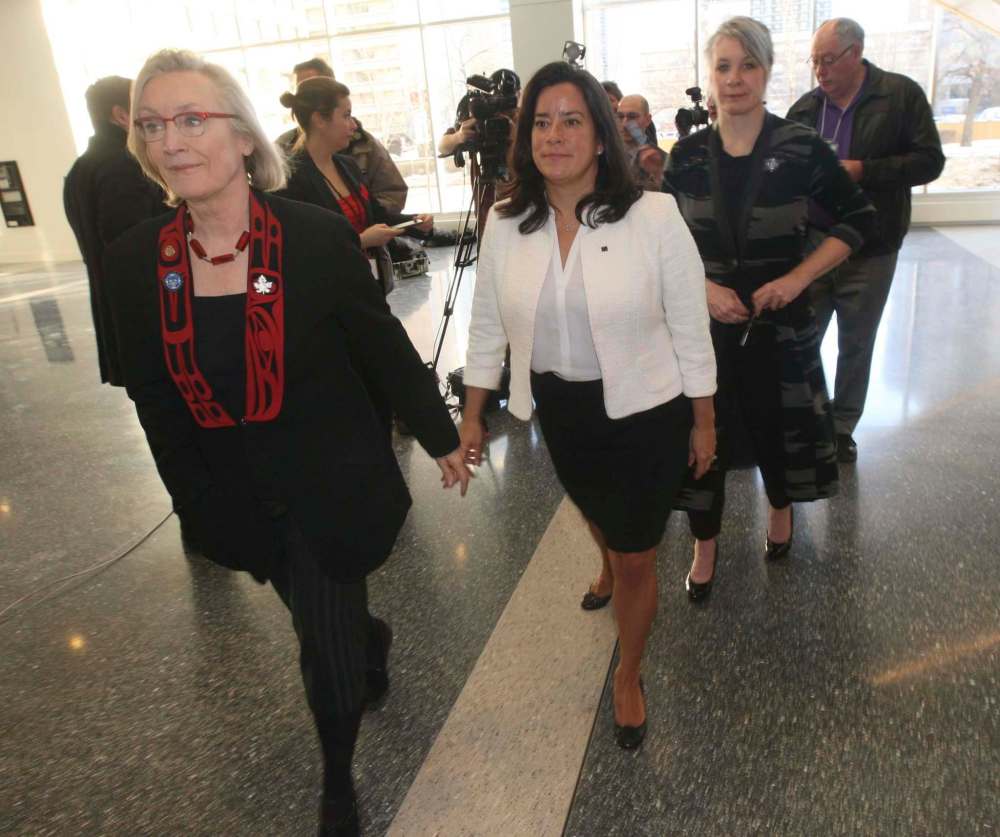
Federal Indigenous and Northern Affairs Minister Carolyn Bennett said, “Minister Patty Hajdu and Minister Wilson-Raybould and I have been on a journey since Dec. 8 when we announced there would be a national inquiry and on behalf of the three ministers I want to say this has been an important day, as the province’s and territories have agreed this will indeed be a national inquiry.”
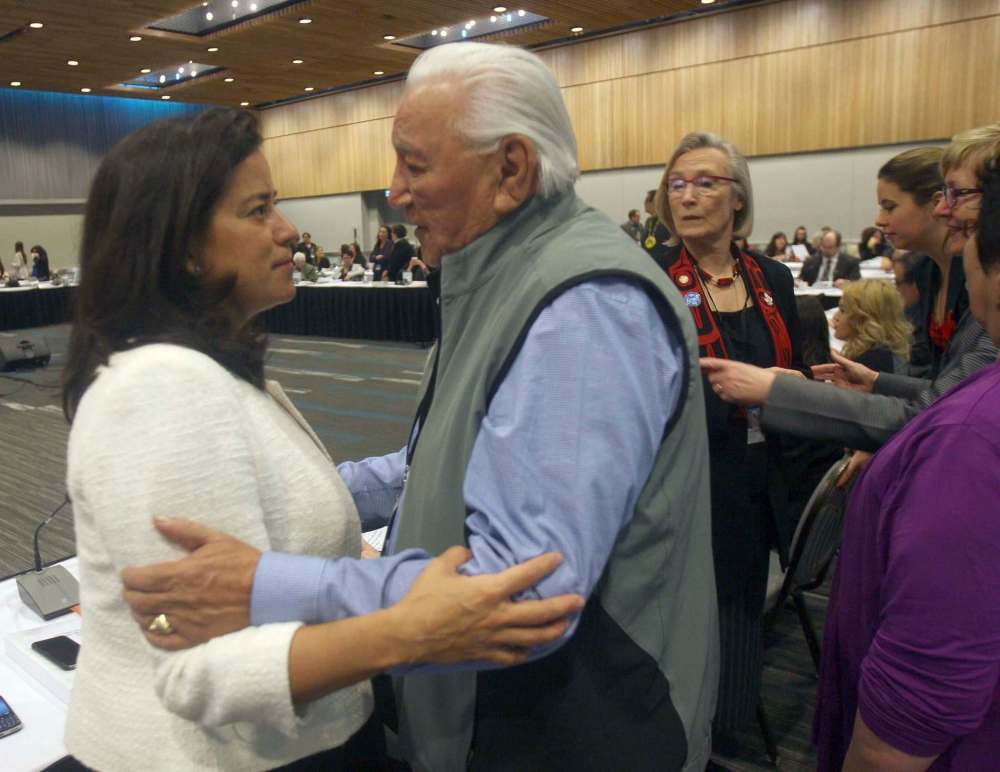
Hajdu is the federal minister for the status of women, while Wilson-Raybould is Canada’s justice minister. The three attended the final day of talks and Bennett took part in a vigil Thursday night for the third of three indigenous women slain in Winnipeg this year.
“Today is the day we get to deliver because we know that… the roots causes will be properly examined,” Bennett said.
Ontario Premier Kathleen Wynne said the take-home message is the provinces now have an action plan.
“The theme that resonated most with me is we have an opportunity as the national inquiry gets underway to take action. It’s a wonderful thing that the federal government has taken that on; we’ve been asking for that. But we don’t have to wait for it,” Wynne said. “We believe there is much all our jurisdictions can do to counter violence against indigenous women.”

Manitoba introduced legislation Thursday to implement the 94 recommendations of the Truth and Reconciliation Commission, with a pledge to shift social and economic foundations to emphasize indigenous needs if the NDP is returned to power after the April 19 provincial election.
Earlier this week, Ontario committed $100 million over the next three years to put support in place for indigenous families earlier this week.
Among the indigenous leaders who addressed the roundtable, it was Native Women’s Association president Dawn Lavell-Harvard who spoke the strongest about what the commitments mean to indigenous women and families.
“After a decade of denial and deflection, after last year’s roundtable where families went one way and the federal government another, we had a meeting where all the partners at the table made a commitment. It’s hard enough for everybody to set aside our political stripes, our jurisdictional issues and say this issues is too important to fail because of politics. We can not make empty promises and walk away because those families heard every word. They will be there next year to see the progress,” Lavell-Harvard said.
No commitment was made on when another roundtable would be convened.
History
Updated on Friday, February 26, 2016 9:54 AM CST: Changes photo
Updated on Friday, February 26, 2016 8:02 PM CST: Writethrough