

Manitoba non-profits, government, volunteers prep for influx of Syrian refugees

Advertisement
Read this article for free:
or
Already have an account? Log in here »
To continue reading, please subscribe:
Digital Subscription
One year of digital access for only $75*
- Enjoy unlimited reading on winnipegfreepress.com
- Read the E-Edition, our digital replica newspaper
- Access News Break, our award-winning app
- Play interactive puzzles
*Billed as $5.77 plus GST every four weeks. After 52 weeks, price increases to the regular rate of $19.95 plus GST every four weeks. Offer available to new and qualified returning subscribers only. Cancel any time.
Monthly Digital Subscription
$4.99/week*
- Enjoy unlimited reading on winnipegfreepress.com
- Read the E-Edition, our digital replica newspaper
- Access News Break, our award-winning app
- Play interactive puzzles
*Billed as $19.95 plus GST every four weeks. Cancel any time.
To continue reading, please subscribe:
Add Free Press access to your Brandon Sun subscription for only an additional
$1 for the first 4 weeks*
- Enjoy unlimited reading on winnipegfreepress.com
- Read the E-Edition, our digital replica newspaper
- Access News Break, our award-winning app
- Play interactive puzzles
*Your next Brandon Sun subscription payment will increase by $1.00 and you will be charged $17.95 plus GST for four weeks. After four weeks, your payment will increase to $24.95 plus GST every four weeks.
Read unlimited articles for free today:
or
Already have an account? Log in here »
Hey there, time traveller!
This article was published 14/11/2015 (3843 days ago), so information in it may no longer be current.
Manitoba settlement agencies are preparing for the arrival of as many as 2,000 Syrian refugees by the end of 2015 — almost four times the number of government-assisted refugees the province received in the last year.
As the non-profit organizations and government departments gearing up for the massive refugee rescue and resettlement operation, what happens once they arrive? How many obstacles, big and small, are there to overcome?
Refuge Winnipeg volunteers who privately sponsored three large Syrian families are finding out.
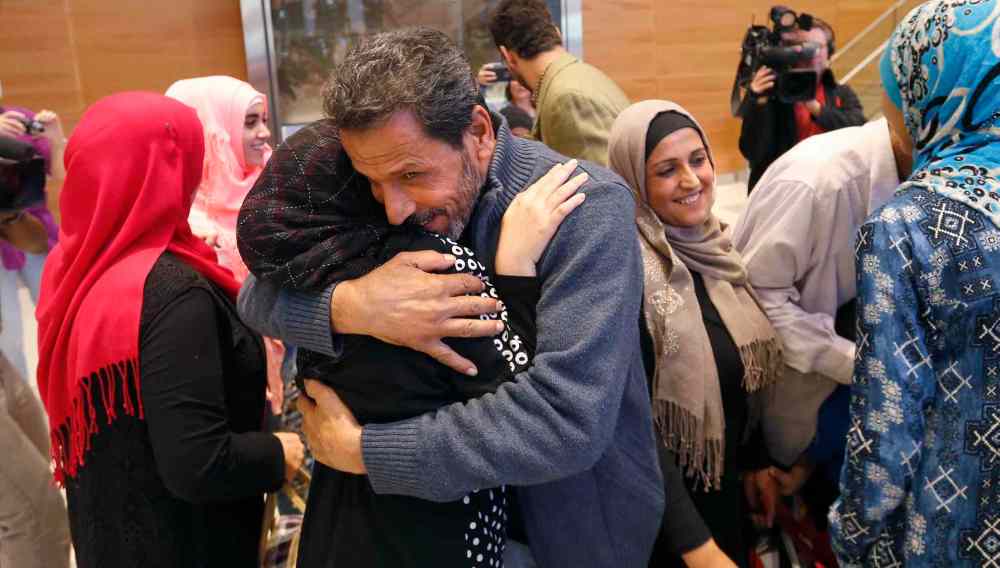
Three things are required, said Barbara Wynes: “co-ordination, compassion and patience.”
Wynes is one of 20 volunteers with Refuge Winnipeg, a coalition of faith and community groups helping to resettle 24 Syrians in Winnipeg.
The men, women and children arrived in the city five weeks ago from a refugee camp in Lebanon, where they were stuck after fleeing war-torn Syria. They’re reliant on private sponsors and a network of volunteers to provide them with the basics such as food, clothing, shelter and transportation, and to help them attend to all the things needed to integrate into Canadian society.
“There are so many things you have to do to get settled,” Wynes said.
On Thursday, she spent more than a half-day taking five members of a family of nine for appointments at a medical clinic. Then, she delivered winter coats to another family.
“There’s always more than one thing happening,” Wynes said.
Up until last week, the school-age children attended a program at the downtown Newcomers Employment and Education Development Services (NEEDS) Inc. centre to prepare them for school. NEEDS and Refuge Winnipeg volunteers drove them to the centre and picked them up every day.
The three families — with seven, eight and nine members — need booster and car seats for the youngest members when they get a ride somewhere. If an entire family goes, it requires two trips or two vehicles to transport them all.
“It’s the co-ordination that can be challenging,” said Wynes. She and her husband, a fellow volunteer and retired teacher, set aside time once a week to co-ordinate appointments and volunteers, plus drivers and interpreters for the families.
Now that the children are in school, the next step is getting the adults connected to Manitoba Start (language and employment services) and into the Entry program (Canadian rules, rights and responsibilities), she said.
Meeting the Syrians’ basic needs is the sponsors’ first priority, said Wynes. “We’re now in the boot and winter-jacket stage and that takes time, too.”
The newcomers have to learn how to do everyday things in a new way; even grocery shopping is a challenge when you don’t recognize packaged goods and labels aren’t written in Arabic. Volunteers have stepped forward to assist, including members of the Syrian Assembly of Manitoba, the Manitoba Islamic Association and a Winnipeg relative of the three families who can translate.
“They’ve been very generous with their time,” Wynes said.
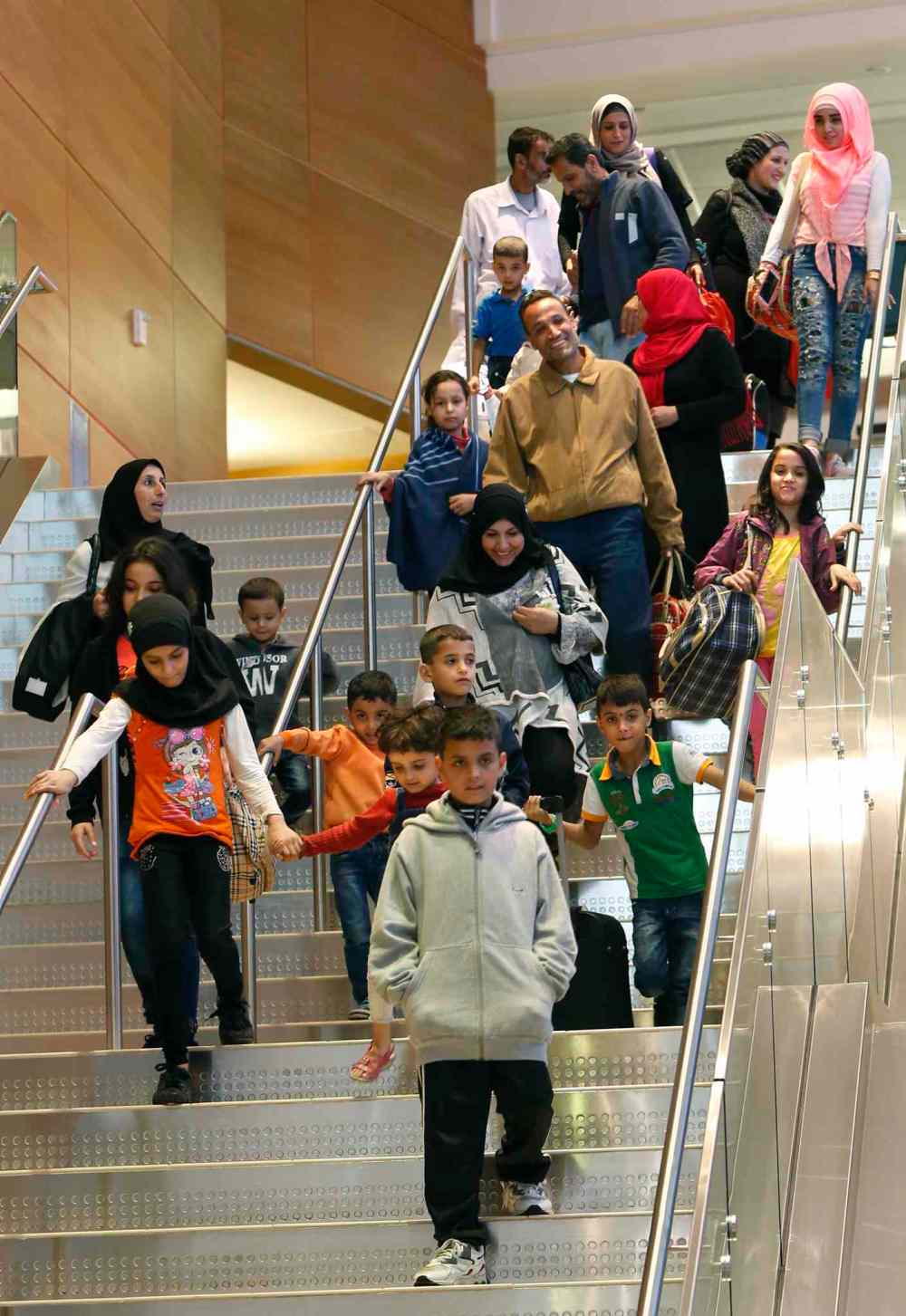
When no interpreter is available, Wynes relies on a smartphone app to translate English into Arabic — which requires a sense of humour, too.
“We laugh at our language differences,” she said.
(Wynes and one of the Syrian mothers were both trying to think of the word for school in each other’s language one day. Wynes blurted out “madrassa” and the mom blurted out “school,” she recalled. “I was speaking Arabic and she’s speaking English. We were bonding.”)
She feels for the newcomers, who’ve been forced from their homes by conflict and are now basically at the mercy of strangers.
“I often think it must be very difficult when you don’t have a lot of control over your life,” Wynes said, adding she marvels at how the families she’s getting to know are handling it.
“They’re exceedingly generous people, who are kind and appreciative — with great senses of humour.”
Take the number of Syrian newcomers Refuge Winnipeg is currently helping and multiple it by 83 — that’s how many refugees the Manitoba Interfaith Immigration Council (MIIC) is preparing for by the end of the year.
The MIIC runs Welcome Place, the largest government-assisted refugee resettlement agency in the province. It will be the refugees’ first point of contact in Winnipeg.
“As agencies, we’ve been asked to prepare for it,” said executive director Rita Chahal, who is co-ordinating efforts with other non-profit organizations.
Although the exact number of Syrian refugees coming to Manitoba will be decided by the federal government and hasn’t yet been announced, Premier Greg Selinger has said the province can take in 2,000 more by the end of the year — nearly four times the 519 government-assisted refugee arrivals Welcome Place helped in the 2014-15 fiscal year, according to the agency’s annual report.
The Immigrant and Refugee Community Organization of Manitoba (IRCOM) says the federal government won’t be seen as “reneging” on an election promise if it takes additional time to ensure supports are in place and resettlements go well.
“Many refugees have experienced personal violence, loss of loved ones and terrible experiences that can affect their mental well-being,” said IRCOM interim executive director Shereen Denetto.
Education and health systems will need added resources, she said.
“Classroom teachers might be overwhelmed if there are not adequate supports for refugee children and youth. Our health system may need more interpreters and additional resources to address immediate health needs of refugees,” Denetto said.
However, Chahal is confident Welcome Place can handle the influx.
“Every person here is willing and ready to meet the challenge and will do it well,” she said. “There are going to be challenges.”
Despite not knowing exactly how many people are coming or when they will arrive, Chahal said, plans are underway and working groups are forming to focus on things such as short- and long-term housing, mapping and logistics. Staff at the unionized workplace won’t be taking any vacation time between now and the end of the year.
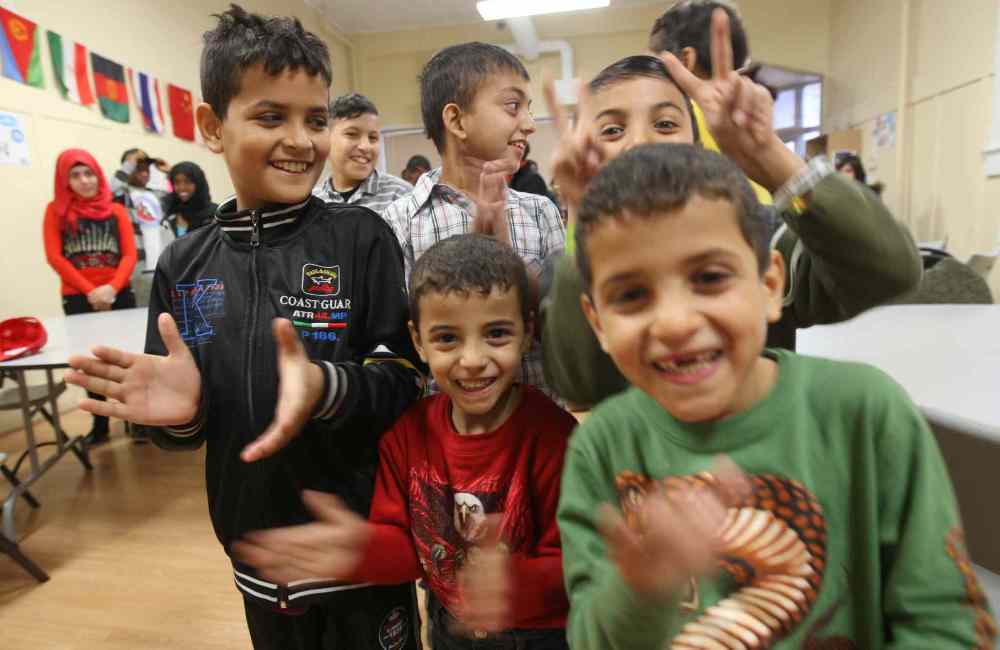
Welcome Place is prepared to hire more temporary staff and find more office space if needed, said Chahal, who expects more funding from the provincial and federal governments will be provided. Reassigning staff internally so Arabic speakers can be freed up to work as interpreters and hiring more settlement workers is a possibility. They’ll need more trainers to show the influx of Syrian newcomers the ropes of day-to-day living in a new culture and climate.
“We have a number of life-skills trainers that we can call in,” said Chahal. “We’re also meeting with the Syrian community here to have their input on what can make the process better.”
The regional Immigration, Refugees and Citizenship office will take the lead and help co-ordinate the plan, said Chahal. A coalition of dozens of organizations that belong to the Manitoba Immigrant and Refugee Settlement Sector Association — including IRCOM — will be involved in carrying it out.
In addition to Manitoba’s settlement services and expertise, the province has a motherlode of volunteers and good will to rely on.
“We have been quite amazed at the response we’re getting from the public,” said Chahal. “We’re getting calls from people willing to share their homes — they have spaces available for temporary, as well as long-term, residents.”
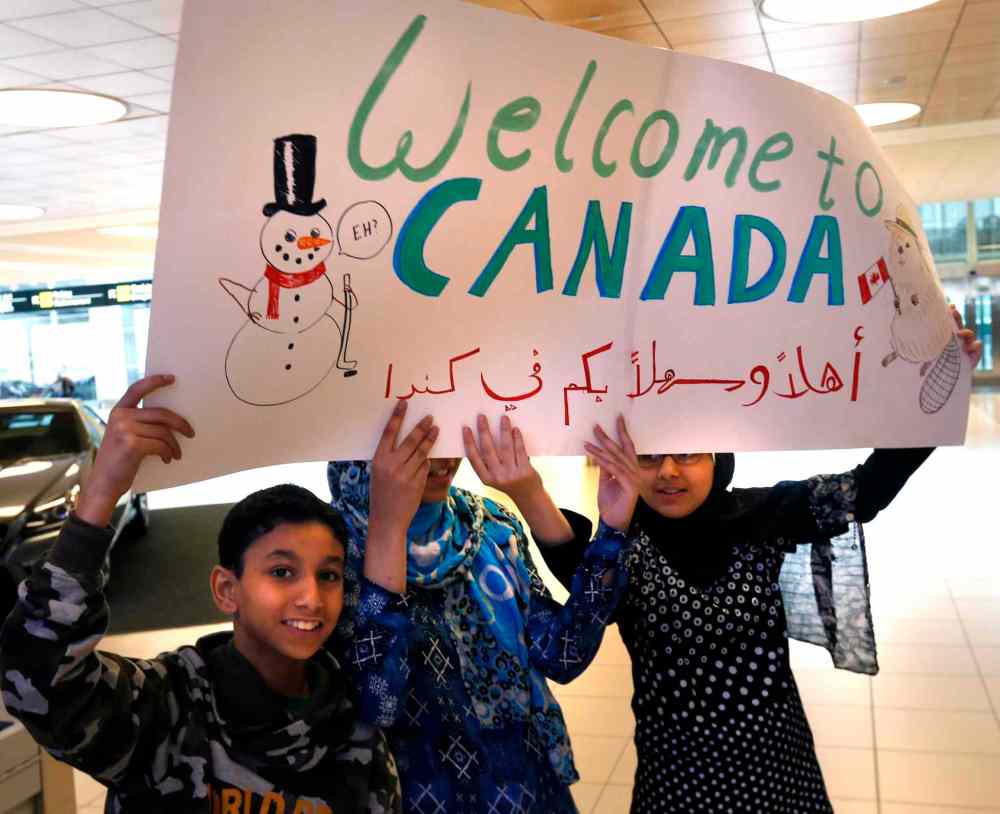
One of them is Kris Widla, a Winnipeg accountant who lives in Richmond West.
Coming to a strange, new land is something Widla can relate to. He was 14 when he arrived from Poland in 1985, the year a major snowfall practically shut down Winnipeg. “It was crazy — you could see just the roofs of the cars.”
With the onset of winter, Widla feels for the influx of Syrian newcomers.
“Most of them will probably be arriving just before New Year’s (Eve). It’s cold and it’s difficult,” said Widla, who wants them to receive a warm welcome. “I think it would be nice if people helped out.”
“Christmas is coming,” said the married father of three, adding he can’t think of a better way to celebrate than by opening their home to a family in need of a safe shelter.
Widla said his three children — ages 13, 11 and eight — will benefit, too. “I want my kids to be exposed to different cultures — that’s the best way to prevent racism.”
The city and the province will benefit, as well, he said.
“These people are not looking to cause trouble… They can’t live where they live,” said Widla. “As far as I’m concerned, they’re going to contribute to our economy and give back tenfold. That’s not why I’m (offering to my share home), but that’s the reality.”
carol.sanders@freepress.mb.ca
Carol Sanders
Legislature reporter
Carol Sanders is a reporter at the Free Press legislature bureau. The former general assignment reporter and copy editor joined the paper in 1997. Read more about Carol.
Every piece of reporting Carol produces is reviewed by an editing team before it is posted online or published in print — part of the Free Press‘s tradition, since 1872, of producing reliable independent journalism. Read more about Free Press’s history and mandate, and learn how our newsroom operates.
Our newsroom depends on a growing audience of readers to power our journalism. If you are not a paid reader, please consider becoming a subscriber.
Our newsroom depends on its audience of readers to power our journalism. Thank you for your support.
Carol Sanders
Legislature reporter
Carol Sanders is a reporter at the Free Press legislature bureau. The former general assignment reporter and copy editor joined the paper in 1997. Read more about Carol.
Every piece of reporting Carol produces is reviewed by an editing team before it is posted online or published in print — part of the Free Press‘s tradition, since 1872, of producing reliable independent journalism. Read more about Free Press’s history and mandate, and learn how our newsroom operates.
Our newsroom depends on a growing audience of readers to power our journalism. If you are not a paid reader, please consider becoming a subscriber.
Our newsroom depends on its audience of readers to power our journalism. Thank you for your support.
Advertisement Advertise With Us
Advertisement Advertise With Us
History
Updated on Monday, November 16, 2015 3:43 PM CST: Corrects age of child.