

Silent no more
Winnipeg man shares painful memories of the Holocaust
Advertisement
Read this article for free:
or
Already have an account? Log in here »
To continue reading, please subscribe:
Monthly Digital Subscription
$1 per week for 24 weeks*
- Enjoy unlimited reading on winnipegfreepress.com
- Read the E-Edition, our digital replica newspaper
- Access News Break, our award-winning app
- Play interactive puzzles
*Billed as $4.00 plus GST every four weeks. After 24 weeks, price increases to the regular rate of $19.95 plus GST every four weeks. Offer available to new and qualified returning subscribers only. Cancel any time.
Monthly Digital Subscription
$4.99/week*
- Enjoy unlimited reading on winnipegfreepress.com
- Read the E-Edition, our digital replica newspaper
- Access News Break, our award-winning app
- Play interactive puzzles
*Billed as $19.95 plus GST every four weeks. Cancel any time.
To continue reading, please subscribe:
Add Free Press access to your Brandon Sun subscription for only an additional
$1 for the first 4 weeks*
*Your next subscription payment will increase by $1.00 and you will be charged $16.99 plus GST for four weeks. After four weeks, your payment will increase to $23.99 plus GST every four weeks.
Read unlimited articles for free today:
or
Already have an account? Log in here »
Hey there, time traveller!
This article was published 18/07/2015 (3927 days ago), so information in it may no longer be current.
He appeared around the gentle bend of an Assiniboine Park pathway.
A white-haired man seated on a park bench.
Staring out at an expanse of park lawn and a distant line of trees. I was walking my dog and wondering what the old man was thinking; what he was remembering, the way old men sitting alone on benches do.

I began with “hello” and a question.
The old man said he was waiting for the sun to break through the clouds. He liked to get some sun. So I sat down to wait with him. My golden retriever sat down, too, right up against the immaculately attired old man’s tanned leg.
“A dog feels if a person is friendly,” he said, in a voice with an obvious accent.
And with that he began to share his life story. “I come from Europe.”
“Whereabouts?” I inquired.
“Well,” he said, “now it’s Ukraine. It’s the western Ukraine.”
“Were you born there?”
“Yeah, I’m 88, plus.”
He added this.
“I’m Jewish. And you know what happened in the Second World War.”
Of course. But I had never heard a story about the Holocaust like the one he was about to tell.
His name, I would learn nearly half an hour later, is Sam Kimelman. Before he retired, he was an aircraft electronics mechanic at Bristol Aerospace where his co-workers had given this gentle, quiet man a nickname.
Silent Sam.
That, in part at least, accounts for why he has rarely shared his story since arriving in Winnipeg in the winter of 1949 with his mother and two older sisters.
And his father?
Sam would get to that. But not easily.
Instead, he went back to his childhood in a village of 12,000 mostly Ukrainians and Poles on a bend of the Setert River. It was there his father, Mendel, was a land-owning farmer, with rye, wheat, corn, a hemp-oil press and a general store.
“And we survived,” Sam said, “because my father knew how to deal with people. We didn’t have any enemies.”
Not among the people with whom his father always dealt fairly.
But the war would come, and as it grew nearer, the family would be moved to a Jewish ghetto in the district town of Borchov where, instead of sending them to concentration camps, Jews were rounded up periodically, marched to the cemetery, and shot.
“So my father was killed on the sixth of June, 1943.”
He offered the general circumstances that led to his father’s execution. How the family, knowing another roundup was coming, sneaked out of the ghetto the day before and fled into the woods to hide.
It was after 10 the next morning when, thinking the shooting was over, he and his father returned to their garage-sized lodging to get some food.
But the shooting wasn’t over.
And when they heard it start again and stepped outside, there was an armed Ukrainian policeman waiting, blocking the escape of 16-year-old Sam and his 53-year-old father.
“I ran behind the house,” Sam recalled.
He ran, as he described it, the way animals run in a forest fire. Running for his life.
And his father?
“If we had stayed another hour in the woods,” Sam began, then paused. “He would have survived.”
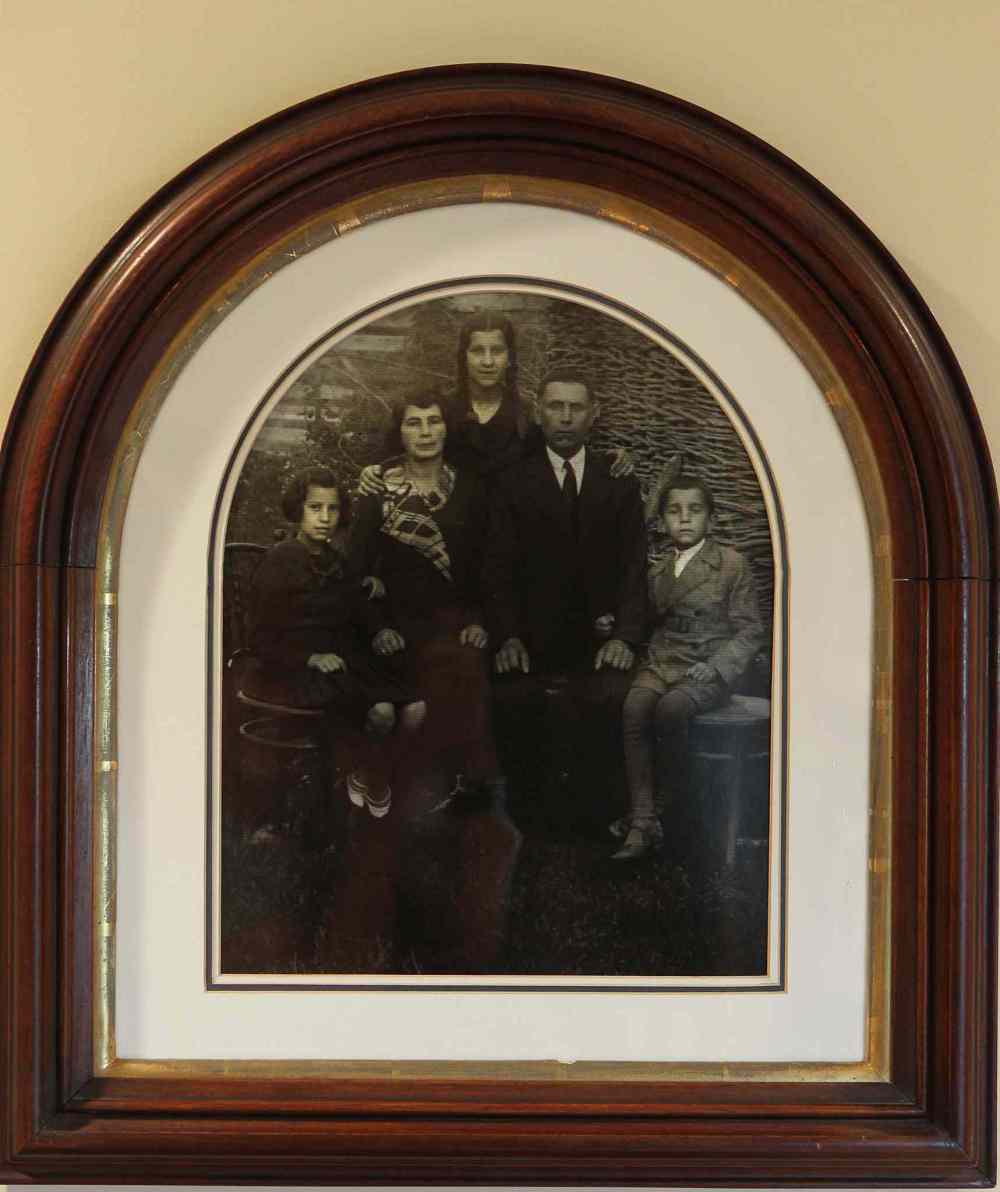
His reasoning being the roundup and shooting of 700 Jews — that had gone on all night and much of the previous afternoon according to one historic account — would have been over and they, like some of the others, would be spared.
Until the next roundup.
But Sam still hadn’t explained how his father had died.
I asked if his father ran, too.
“You see,” Sam said, “what happened is we went out from the house.”
Sam paused.
“You see,” he began again. “It’s your father. But when it comes to your life, you run.”
“Of course,” I said.
“And I ran, and I think he was. I didn’t hear him shot, but he was shot almost instantly.”
Just as Sam’s father’s father was shot dead outside his home in 1920.
Just because he was a Jew.
There was more trauma for young Sam — being tasked to pick skull and skin fragments from the cemetery where Jews who tried to escape were shot. And there was more to the story of how he and his mother and sister were reunited and found their way to Winnipeg.
But what I wondered now was how he survived all of that trauma and loss. And whether he thinks about that as he stares across the vastness of the park grass and into the trees.
I wasn’t expecting the answer he gave. He suggested he and his family, and the other Holocaust survivors arriving in post-war Winnipeg, weren’t embraced by the Jewish community. They didn’t want to hear their stories of survival. Instead, they were judged. The attitude, he said, was this: “They must have done something wrong. Otherwise they wouldn’t have survived.”
Two days later, we met again on the park bench.
When we had parted, I told Sam I might tell the story of his Holocaust survival that, unlike his wife Edith’s own story, he’s never shared publicly.
But I had another question: when he looks back, does he have any feelings of guilt about leaving his father behind?
“At the time I had guilt,” Sam said. “I had guilt for a long, long time; yeah.”
But you couldn’t have done anything, I reminded him.
“No,” he agreed.
And then I asked again about how he handles all the memories, all the horror.

He said he deals with it when it wakes him at four every morning.
“And I have this big ball of stories in my mind. Going through, going through all that. It never leaves. There’s nothing you can do about it. It’s part of your survival.”
Actually, there is something Sam Kimelman can do about it, and he just did. He finally told his story.
Sam is silent, no more.
History
Updated on Wednesday, December 23, 2015 4:23 PM CST: Tightens text.