

Spreading word on bowel disease with humour
Advertisement
Read this article for free:
or
Already have an account? Log in here »
To continue reading, please subscribe:

Digital Subscription
One year of digital access for only $205*
- Enjoy unlimited reading on winnipegfreepress.com
- Read the E-Edition, our digital replica newspaper
- Access News Break, our award-winning app
- Play interactive puzzles
*First annual payment billed as $205.00 + GST for one year. This annual subscription will automatically renew at $233.00 + GST every 52 weeks (10% off the regular annual price of $259.35). Offer available to new and qualified returning subscribers only. Cancel any time.
To continue reading, please subscribe:
Add Free Press access to your Brandon Sun subscription for only an additional
$1 for the first 4 weeks*
- Enjoy unlimited reading on winnipegfreepress.com
- Read the E-Edition, our digital replica newspaper
- Access News Break, our award-winning app
- Play interactive puzzles
*Your next Brandon Sun subscription payment will increase by $1.00 and you will be charged $17.95 plus GST for four weeks. After four weeks, your payment will increase to $24.95 plus GST every four weeks.
Read unlimited articles for free today:
or
Already have an account? Log in here »
Hey there, time traveller!
This article was published 07/09/2011 (5439 days ago), so information in it may no longer be current.
A disease that constipates thousands of Canadian children hides in obscurity because of our discomfort talking about excrement, a Winnipeg mother says.
Liz Crawford is trying to change that with her coy campaign, “S-Happens,” banking on humour to spread awareness.
“It’s the funny moments, because you’re in the trenches, you’re in hell, more or less, when you’re beside the hospital bed and you’re trying everything and all you want — and I’ve been there with my girlfriends and my family and we’ve been standing beside his bed for 24, 40 hours, waiting for him to poop, trying every two hours, and when he does, honest to God, you are so flipping happy when it happens.”
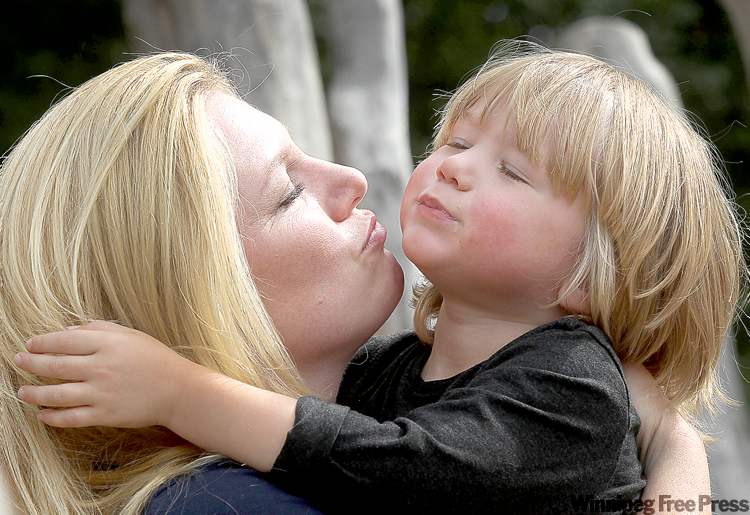
Hirschsprung’s disease affects nerve endings in the large intestine, preventing colon muscles from contracting and preventing the baby from passing stool. One in 5,000 is born with it.
A corrective surgery still leaves many parents having to give their kids periodic “irrigations” throughout childhood. An irrigation consists of sticking a catheter tube into the intestine to flush it out with a saline solution.
After a few years, kids with Hirschsprung’s are able to live pretty normally, says Winnipeg pediatric surgeon Dr. Nathan Wiseman, who’s operated on more than 100 babies with the disease over the years.
In the meantime, Crawford wants to make it so parents who get a Hirschsprung’s diagnosis in the future don’t have to say “what’s that?” — and so people who have the disease don’t fear ridicule from people who don’t understand it.

Crawford is trying to mount a photo campaign of celebrities wearing T-shirts that say “S-Happens.”
The other parts of Crawford’s mission are a blog telling two-year-old son Malachi’s story and a Facebook group that is a resource group for parents from around the globe.
One connected parent is Taiisha Bradley, a university professor in Tennessee, whose four-year old son with Hirschsprung’s still needs constant irrigations.
In her everyday conversations, it’s hard for Bradley to bring up: “You don’t say ‘Oh hey last night I gave my son an irrigation and I put my pinky finger in his rectum and he s-all over me and the wall, ha ha ha!’ ” Bradley says sarcastically. “It’s just not funny to anybody else and you don’t want to tell anybody that that’s what you’re doing to your newborn, because they’re not going to get it. And you know, when you find someone else who can laugh about it, it’s just like a relief because you feel like you’re the only person in the world going through this.”
william.burr@freepress.mb.ca