

Winnipeg murder rate slides again: StatsCan
Advertisement
Read this article for free:
or
Already have an account? Log in here »
To continue reading, please subscribe:
Monthly Digital Subscription
$1 per week for 24 weeks*
- Enjoy unlimited reading on winnipegfreepress.com
- Read the E-Edition, our digital replica newspaper
- Access News Break, our award-winning app
- Play interactive puzzles
*Billed as $4.00 plus GST every four weeks. After 24 weeks, price increases to the regular rate of $19.95 plus GST every four weeks. Offer available to new and qualified returning subscribers only. Cancel any time.
Monthly Digital Subscription
$4.99/week*
- Enjoy unlimited reading on winnipegfreepress.com
- Read the E-Edition, our digital replica newspaper
- Access News Break, our award-winning app
- Play interactive puzzles
*Billed as $19.95 plus GST every four weeks. Cancel any time.
To continue reading, please subscribe:
Add Free Press access to your Brandon Sun subscription for only an additional
$1 for the first 4 weeks*
*Your next subscription payment will increase by $1.00 and you will be charged $16.99 plus GST for four weeks. After four weeks, your payment will increase to $23.99 plus GST every four weeks.
Read unlimited articles for free today:
or
Already have an account? Log in here »
Hey there, time traveller!
This article was published 23/11/2016 (3418 days ago), so information in it may no longer be current.
Winnipeg’s murder rate continues to fall.
New data released by Statistics Canada on Wednesday in the 2015 Homicide Survey revealed Winnipeg — which had been known as the country’s murder capital a few years ago — has taken a back seat to Regina, Saskatoon and Edmonton for the highest homicide rates per capita in the country last year.
The study reported homicide rates per 100,000 population in 33 census metropolitan areas in Canada.
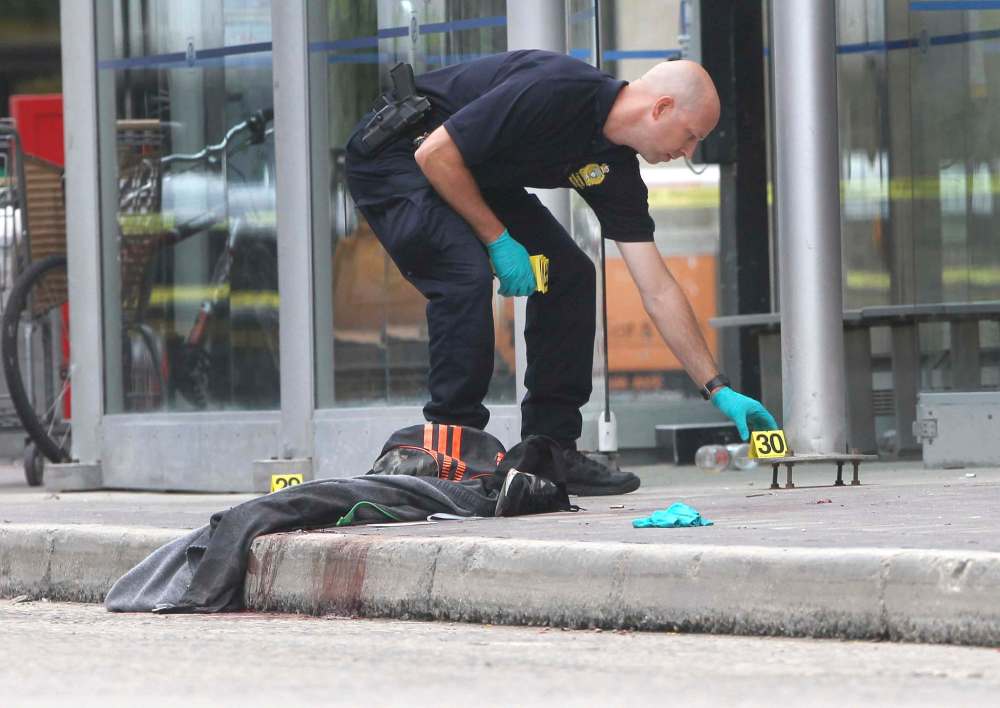
Regina led with 3.30 victims per 100,000 population, followed by Saskatoon at 3.22, Edmonton at 2.87 and Winnipeg at 2.72.
In total number of victims, there were 22 homicide victims in Winnipeg in 2015, down from 27 in 2014. Only Toronto (82), Vancouver (47), Edmonton (39) and Calgary (39) had more.
But Manitoba had the second-highest homicide rate in 2015 among the provinces, behind only Saskatchewan.
The lowest rates were in Quebec, Prince Edward Island and Newfoundland and Labrador.
Overall, police services across Canada reported 604 murders in 2015 — 83 more than in 2014.
The country saw its national homicide rate increase by 15 per cent in 2015, to 1.68 per 100,000 population, which is the highest rate since 2011.
Guns were used 14 per cent more often in 2015 for killing people, the highest rate since 2010, and there were 178 firearms-related homicides in 2015 — 23 more than the previous year.
The data showed that most homicide victims knew their killers. In 2015, 87 per cent of solved homicides were committed by a person known to the victim.
Victims were most often killed by family members other than a spouse (22 per cent), casual acquaintances (22 per cent) or former spouses (14 per cent).
There were 83 intimate partner homicides in 2015, three fewer than the previous year.
Aboriginal peoples made up 25 per cent of Canada’s total number of murdered people while aboriginal people account for about 5 per cent of the country’s population.
The study showed that aboriginal people were victims of homicide at a rate that was seven times higher than non-aboriginals.
Indigenous men were at the greatest risk of being victims of homicide in 2015 as they were seven times more likely to be murdered than non-aborginal men and three times more likely to be a murder victim than aboriginal females.
However, a greater proportion of aboriginal female homicide victims were killed by a casual acquaintance — 18 per cent compared to 11 per cent of non-aboriginal females.
Data available for the first time in 2015 showed that female homicide victims were two-and-a-half times more likely to be listed as missing persons at the time the homicide was discovered.

Overall, males accounted for the majority of both homicide victims and accused persons. In 2015, 71 per cent of homicide victims and 88 per cent of homicide accused were male, findings that have remained consistent over the past 10 years.
The highest rates of homicide among male victims were among those aged 25-34 followed by those aged 18-24.
For females, the highest homicide rate was for those aged 18-24 years followed by females aged 25-34 years.
Overall, police reported an increase in the number of homicides involving a victim who had a criminal relationship with the accused killer — 54 in 2015 compared to 29 in 2014.
The data was collected through police-reported information on homicide incidents, victims and accused persons in Canada.
History
Updated on Wednesday, November 23, 2016 6:28 PM CST: edited, updated