From a grassroots hashtag to a real opportunity for change

Advertisement

Advertise with us

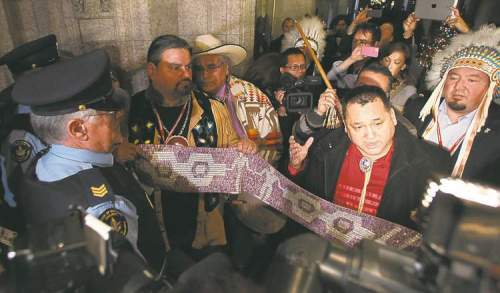
When First Nations chiefs angry with the federal omnibus budget Bill C-45 scuffled briefly with RCMP on Parliament Hill on Tuesday, it certainly made for compelling images. It also raised some compelling questions. Are we seeing a renewed militancy in the aboriginal community? Is this a "tipping point" of sorts? What can we expect next? To me, the most interesting question is what was the catalyst for this showdown?

Read this article for free:


or

Already have an account? Log in here »

To continue reading, please subscribe:

Subscribe and receive a limited-edition Free Press branded hat or tote.

Digital Subscription

One year of digital access for only $205*

  • Enjoy unlimited reading on winnipegfreepress.com
  • Read the E-Edition, our digital replica newspaper
  • Access News Break, our award-winning app
  • Play interactive puzzles

*First annual payment billed as $205.00 + GST for one year. This annual subscription will automatically renew at $233.00 + GST every 52 weeks (10% off the regular annual price of $259.35). Offer available to new and qualified returning subscribers only. Cancel any time.

To continue reading, please subscribe:

Add Free Press access to your Brandon Sun subscription for only an additional

$1 for the first 4 weeks*

  • Enjoy unlimited reading on winnipegfreepress.com
  • Read the E-Edition, our digital replica newspaper
  • Access News Break, our award-winning app
  • Play interactive puzzles
Start now

*Your next Brandon Sun subscription payment will increase by $1.00 and you will be charged $17.95 plus GST for four weeks. After four weeks, your payment will increase to $24.95 plus GST every four weeks.

Opinion

Hey there, time traveller!
This article was published 06/12/2012 (5009 days ago), so information in it may no longer be current.

When First Nations chiefs angry with the federal omnibus budget Bill C-45 scuffled briefly with RCMP on Parliament Hill on Tuesday, it certainly made for compelling images. It also raised some compelling questions. Are we seeing a renewed militancy in the aboriginal community? Is this a “tipping point” of sorts? What can we expect next? To me, the most interesting question is what was the catalyst for this showdown?

It was actually a simple message, likely unintelligible unless you are an avid Twitter user:

“Tweeting up on Sunday, December 2, the #IdleNoMore event in Alberta. Lets get it trending! Here is the FB event…”

CP
First Nations leaders talk to the media outside the House of Commons Tuesday.
CP First Nations leaders talk to the media outside the House of Commons Tuesday.

Not necessarily “I have a dream” type material, but significant in its own right. Tanya Kappo Tanya Kappo (@Nehiyawskwew) posted that on Nov. 30 to drum up support for an event she organized called “Idle No More.” Her fellow organizers began using the “#idlenomore” hashtag (hashtags are Twitter’s way of grouping messages together by topic) and so did their followers.

Kappo told me she expected her event to be “15 people in a room listening to what I thought about the legislation.” Instead, 150 people descended on Louis Bull First Nation in Alberta to hear Kappo and her co-organizers speak against Bill C-45.

Kappo and many First Nations people object to provisions in the bill that reduce the amount of federally protected waterways and increase the minister of aboriginal affairs’ power to sell off reserve land. It is also seen as part of a broader agenda to impose legislation on aboriginal people without their consent. Some people have even begun to blame indigenous leaders for allowing this agenda to proceed.

At the Idle No More event last Sunday, Kappo says many people were upset their chiefs were not talking about the bill. “There was angst building against our leadership. People asked ‘What’s (the Assembly of First Nations) doing?’ and ‘What are the chiefs doing?'” People at the meeting kept tweeting and the hashtag took off.

It grew beyond the Alberta event. Soon all sorts of messages about indigenous issues included the hashtag. There were more messages critical of First Nations leaders. Even non-aboriginal people started using the hashtag to express their support. The hashtag went viral.

Then on Tuesday this social media talk hit the floor of an Assembly of First Nations meeting in Ottawa. Soon National Chief Shawn Atleo and others called for a march to Parliament. Fast-forward a few hours and suddenly chiefs and Mounties were shoving each other outside the House of Commons chamber.

In the aftermath, one of those leaders, Manitoba Grand Chief Derek Nepinak, appeared on CBC television and tipped his hat to the Twitterati.

“As chiefs, we always watch what our young people are doing…. They’re putting their words out on social media saying, ‘What are the chiefs going to do?’, ‘We need to stand up now.’ We are going to act and this is just the beginning of it.”

What is the lasting impact of the “#idlenomore” hashtag? Will it be as momentous as the “#jan26” hashtag that started the protests in Egypt that led to Hosni Mubarak’s removal from power? Or is it just another online fad that will come and go?

The hashtag “#Idlenomore” did not stop bill C-45. It ended up passing unamended. The true impact, however, is that it showed grassroots aboriginal people they can influence their leaders through social media. Kappo says Tuesday’s events “closed the gap” between the chiefs and their constituents, adding, “If there’s going to be real and profound change, it’s not only about the relationship with the feds, but also the relationship with ourselves.” Now she and others are planning other events to raise awareness under the Idle No More banner and the chiefs in Ottawa are discussing their next move.

This has implications far beyond the aboriginal community. From proposed changes to the Indian Act to proposed pipelines, there are many issues looming that have the potential to galvanize indigenous people into protest. If First Nations people are mobilized by any one of them, I suspect that some of the other tensions faced by our community will begin to boil over. Poverty, rundown homes, bad schools, children in care, missing and murdered women… the list goes on. In short, we could soon see a lot of conflict and acrimony.

Yet, it can be avoided. What Kappo and the others behind “#idlenomore” are asking for is simple: for the government to listen to First Nations people. Not imposed legislation. Not political rhetoric. Not games. Simply, to listen to the vision First Nations people have for our future, and work with us to make it happen. The architects of this nascent movement have already succeeded in getting aboriginal leaders to listen to that message. Perhaps others in Canada will soon pay attention.


Wab Kinew is the Director of Indigenous Inclusion at the University of Winnipeg. His hip hop has won an Aboriginal Peoples Choice Music Award. His journalism has won an Adrienne Clarkson RTNDA Award, a Gabriel Award and been nominated for a Gemini Award.
Report Error Submit a Tip

More Stories

Inflation-battered U.S. voters could prove to be key Canadian ally in fight against Trump’s trade tyranny

Dan Lett 5 minute read Preview

Inflation-battered U.S. voters could prove to be key Canadian ally in fight against Trump’s trade tyranny

Dan Lett 5 minute read 1:37 PM CDT

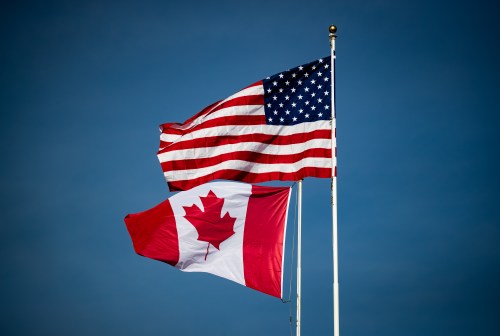
Is there anything or anyone that can help Canada and the United States avoid an unprecedented trade war?

Both nations stand poised on the precipice of a tariff battle that could — in the worst-case scenario — trigger an economic downturn. Both countries have a lot to lose, but neither country is showing any sign of backing down.

Canadian Prime Minister Mark Carney has, by all accounts, given negotiation a full chance to defuse the trade war. It didn’t work and it appears now that nothing — neither thoughtful negotiation or retaliatory measures — will dissuade U.S. President Donald Trump from his war of trade attrition.

Increasingly, it appears that if Trump is going to back away from punitive tariffs against Canada, it will be because of mounting pressure from within the United States and not because of tough talk and countermeasures from this side of the border.

Read
1:37 PM CDT

From a grassroots hashtag to a real opportunity for change

By Wab Kinew 5 minute read Preview

From a grassroots hashtag to a real opportunity for change

By Wab Kinew 5 minute read Thursday, Dec. 6, 2012

When First Nations chiefs angry with the federal omnibus budget Bill C-45 scuffled briefly with RCMP on Parliament Hill on Tuesday, it certainly made for compelling images. It also raised some compelling questions. Are we seeing a renewed militancy in the aboriginal community? Is this a "tipping point" of sorts? What can we expect next? To me, the most interesting question is what was the catalyst for this showdown?

It was actually a simple message, likely unintelligible unless you are an avid Twitter user:

"Tweeting up on Sunday, December 2, the #IdleNoMore event in Alberta. Lets get it trending! Here is the FB event..."

Not necessarily "I have a dream" type material, but significant in its own right. Tanya Kappo Tanya Kappo (@Nehiyawskwew) posted that on Nov. 30 to drum up support for an event she organized called "Idle No More." Her fellow organizers began using the "#idlenomore" hashtag (hashtags are Twitter's way of grouping messages together by topic) and so did their followers.

Read
Thursday, Dec. 6, 2012

Five Things: PM Carney explains why Canada left the U.S. negotiating table

David Baxter, The Canadian Press 5 minute read Preview

Five Things: PM Carney explains why Canada left the U.S. negotiating table

David Baxter, The Canadian Press 5 minute read Saturday, Aug. 22, 2026

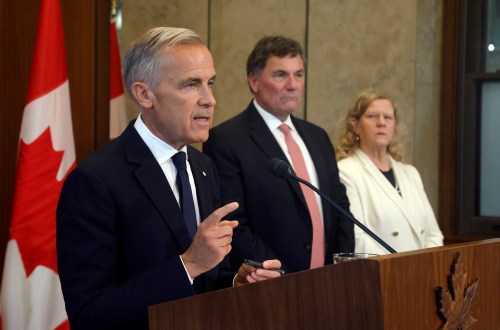
OTTAWA - Canada is preparing to hit the U.S. with dollar-for-dollar tariffs in response to new 50 per cent duties on $28 billion worth of Canadian products that took effect when talks between the two nations collapsed as negotiations neared the finish line. 

Prime Minister Mark Carney was quiet publicly during the final days of negotiations, but now has now explained his rationale for telling the Canadian negotiating team, led by Canada-U.S. Trade Minister Dominic LeBlanc and chief negotiator Janice Charette, to leave the table.

Restrictions on further trade deals

"The U.S. Introduced at the last hours, in the last hours, efforts to restrict our ability to have other trade deals. You heard me say a moment ago, what we've accomplished in the past year, 20 new deals, economic and security partnerships, the prospect of doubling our market access because we believe in free trade. We're the partner of choice in many respects for countries around the world and the Americans wanted to restrict that. They had language that what they wanted to restrict that, unacceptable," Carney said during a press conference on Parliament Hill.

Read
Saturday, Aug. 22, 2026

H.P. Tergesen & Sons General Market surpasses 127 years as family-run business in Gimli

Aaron Epp 7 minute read Preview

H.P. Tergesen & Sons General Market surpasses 127 years as family-run business in Gimli

Aaron Epp 7 minute read 6:00 AM CDT

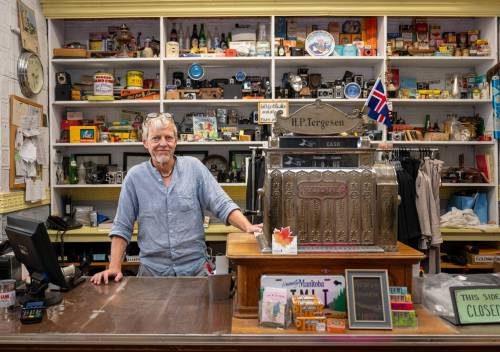
GIMLI — Walk into the store. Meander past the clothing, candy and candles. Find him in the corner, his eyes scanning the bookshelves, a smile on his face as a half-dozen people explore this side of the shop.

Wearing grey shorts and a light blue shirt, Stefan Tergesen, the fourth-generation proprietor of H.P. Tergesen & Sons General Market, is explaining his vision for what’s widely recognized as the oldest general store in Western Canada.

“First and foremost, I want everybody to enjoy being in here,” he says. “I want you at some point to look and go, ‘Oh, cool!’ after seeing something that gets your blood flowing.”

If you ever find yourself on the west side of Lake Winnipeg, some 80 kilometres north of Manitoba’s capital, and you realize you forgot to pack something, there’s a good chance you’ll find it at Tergesen’s.

Read
6:00 AM CDT

‘We got attacked’: Carney says retaliatory tariffs on U.S. to take effect next month

Catherine Morrison and David Baxter, The Canadian Press 7 minute read Preview

‘We got attacked’: Carney says retaliatory tariffs on U.S. to take effect next month

Catherine Morrison and David Baxter, The Canadian Press 7 minute read Saturday, Aug. 22, 2026

OTTAWA - Prime Minister Mark Carney says retaliatory tariffs will hit the U.S. starting next month after Canada walked away from what he called a "bad deal."

The U.S. introduced new 50 per cent tariffs on billions of dollars in Canadian exports on Saturday after trade talks failed.

"We got attacked," Carney told reporters on Parliament Hill Saturday when asked about the escalating trade war.

Carney suspended talks with the United States late Friday and summoned his negotiators back to Ottawa.

Read
Saturday, Aug. 22, 2026

Community rallies around family devastated by fire

Tiago Resko 4 minute read Preview

Community rallies around family devastated by fire

Tiago Resko 4 minute read 6:00 AM CDT

Dennis Lafreniere and his wife didn’t expect to celebrate 27 years of marriage Thursday in a Selkirk hotel room while reeling from a recent house fire.

The couple and their two daughters lost their home last Sunday in a raging fire that left nothing behind, but overwhelming support from multiple communities has kept them afloat.

“It’s devastating when you don’t have any clothes, any medication, all of that stuff, and it’s just so overwhelming the next morning. It’s just nasty,” Lafreniere said.

Investigators suspect the fire was caused by a fridge, freezer and battery charger that were all plugged into the same electrical line that got overheated. The house, located on Highway 59 between Selkirk and Libau, is a farmhouse built in 1943, and investigators think worn-out electrical lines also contributed to the fire, said Lafreniere.

Read
6:00 AM CDT