

Afghans deserve support
Advertisement
Read this article for free:
or
Already have an account? Log in here »
To continue reading, please subscribe:
Monthly Digital Subscription
$1 per week for 24 weeks*
- Enjoy unlimited reading on winnipegfreepress.com
- Read the E-Edition, our digital replica newspaper
- Access News Break, our award-winning app
- Play interactive puzzles
*Billed as $4.00 plus GST every four weeks. After 24 weeks, price increases to the regular rate of $19.95 plus GST every four weeks. Offer available to new and qualified returning subscribers only. Cancel any time.
Monthly Digital Subscription
$4.99/week*
- Enjoy unlimited reading on winnipegfreepress.com
- Read the E-Edition, our digital replica newspaper
- Access News Break, our award-winning app
- Play interactive puzzles
*Billed as $19.95 plus GST every four weeks. Cancel any time.
To continue reading, please subscribe:
Add Free Press access to your Brandon Sun subscription for only an additional
$1 for the first 4 weeks*
*Your next subscription payment will increase by $1.00 and you will be charged $16.99 plus GST for four weeks. After four weeks, your payment will increase to $23.99 plus GST every four weeks.
Read unlimited articles for free today:
or
Already have an account? Log in here »
Hey there, time traveller!
This article was published 06/12/2011 (5247 days ago), so information in it may no longer be current.
Canada and its NATO partners have pledged long-term economic support for Afghanistan after the last allied troops depart the country in 2014. The announcement in Bonn, Germany, where some 100 nations are meeting to discuss Afghanistan’s future, was not a huge surprise, but it needed to be stated loud and clear.
Afghans who are risking their lives for a better society need to know that their allies will be with them for the long haul. Otherwise, support will decline and the gains that have been made will surely be lost.
The commitment in Bonn did not include a dollar figure, but it will be in the billions of dollars. Canada alone has contributed close to $200 million a year in development aid since 2002, in addition to military spending and the cost of maintaining 950 troops in the country to train the Afghan army.
Skeptics may say it’s a case of throwing good money after bad, particularly since the Taliban seem to be able to strike at will throughout the country.
The fact is, however, that the Taliban have been reduced to a terrorist nuisance, with no ability to launch major offensives. It is still dangerous and probably always will be, but that is the nature of life and politics in the region. The graver threat is the duplicity of Pakistan, which has supported the insurgency while protesting its innocence.
The government of President Hamid Karzai wants to reconcile with the disaffected and disempowered groups in the country, including the Taliban, in an effort to end the violence and move forward.
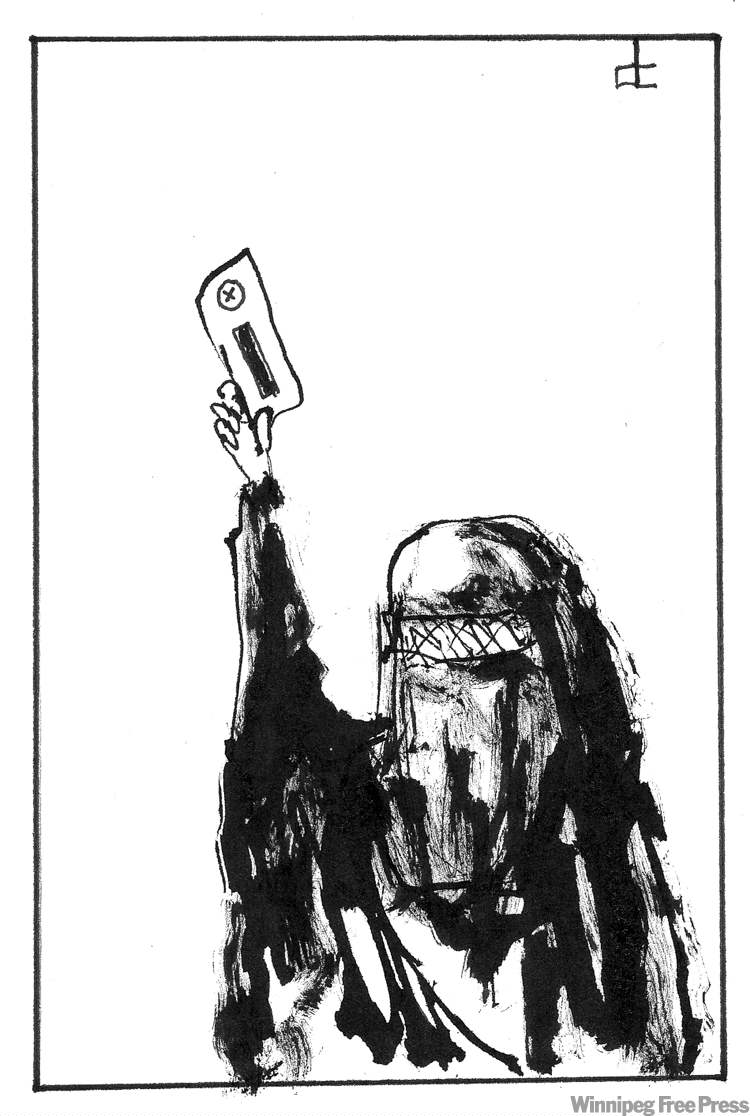
There’s nothing wrong with talking, but it should be clear that some issues aren’t up for negotiation, particularly the progress women have made over the last 10 years. The Afghan constitution even states that men and women “have equal rights and duties before the law,” a commitment that is still unthinkable in many countries in the region.
Women constitute one-third of the Afghan delegation in Bonn, while nearly 30 per cent of members in the parliament in Kabul are women. Anyone who says there’s been no progress should try telling that to the thousands of women who have returned to the workforce or to school.

But the gains are fragile and life is still dangerous for women in a country that remains overwhelmingly patriarchal. One woman was even forced recently to marry her rapist, lest she bring dishonour on her family.
The allied coalition should link its offers of aid with assurances that the achievements of women will be respected and, ideally, enhanced. Canada did not go to war to liberate women — the primary goal was to defeat terrorism and deny ground to potential enemies — but a society that can learn to embrace concepts of dignity and equality will be more trustworthy and peaceful in the long-term.
It would also be difficult for western nations to continue financing a government that turns its back on half its population.
The road ahead in Afghanistan will be difficult and marked with setbacks and disappointments, but it will also be a test of the integrity of democratic nations to meet their moral commitments and obligations.
Having turned the country upside down and caused thousands of deaths, the West now has a responsibility to do all that is reasonable to give meaning to the exercise.