

China’s Arctic ambition
Advertisement
Read this article for free:
or
Already have an account? Log in here »
To continue reading, please subscribe:
Monthly Digital Subscription
$1 per week for 24 weeks*
- Enjoy unlimited reading on winnipegfreepress.com
- Read the E-Edition, our digital replica newspaper
- Access News Break, our award-winning app
- Play interactive puzzles
*Billed as $4.00 plus GST every four weeks. After 24 weeks, price increases to the regular rate of $19.95 plus GST every four weeks. Offer available to new and qualified returning subscribers only. Cancel any time.
Monthly Digital Subscription
$4.99/week*
- Enjoy unlimited reading on winnipegfreepress.com
- Read the E-Edition, our digital replica newspaper
- Access News Break, our award-winning app
- Play interactive puzzles
*Billed as $19.95 plus GST every four weeks. Cancel any time.
To continue reading, please subscribe:
Add Free Press access to your Brandon Sun subscription for only an additional
$1 for the first 4 weeks*
*Your next subscription payment will increase by $1.00 and you will be charged $16.99 plus GST for four weeks. After four weeks, your payment will increase to $23.99 plus GST every four weeks.
Read unlimited articles for free today:
or
Already have an account? Log in here »
Hey there, time traveller!
This article was published 25/01/2014 (4442 days ago), so information in it may no longer be current.
China has become increasingly vocal in asserting its right to a leadership role in how the Arctic is developed, challenging the very idea the resources of the high north belong exclusively to those with sovereign claims on the territory.
It wants the polar region internationalized, similar to the Antarctic, with its resources shared by anyone with the means and ability to develop and extract them for a profit.
“Arctic resources… will be allocated according to the needs of the world, not only owned by certain countries,” a senior Chinese official recently said.
China also claims non-Arctic nations have a legitimate stake in northern development for reasons other than resource extraction or free navigation of the seas. These include concerns about climate change and environmental monitoring, protection of marine and land-based wildlife, and the welfare of indigenous peoples.
These so-called global concerns, however, are merely an attempt to disguise its goal of easy access to the enormous potential wealth in the Arctic.
The U.S. Geological Survey, for example, says the Arctic holds about 13 per cent of the world’s undiscovered oil, 30 per cent of its undiscovered natural gas, and 20 per cent of its undiscovered natural gas liquids. It adds up to hundreds of billions of barrels of energy that China needs.
China’s stance, however, is not mere posturing.
Since it was admitted last year as an observer nation to the Arctic Council, composed of the eight countries with Arctic territories, China has invested heavily in polar research and launched initiatives with Russia, Sweden, Finland and Iceland with an eye to expanding trade and investment in northern projects.
China has also built a modern icebreaker and two more are in the works. Iceland has accepted money from China for polar research, while Russia is encouraging China to use its northern sea route to transport goods.
By words and deeds, then, China has made it clear it will not be an idle observer. It wants a direct role in Arctic development and it is challenging the very idea of sovereignty, a proposition that is supported by countries around the world.
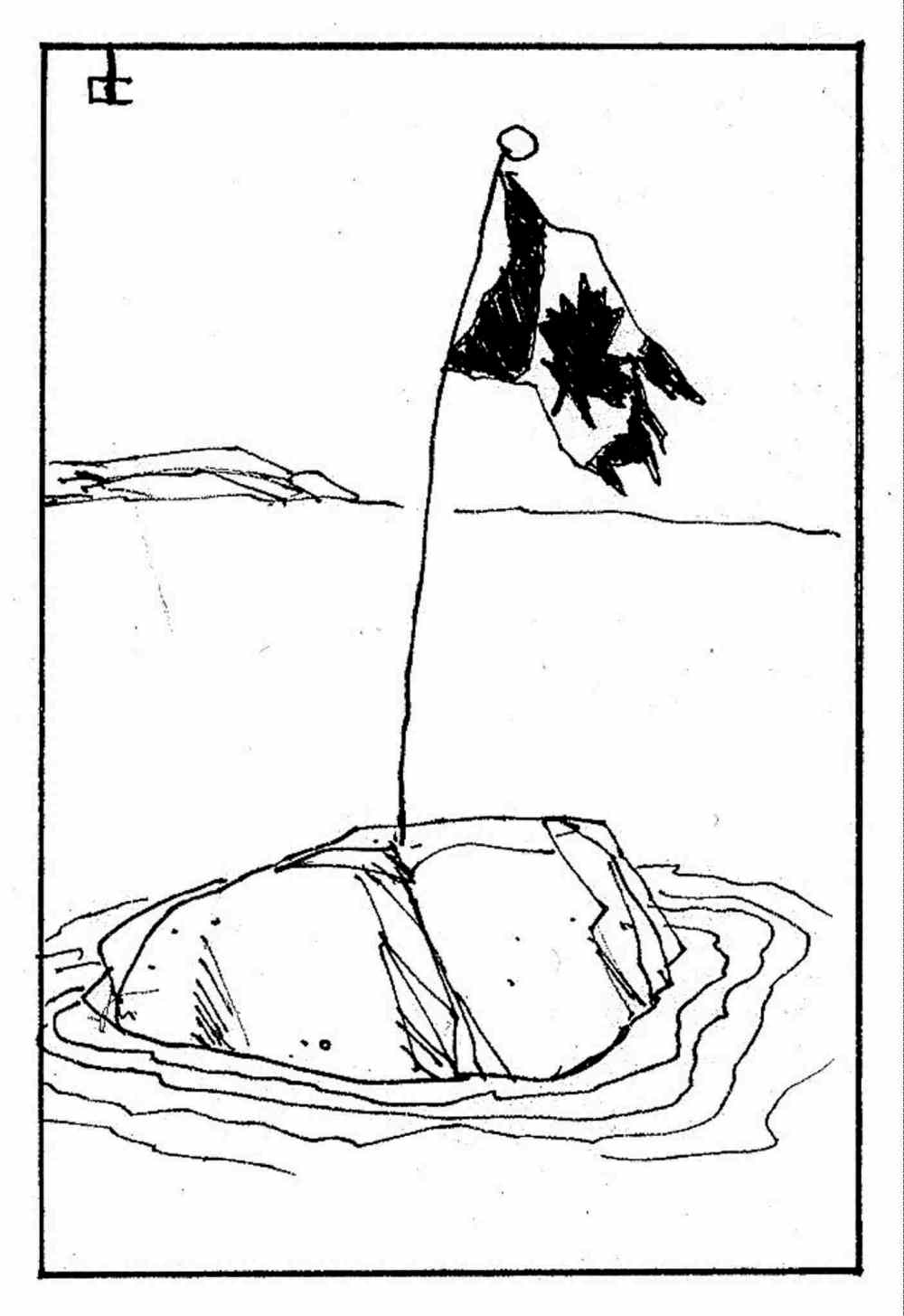
Prime Minister Stephen Harper has made it clear Canada will never surrender its sovereign territory.
Canada, he says, has also claimed the North Pole for 80 years and there is no reason to abandon it now.
The question of who owns the polar region is still a subject of dispute, but it will be resolved in the normal ways.

If the Canadian continental shelf extends all the way to the pole, it could be considered part of Canada in international law. Maritime law and the laws of the sea will also determine if the Northwest Passage is an internal waterway or international channel.
This is how the various claims of sovereignty will be determined — by science and law — and not through vague and disingenuous assertions of global altruism.

The Arctic Council is worthwhile as an association of sovereign states with common issues, but it should not be allowed to become a forum for southern nations to make claims that have no basis in law or history.
Mr. Harper’s northern strategy, however, has been weakened by repeated delays in building new icebreakers and patrol ships that are essential to operating in the Arctic.
The prime minister says only that he’s performed better than his predecessors on Arctic issues, but that’s not good enough at a time when countries like Russia, China and even Norway are rapidly expanding their ability to operate in the polar region.
For some countries, the future of the Arctic is up for debate and interpretation.
Canada should push for a speedier resolution of the issues, which have been around for decades, rather than allowing the outliers an opportunity to control and manipulate the dialogue.