

Secure border for all
Advertisement
Read this article for free:
or
Already have an account? Log in here »
To continue reading, please subscribe:
Digital Subscription
One year of digital access for only $1.44 a week*
- Enjoy unlimited reading on winnipegfreepress.com
- Read the E-Edition, our digital replica newspaper
- Access News Break, our award-winning app
- Play interactive puzzles
*Billed as $5.77 plus GST every four weeks. After 52 weeks, price increases to the regular rate of $19.95 plus GST every four weeks. Offer available to new and qualified returning subscribers only. Cancel any time.
To continue reading, please subscribe:
Add Free Press access to your Brandon Sun subscription for only an additional
$1 for the first 4 weeks*
- Enjoy unlimited reading on winnipegfreepress.com
- Read the E-Edition, our digital replica newspaper
- Access News Break, our award-winning app
- Play interactive puzzles
*Your next Brandon Sun subscription payment will increase by $1.00 and you will be charged $17.95 plus GST for four weeks. After four weeks, your payment will increase to $24.95 plus GST every four weeks.
Read unlimited articles for free today:
or
Already have an account? Log in here »
Hey there, time traveller!
This article was published 11/10/2011 (5488 days ago), so information in it may no longer be current.
Canada and the United States have apparently reached a tentative agreement on border co-operation that could be the beginning of a broader arrangement on continental defence. The initial pact avoids any of the concerns that had previously been raised about loss of sovereignty and instead focuses on the bread-and-butter issues of cross-border trade and travel.
Among other things, the deal is said to include the creation of a one-stop window for importers to reduce paperwork and speed up the approval process. There will be more emphasis on frequent-traveller and trusted-shipper programs, while Canada will be expected to invest in new border-screening technologies already used in America.
There are no plans to harmonize immigration and refugee policies, which many critics feared would result in a loss of Canada’s right to set its own policies and priorities for admitting newcomers.
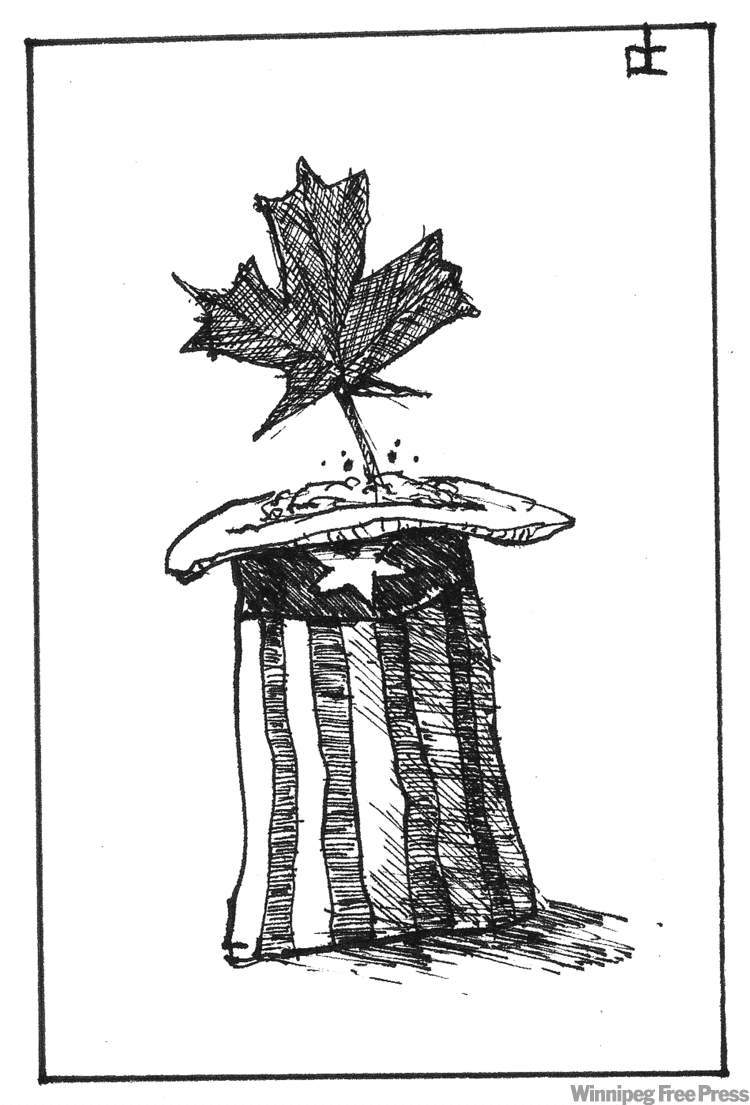
The goal in the agreement was to approve measures that will make it easier for people and goods to cross the border. The idea of eliminating internal borders while focusing all efforts on a single shared perimeter is not being considered.
The single complicating factor now is America’s concern about its own economy, which has sparked a Buy American movement to protect jobs. If the United States did move to restrict Canadian goods, it would undermine the goodwill required for an open-border program.
American protectionism could spark a similar response from Canada, setting back the gains that have been made on the free movement of goods and services.
Canada and the United States share a border that is nearly 9,000 kilometres long and a bilateral trading relationship worth about $650 billion a year. The two countries not only have a lot in common, they need each other to sustain jobs and economic activity.

For Americans, however, homeland security is their No. 1 concern. Some Canadians may believe American fears about the Canadian border are unwarranted, but such an attitude will not boost American confidence.
The best way to improve our bilateral relationship is to make it clear we share their security concerns and we’re willing to do our part to make North America safer.