

Learning transit lessons?
Report outlines keys to success; critics say city lacks the vision
Advertisement
Read this article for free:
or
Already have an account? Log in here »
To continue reading, please subscribe:
Digital Subscription
One year of digital access for only $1.44 a week*
- Enjoy unlimited reading on winnipegfreepress.com
- Read the E-Edition, our digital replica newspaper
- Access News Break, our award-winning app
- Play interactive puzzles
*Billed as $5.77 plus GST every four weeks. After 52 weeks, price increases to the regular rate of $19.95 plus GST every four weeks. Offer available to new and qualified returning subscribers only. Cancel any time.
To continue reading, please subscribe:
Add Free Press access to your Brandon Sun subscription for only an additional
$1 for the first 4 weeks*
- Enjoy unlimited reading on winnipegfreepress.com
- Read the E-Edition, our digital replica newspaper
- Access News Break, our award-winning app
- Play interactive puzzles
*Your next Brandon Sun subscription payment will increase by $1.00 and you will be charged $17.95 plus GST for four weeks. After four weeks, your payment will increase to $24.95 plus GST every four weeks.
Read unlimited articles for free today:
or
Already have an account? Log in here »
Hey there, time traveller!
This article was published 11/02/2012 (5237 days ago), so information in it may no longer be current.
Ottawa and San Jose have proven transit networks can be a hub for development — if there’s the will to do it.
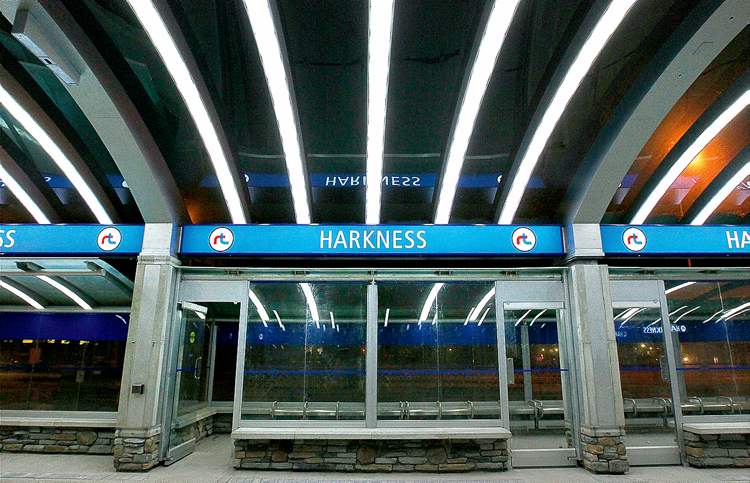
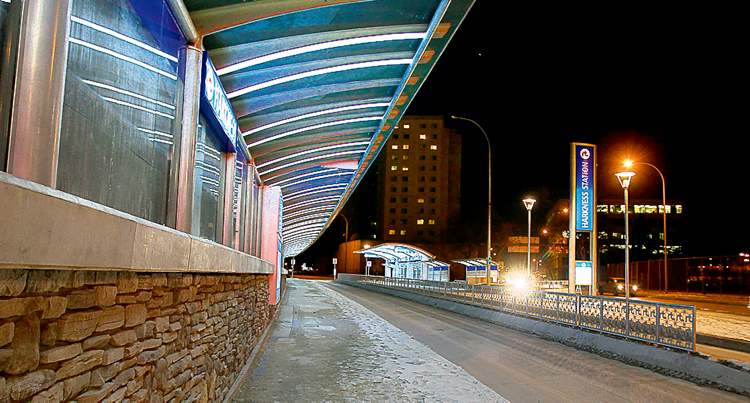
While Winnipeg is still in the final stages of building its first-ever rapid transit corridor, a new planning handbook breaks down how the city can integrate transit networks with new and existing homes, retail and office spaces. The idea is to make it easier for people to take transit, and the report notes what Winnipeg can learn from cities that have taken steps to make transit stations hubs where people can easily walk to where they live, work and shop.
To do this, Winnipeg needs to increase density and create innovative parking strategies and pedestrian-oriented areas. The report said the goal is not to get rid of car travel, but to give residents an option on how they can commute.
But the report also said political will and leadership are key — something some local experts say Winnipeg lacks, which can be a major barrier to catching up with the robust transit networks that exist in other urban centres.
“We’re at least 50 years behind other cities,” said Jino Distasio, director of the University of Winnipeg’s Institute of Urban Studies. “It’s not about being green, it’s about having multiple ways to get to different places. I can’t think of a major global city that does not have a major transit system.”
Downtown Business Improvement Zone executive director Stefano Grande said there’s a disconnect between the transit-planning document and the city’s recent decision to increase bus fares to pay for the second phase of rapid transit.
Last fall, city council took the unusual step of approving a 20-cent transit fare hike to cover part of the cost of extending the city’s first rapid transit line to Bison Drive near the University of Manitoba. Buses are set to roll on the first leg of the corridor this April and plans for the second phase have yet to be finalized.
Grande said the fare hike sends the wrong message at a time when the city should be looking at ways to integrate transit and land-use planning. The Graham Avenue mall is a perfect example of an opportunity, Grande said, since there are a lot of underused buildings in the area and near the U of W that could be converted into affordable housing or commercial and retail space.
He said these types of mixed-use developments generate more taxes for the city than typical single-family home dwellings and commercial strip malls. Grande said Winnipeg should undertake a study to identify parcels of land across the city that could be used for transit-oriented plans in the future.
“The fact that there’s discussions about funding rapid transit through increasing fares tells me we have a little (ways) more to go,” Grande said. “What we’d like to see is a business plan: This is what the first three phases of rapid transit will cost, here are the parcels of land that can be converted to transit-oriented development, here’s how much tax it will generate.”
Distasio said he thinks part of the problem is civic government has not championed transit. He said Winnipeg continues to focus on fixing roads and filling potholes instead of touting the benefits of forward-thinking projects such as the Fort Rouge Yards infill.
He said Winnipeg is growing, and the city cannot continue to expand unless it provides an alternative to vehicle transportation. The cost of doing nothing, he said, is the city will continue to lag behind other cities.
“There are smaller cities that are so far ahead of us,” Distasio said.
Property committee chairman Coun. Jeff Browaty (North Kildonan) said Winnipeg can do more to make transit more appealing, and getting people on the bus is a way to help accommodate the city’s growth. Browaty said arterial roads in the city’s southwest are close to capacity and rapid transit is one way to decrease congestion and giving people another option.
Fort Rouge Coun. Jenny Gerbasi said Winnipeg tends to “react” to new developments — such as IKEA and Sage Creek — instead of building transit into major plans in the first place. She said there needs to be a shift in the city’s planning so residents don’t need two or three cars in order to get around.

While she is concerned about the political commitment to get this done, Gerbasi said she thinks Winnipeg is on the cusp of moving forward.
Others aren’t so optimistic.
“The stuff they talk about is all nice but it all seems to be window dressing because they never dedicate any money to doing it,” said Lynne Fernandez, a researcher for the Canadian Centre for Policy Alternatives. “All they do is write it in reports and put the reports on some shelf somewhere.”
Council’s property committee will review the planning handbook at a meeting on Tuesday.
jen.skerritt@freepress.mb.ca
History
Updated on Saturday, February 11, 2012 8:57 AM CST: adds fact box, fixes cutlines