

Spidey sense
Before going out to buy a cool and creepy tarantula, carefully consider the consequences
Advertisement
Read this article for free:
or
Already have an account? Log in here »
To continue reading, please subscribe:
Digital Subscription
One year of digital access for only $75*
- Enjoy unlimited reading on winnipegfreepress.com
- Read the E-Edition, our digital replica newspaper
- Access News Break, our award-winning app
- Play interactive puzzles
*Billed as $5.77 plus GST every four weeks. After 52 weeks, price increases to the regular rate of $19.95 plus GST every four weeks. Offer available to new and qualified returning subscribers only. Cancel any time.
Monthly Digital Subscription
$4.99/week*
- Enjoy unlimited reading on winnipegfreepress.com
- Read the E-Edition, our digital replica newspaper
- Access News Break, our award-winning app
- Play interactive puzzles
*Billed as $19.95 plus GST every four weeks. Cancel any time.
To continue reading, please subscribe:
Add Free Press access to your Brandon Sun subscription for only an additional
$1 for the first 4 weeks*
- Enjoy unlimited reading on winnipegfreepress.com
- Read the E-Edition, our digital replica newspaper
- Access News Break, our award-winning app
- Play interactive puzzles
*Your next Brandon Sun subscription payment will increase by $1.00 and you will be charged $17.95 plus GST for four weeks. After four weeks, your payment will increase to $24.95 plus GST every four weeks.
Read unlimited articles for free today:
or
Already have an account? Log in here »
Hey there, time traveller!
This article was published 26/10/2010 (5684 days ago), so information in it may no longer be current.
Would you raise 3,000 spiders in your home?
If you continued to read this article after that last sentence, I suspect you don’t suffer from arachnophobia. Still, even if the word doesn’t give you the willies, spiders remain unloved by many.
This is confirmed by an Oct. 22 article in The Guardian newspaper. The British daily highlighted how one researcher went to the trouble of hand-rearing thousands of a threatened species spider. When they reached maturity, she intended to release them into the wild. Not in my backyard, said many readers. One person wrote “if I see one, I’ll kill it.”
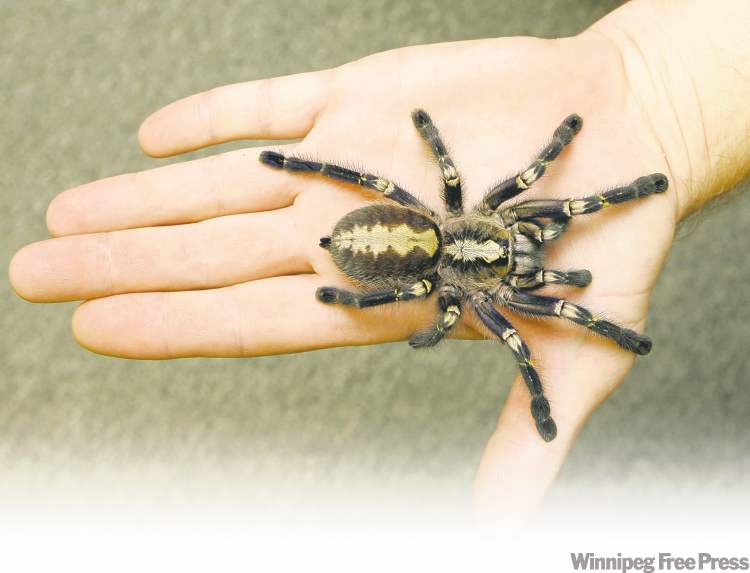
To be honest, I have never said “I want a pet spider.” Still, spiders are fascinating creatures that I like to admire from far away. Very far away.
Now that I’ve revealed this to you, I have to say how proud of myself I am for getting up close and personal with a Rose Hair tarantula.
Tarantulas are the most common pet spider in North America. There are hundreds of species. Not all are appropriate for the average pet owner. Some are quite venomous and aggressive, according to Brian Peake, aquarium manager at the Kenaston Boulevard Petland store.
The store has several types of tarantulas and will bring in special requests, but only if they’re not a dangerous breed, Peake says. He feels even the beginner tarantulas, like the Rosey, shouldn’t be an impulse buy. Potential owners need to do their research.
Studying them isn’t merely a good idea meant to help potential owners understand the fragility of and threats to the pet but they must understand what they’re about to undertake. Peake has even heard of tarantula owners being evicted from their homes for owning one.
These arachnids are mainly an ornamental pet. Although their hairs give an appearance of fur, they aren’t like dogs or cats which enjoy a good scratch. Tarantulas barely tolerate interaction at best.
Most tarantulas have venom that isn’t stronger than a honey bee’s. But their bite can sting a lot. It could result in a visit to the doctor. Depending on the breed, most only bite when threatened (I’m the same way). There’s another concern to consider with pet arachnids. Some shoot urticating (fine barbed) hairs, which can embed in your skin or eyes.
There seem to be no bylaws that prevent the ownership of tarantulas (except in daycares). The law of nature, however, creates another limit to non-breeder owners. Spiders aren’t social animals. Only one can live in an aquarium at a time, which prevents the likelihood that you’ll get a cluster of tarantulas that will recreate the eerie spider scene in Harry Potter and the Chamber of Secrets.
While females can live as long as 20 years, males don’t enjoy the same longevity. They typically survive for just a few years, some only months. Their main reason they exist is to mate (I’ve dated guys like that — they didn’t last long, either).
Since tarantulas can suffer serious injury or death if dropped, many experts stress caution when handling them. This is especially the case with children. Peake recommends that owners limit the time they spend holding their tarantulas.
Ground dwellers, which are the most often recommended to beginners, don’t need a great deal of space. Peake suggests a 10-gallon glass aquarium with a secure, ventilated lid and a fair amount of lining (or substrate). Arboreals, or climbers, would also need items upon which to climb. Aquariums must be cleaned monthly. And the humidity and temperature must be monitored to best suit your tarantula’s species.
Although owners purchase spiders for mainly observational reasons, these pets require care. Feeding varies upon the spider’s age, how fast you wish your pet to grow and if it is in or near a molt. Molting is a delicate stage where they shed their exoskeleton. Should you attempt to feed your tarantula at this stage, it could injure or kill the spider.
In the wild, predators like lions are respected for their hunting abilities. But tarantulas are hunters, too. Some even create a line of web, much like a trip wire, which can signal the arrival of potential prey.
If you want a tarantula, research it well and prepare to dedicate many years to its care. However, should you wish to celebrate Halloween with the purchase of a brand new spider, stores have plenty of fake ones.
char.adam@mts.net
twitter.com/charspetpage