

Tassie tales
We're guilty of loving former convicts' colony
Advertisement
Read this article for free:
or
Already have an account? Log in here »
To continue reading, please subscribe:
Digital Subscription
One year of digital access for only $1.44 a week*
- Enjoy unlimited reading on winnipegfreepress.com
- Read the E-Edition, our digital replica newspaper
- Access News Break, our award-winning app
- Play interactive puzzles
*Billed as $5.77 plus GST every four weeks. After 52 weeks, price increases to the regular rate of $19.95 plus GST every four weeks. Offer available to new and qualified returning subscribers only. Cancel any time.
To continue reading, please subscribe:
Add Free Press access to your Brandon Sun subscription for only an additional
$1 for the first 4 weeks*
- Enjoy unlimited reading on winnipegfreepress.com
- Read the E-Edition, our digital replica newspaper
- Access News Break, our award-winning app
- Play interactive puzzles
*Your next Brandon Sun subscription payment will increase by $1.00 and you will be charged $17.95 plus GST for four weeks. After four weeks, your payment will increase to $24.95 plus GST every four weeks.
Read unlimited articles for free today:
or
Already have an account? Log in here »
Hey there, time traveller!
This article was published 20/11/2010 (5707 days ago), so information in it may no longer be current.
HOBART, Tasmania — Isolated in the wild southern ocean, Tasmania, or Tassie as it’s known by locals, is forgotten by much of the world.
Having heard that this gentle isle is rimmed by sandy beaches, populated by bizarre creatures and, even though they have a criminal pedigree, the friendliest people, my wife Allyson and I decided we had to go.
We planned our campaign carefully. The goal was to circle the eastern part of Tassie in seven days.
Day 1: Hobart
As the plane descended, we saw Hobart, Tasmania’s capital, nestled among hills beside the Derwent River. Sleek ocean-going sailboats, squat fishing tubs and tiny sculls and kayaks dotted the water. Despite its small size (200,000 population), we could see why Hobart is one of the most picturesque cities in the world.
Soon we were strolling through the historic Battery area, with its small streets and wrought-iron-decorated terrace homes dating from the colonial days. We entered the happy hubbub in the Shipwright’s Arms and, over foaming ales, reflected on the convicts, whalers, wealthy merchants and seamen who settled here.
We wandered to Sullivan’s Cove, the historic port area where the streets are lined with restored sandstone Georgian warehouses, now occupied by art galleries, restaurants and cafés. People spilled from the pubs onto the sidewalks and we jostled to find a table in one of the noisy, bubbling restaurants.
Day 2: Hobart to Launceston
Morning found us at Salamanca Market, lost among thousands of locals pushing and bumping past stalls laden with flowers, honey, pastries, hats, wooden carvings and more. Buskers played, merchants shouted, the sun sparkled.
Nervously driving on the left side of the road, we headed north.
The countryside was dry with golden-brown grass and olive-green hills punctuated by tall gum trees. The air was hot and dry, with a fragrance of eucalyptus trees. The Black Swan, a roadside pub, offered A True Tassie Tucker. (Later, we discovered tucker means food.) Sheep dotted the rolling landscape.
At the village of Ross, the four corners of the main intersection bore the delightful names Temptation, Salvation, Recreation and Damnation for the four convict-built sandstone buildings found there: a hotel, church, town hall and former jail.
At Campbell Town, a long row of bricks was embedded in the sidewalk. Each brick was engraved with the sad story of a luckless convict. Tears welled as Allyson read that many of the convicts were only 12 to 15 years old and had been sentenced to seven years to life for stealing a tablecloth or some cheese.
We drove drowsily northward to Launceston (lon-SESS-ton), the second-largest city in Tasmania (population 100,000).
Day 3: The Tamar Valley
On Sunday morning, Launceston was quiet, with the feel of a sleepy rural town. We strolled to Cataract Gorge, a large nature preserve, and hiked a path with dark, high cliffs. Below, a rowboat bobbed in the river.
We explored the Tamar Valley, which meanders about 60 kilometres to the ocean and is home to the oldest wine region in Tasmania. At Beaconsfield, a pretty little gold-mining town, we pulled into an Australian institution called the bottle shop. Not only were the beer and wine prices remarkably low, but many of these shops are also drive-through. Damned clever, these Aussies!
With a long plume of dust trailing behind, we rattled along a rough road toward Narawntapu National Park, known as the Serengeti of Tasmania.
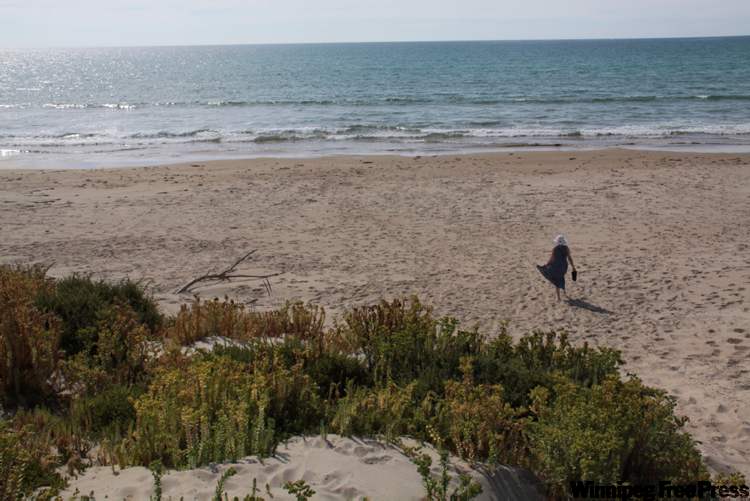
We parked among bush-covered sand dunes and walked to a long, golden beach. We cooled our feet in the waves, with sand scrunching between our toes. Only one other couple, small specks far down the shore, shared this delightful site. Through the bushes, we spotted a few hopping wallabies. The park is also home to bandicoots, Tasmanian devils, possums, platypuses, echidnas and other unusual fauna.
Day 4: Devils en route to Freycinet
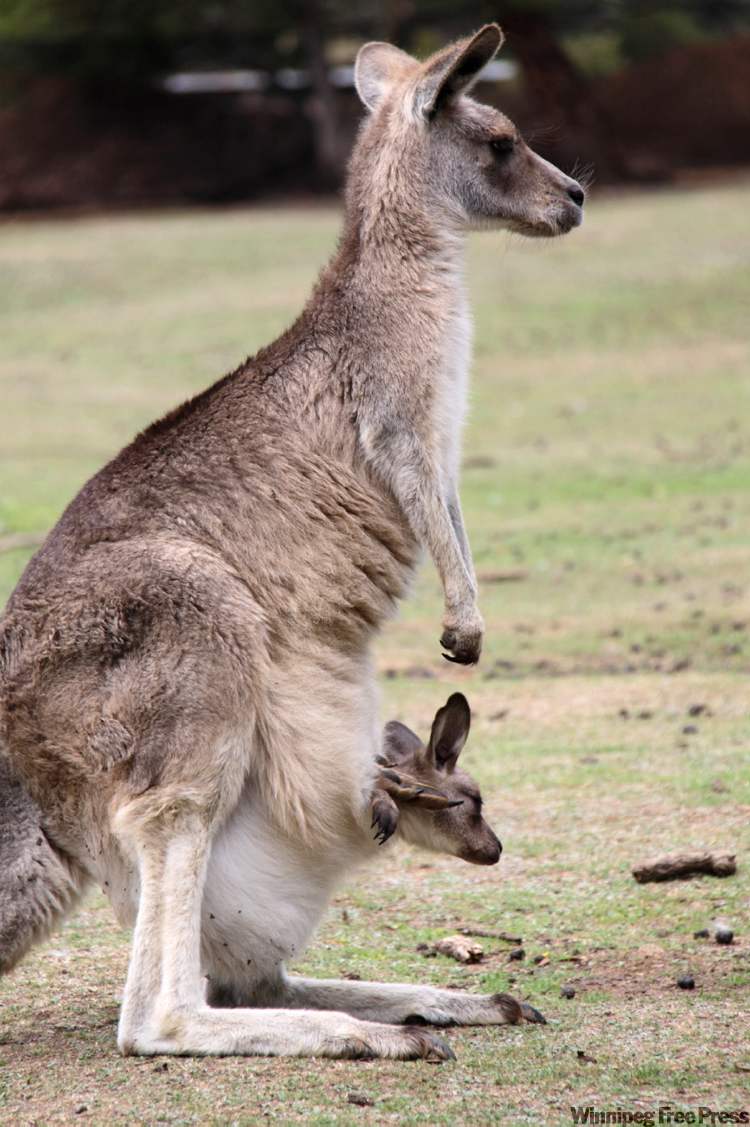
We headed eastward. At East Coast Natureworld, we gazed at kangaroos, wallabies, pelicans, black swans, emus, lethal tiger snakes and Tasmanian devils. The owner explained that the devils are being decimated by facial tumour disease, a contagious cancer.
The devil, he said was made by combining a pig’s face, a beaver’s fur, a crocodile’s teeth, a dog’s ears and a possum’s front legs.
He pulled a young devil from a tree by the tail and spoke soothingly to her. “Even though they look fierce, devils are gentle and pose no danger to humans,” he said. “We need to help them survive.”
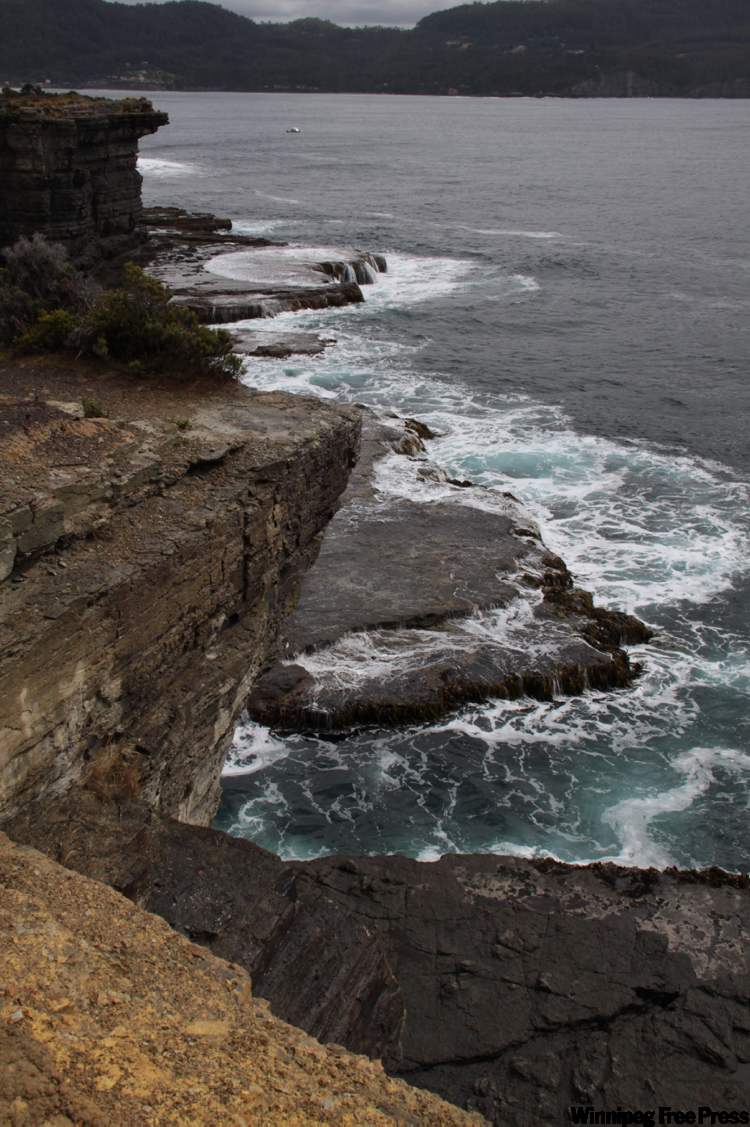
Reaching Freycinet (FRAY-sin-ay) National Park in the late afternoon, we went to Cape Tourville lighthouse. Stately gum trees lined the roadway. White blossoms of tea trees caught the fading light. The lighthouse sits proudly on a promontory overlooking rugged reddish granite cliffs. Far below, waves pounded and sprayed. These rocky headlands line the east coast, interspersed by warm, curving sand beaches.
Day 5: Freycinet National Park and Wineglass Bay
In the morning, we hiked to Wineglass Bay, reputed to be one of the prettiest beaches in the world. Turquoise waves crashed and swirled onto a long crescent of perfect white sand. We splashed happily in the tumbling waves.
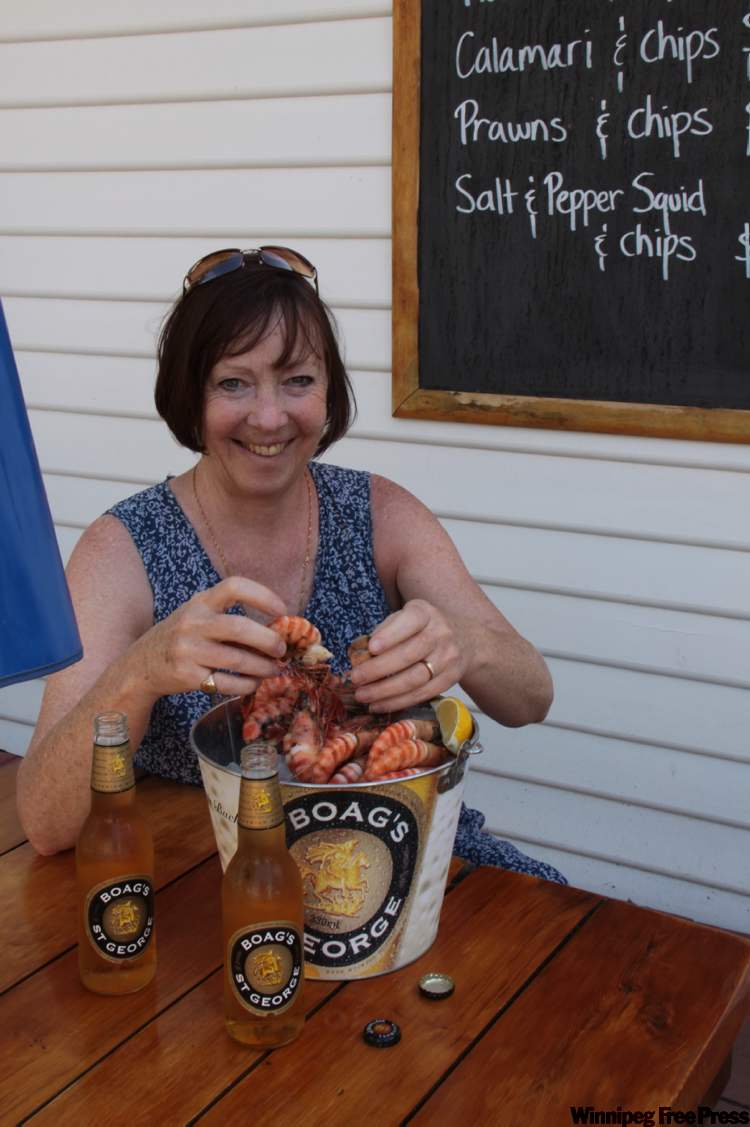
That evening, we found a restaurant where, to our astonishment, the wines started at $11 a bottle, tax and tip included! We devoured a pizza, washed down by a chilled chardonnay, while reflections of reddish granite hills shimmered in the bay.
At dusk, a bushy-tailed possum, about the size of a large cat and with bulging eyes, climbed onto our cabin deck. She sat for a while, then calmly walked up and gently nibbled my fingers. I was too surprised to protest. Then she sauntered to Allyson and lightly bit her toe. Not finding us palatable, she departed, presumably to find tastier fare.
Day 6: Port Arthur
Our destination was Port Arthur Historic Site, the penal colony established in 1833. A cruise took us to the Island of the Dead, where convicts were buried in unmarked graves. Next came Puer Point, where young boys were imprisoned. The guide explained how the first boys arrived dead drunk, having been transported in the same ship’s hold as a cargo of wine.
Wandering through the penitentiary, the hospital, the guard tower, servants’ quarters and the commandant’s house, whose elegance contrasted with the sparse surroundings, I mused about the role of convicts in Australia’s history and the cruelty of which humans are capable.
The Separate Prison was touching. Here, the convicts weren’t allowed to speak and had to wear hoods whenever they were out of their tiny cells. The prison was closed in 1877.
That moonless night, I returned for the ghost tour. By the feeble light of lanterns, our group shuffled into the blackness. At the roofless church, the guide told tales of desperate men forming suicide pacts and bodies tumbling from the high towers. We filed into the morgue in the prison’s dank basement and crowded around a large stone slab.
Our guide, holding a skull in one hand, explained how bodies were dissected here to see if the criminal brain was different than a normal brain. I shivered.
Day 7: Hobart
Back in Hobart, we found the Henry Jones Art Hotel on the historic waterfront. A jam factory from the 1820s was carefully restored and transformed into this luxury hotel. The curator led us on a tour of the hotel’s art.
“Some of our first guests hysterically called registration, claiming that blood was dripping from the ceiling,” she said. “But it was only the crystallized strawberry jam melting.”
As the plane rose and Hobart became smaller, Allyson and I already wanted to return.
— Postmedia News Service
IF YOU GO
Tasmania sites
— discovertasmania.com
Hobart accommodation
— thehenryjones.com
— wrestpoint.com
Launceston accommodation
— Peppers Seaport Hotel: peppers.com.au/seaport
Freycinet National Park accommodation
— Freycinet Lodge: puretasmania.com.au
Port Arthur accommodation
— Stewarts Bay Lodge: stewartsbaylodge.com.au
Parks and sites
— Narawntapu National Park: parks.tas.gov.au/index. aspx? id366
— East Coast Natureworld: natureworld.com.au
— Freycinet National Park: parks.tas.gov.au/index. aspx? base3363
— Port Arthur Historic Site: portarthur.org.au