

For some, democracy is a foreign term
The Democracy Project

Advertisement
Read this article for free:
or
Already have an account? Log in here »
To continue reading, please subscribe:

Digital Subscription
One year of digital access for only $205*
- Enjoy unlimited reading on winnipegfreepress.com
- Read the E-Edition, our digital replica newspaper
- Access News Break, our award-winning app
- Play interactive puzzles
*First annual payment billed as $205.00 + GST for one year. This annual subscription will automatically renew at $233.00 + GST every 52 weeks (10% off the regular annual price of $259.35). Offer available to new and qualified returning subscribers only. Cancel any time.
To continue reading, please subscribe:
Add Free Press access to your Brandon Sun subscription for only an additional
$1 for the first 4 weeks*
- Enjoy unlimited reading on winnipegfreepress.com
- Read the E-Edition, our digital replica newspaper
- Access News Break, our award-winning app
- Play interactive puzzles
*Your next Brandon Sun subscription payment will increase by $1.00 and you will be charged $17.95 plus GST for four weeks. After four weeks, your payment will increase to $24.95 plus GST every four weeks.
Read unlimited articles for free today:
or
Already have an account? Log in here »
Hey there, time traveller!
This article was published 15/01/2011 (5703 days ago), so information in it may no longer be current.
For many new Canadians, democracy is like manna from heaven. Southern Sudanese Winnipeggers drove through a blizzard to Calgary last week to vote on secession in their former homeland, for example.
For others, it’s a concept so foreign they’ve never heard of it. For some, election time is synonymous with violence and bloodshed.
Most newcomers, unlike a large chunk of established Canadians, it seems, don’t take democracy for granted.
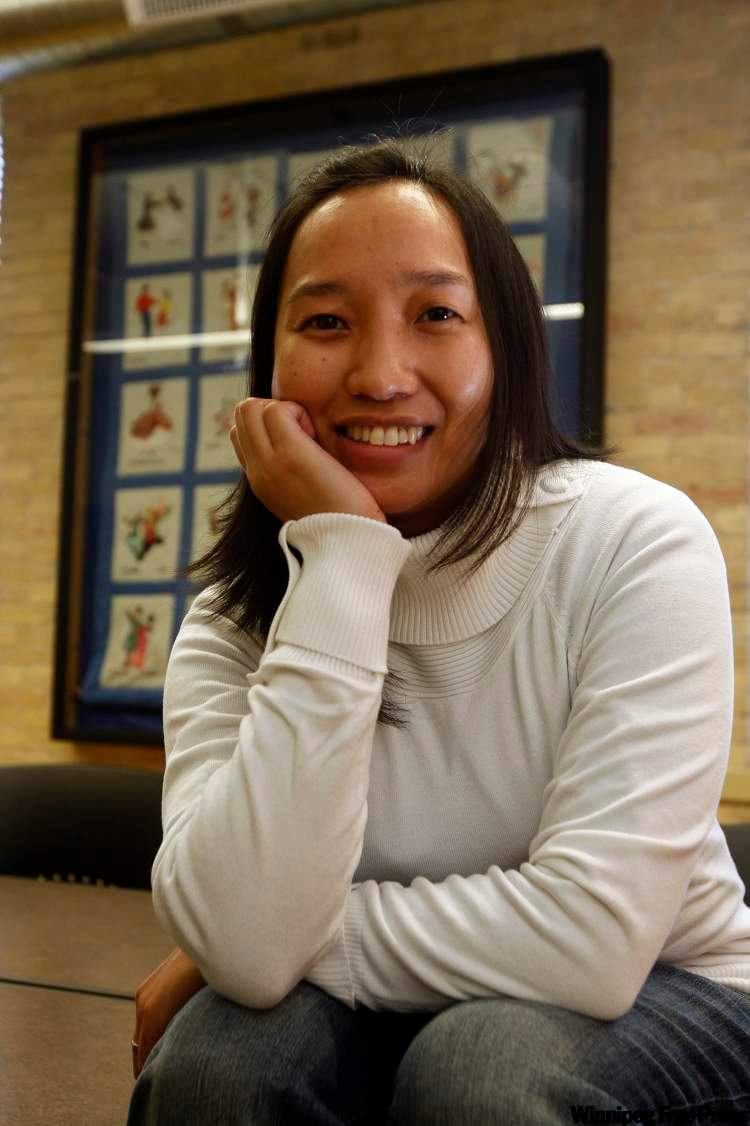
Maileen Pamplona, for instance, is just itching to take part in the democratic process.
“I am going to vote,” said the 31-year-old who came to Canada six years ago and just passed her citizenship test in December. As soon as she’s sworn in and eligible to vote, she will have a voice and plans to use it.
“Once you’re a citizen, you would really be heard.”
She’s even looking forward to receiving candidates’ leaflets in the mail and those pesky auto-dialled phone calls at election time.
“In the last election, I received a call — I don’t know whose party — and they asked if I’m going to vote. I said ‘I can’t — I’m not a citizen yet’,” she said, wincing.
The travel agency worker from the Philippines said she has no party or candidate loyalties.
“I want a good leader who’s concerned about the environment, the community, immigrants and jobs,” she said.
To be able to have a say, she paid $200 to register for the citizenship test and the 52-page instruction manual. Pamplona also signed up for a six-week Immigrant Centre course to help her prepare for the test.
“It was much easier to understand things in the book.”
But not for some of the newcomers struggling with English, she said. Pamplona encouraged one classmate from China to take English classes but the harried mom with small children and a demanding restaurant job couldn’t find the time.
After leaving communist China where speech isn’t free, she won’t be ready to find her voice politically here in Canada for some time, thinks Pamplona.
It can be a long and rough road to democracy for many, said Elections Manitoba’s education co-ordinator, Angela Chalmers.
The first question in the province’s new Your Power to Choose guide for adults that was tested on a group of newcomers showed her just how far some have to go.
“Have you ever voted before?” stumped them, said Chalmers.
“The instructor had to take a step back further to explain what ‘election’ even meant.” Democracy is a totally foreign concept to some.
“I’m talking about new Manitobans who may have come from places where they’re 50 years old and it’s the first election they’re eligible to vote in,” she said.
“Suddenly, they’re empowered to know that the government is a democracy for the people — whether people are acting on it or not,” she said.
Others have had experience with elections that were bloody and violent, said Chalmers. Her presence as an election official at a workshop with refugees was enough to strike fear and dread in one participant, she said.
“Is it going to be safe to send my children to school that day?” the woman asked Chalmers, who discovered why the woman was so terrified.
“Her country was a democratic country but when it came time for an election, people would be killed. People would go missing,” said Chalmers.
“We spent the first part of that workshop on how elections in Manitoba exist to ensure that our elections remain free and fair,” she said. The newcomer’s anxiety lifted, she said.
“It went from fear to relief to surprise to excitement at the idea that democracy really was alive and well in Manitoba and she was going to have an opportunity to participate in that,” said Chalmers.
Mohinder Saran came from one of the world’s largest democracies but, still, it took him nearly 40 years to go from temporary foreign worker in 1970 to MLA in 2007.
It was a long but worthy struggle, said the New Democrat from India.
In 1986, experiencing prejudice prompted him to join a political party.
Saran was a power engineer at Manitoba Government Services who lost a promotion to a less-qualified candidate. He felt he’d been overlooked because of prejudice. Then-MLA Marty Dolin — who now runs Welcome Place, Manitoba’s largest refugee settlement agency — successfully went to bat for him.
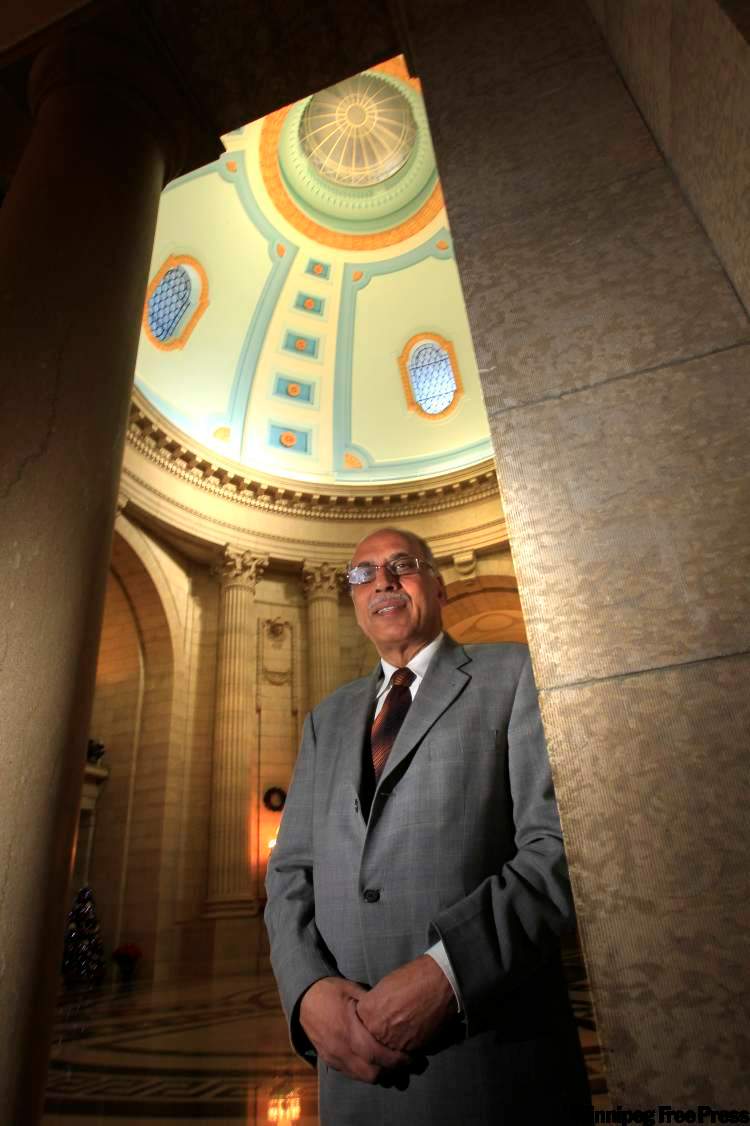
“That helped me,” said Saran, who paid it forward in 1999 when he became more politically involved.
“An East Indian guy wanted to win the nomination and I was helping him,” said Saran. “I had some standing in the community helping a lot of new immigrants to fill out their applications and with small things they’d inquire about.”
Then, in 2007, Saran himself was elected.
“The first generation came from India and are more involved because, one thing they know is, if you’re democratically involved you can make changes,” he said.
For example, fellow MLA and first-generation Canadian Bidhu Ja said he and the people in his Radisson riding were able to effect change, fighting to stop the OlyWest hog plant in their constituency a few years ago.
First-generation Canadians make up about 80 per cent of longtime Winnipeg MLA and Winnipeg North MP Kevin Lamoureux’s volunteer base, Lamoureux said. Over the years, he’s received more invitations to their birthday and anniversary celebrations than to established Canadians’ traditional events such as church teas, parades and service club functions.
The trick now is to get young people — the second, third and fourth generation Canadians — involved in the democratic process, said Saran. They need to know what’s in it for them, said Saran who has kids but no grandkids.
“You have to start with discussing their issues, like how education can be made cheaper: ‘You guys have to get involved.'”
carol.sanders@freepress.mb.ca
The Democracy Project
Newcomers, new voters
Adults in Manitoba who obtained citizenship and the right to vote:
2005 — 1,867
2006 — 3,219

2007 — 4,587
2008 — 3,553
2009 –2,938
Source: Citizenship and Immigration Canada
Carol Sanders
Legislature reporter
Carol Sanders is a reporter at the Free Press legislature bureau. The former general assignment reporter and copy editor joined the paper in 1997. Read more about Carol.
Every piece of reporting Carol produces is reviewed by an editing team before it is posted online or published in print — part of the Free Press‘s tradition, since 1872, of producing reliable independent journalism. Read more about Free Press’s history and mandate, and learn how our newsroom operates.
Our newsroom depends on a growing audience of readers to power our journalism. If you are not a paid reader, please consider becoming a subscriber.
Our newsroom depends on its audience of readers to power our journalism. Thank you for your support.
Carol Sanders
Legislature reporter
Carol Sanders is a reporter at the Free Press legislature bureau. The former general assignment reporter and copy editor joined the paper in 1997. Read more about Carol.
Every piece of reporting Carol produces is reviewed by an editing team before it is posted online or published in print — part of the Free Press‘s tradition, since 1872, of producing reliable independent journalism. Read more about Free Press’s history and mandate, and learn how our newsroom operates.
Our newsroom depends on a growing audience of readers to power our journalism. If you are not a paid reader, please consider becoming a subscriber.
Our newsroom depends on its audience of readers to power our journalism. Thank you for your support.
Related Articles
It's more out of duty than passion for politics

Advertisement Advertise With Us
Advertisement Advertise With Us