Heartbreaking humour
Steinbach-born author delivers beautiful novel / 4
Advertisement
Read this article for free:
or
Already have an account? Log in here »
To continue reading, please subscribe:

Digital Subscription
One year of digital access for only $205*
- Enjoy unlimited reading on winnipegfreepress.com
- Read the E-Edition, our digital replica newspaper
- Access News Break, our award-winning app
- Play interactive puzzles
*First annual payment billed as $205.00 + GST for one year. This annual subscription will automatically renew at $233.00 + GST every 52 weeks (10% off the regular annual price of $259.35). Offer available to new and qualified returning subscribers only. Cancel any time.
To continue reading, please subscribe:
Add Free Press access to your Brandon Sun subscription for only an additional
$1 for the first 4 weeks*
- Enjoy unlimited reading on winnipegfreepress.com
- Read the E-Edition, our digital replica newspaper
- Access News Break, our award-winning app
- Play interactive puzzles
*Your next Brandon Sun subscription payment will increase by $1.00 and you will be charged $17.95 plus GST for four weeks. After four weeks, your payment will increase to $24.95 plus GST every four weeks.
Read unlimited articles for free today:
or
Already have an account? Log in here »
Hey there, time traveller!
This article was published 02/04/2011 (5657 days ago), so information in it may no longer be current.
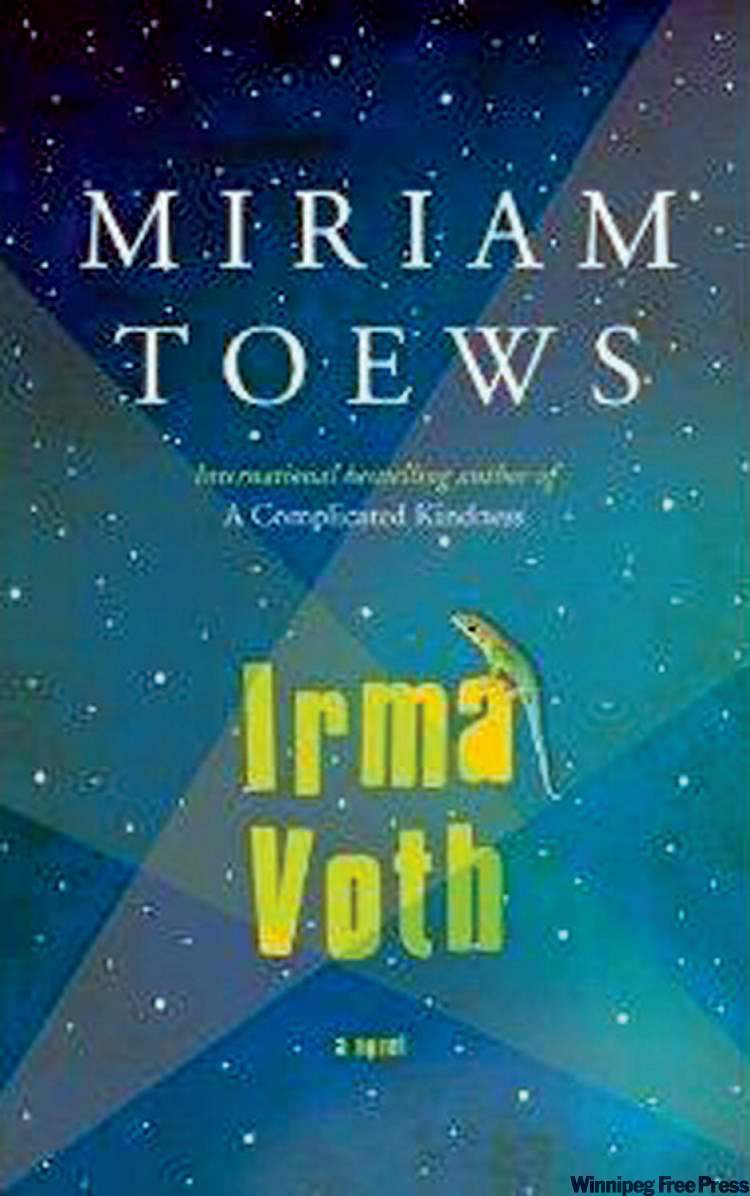
Irma Voth
By Miriam Toews
Knopf Canada, 255 pages, $30
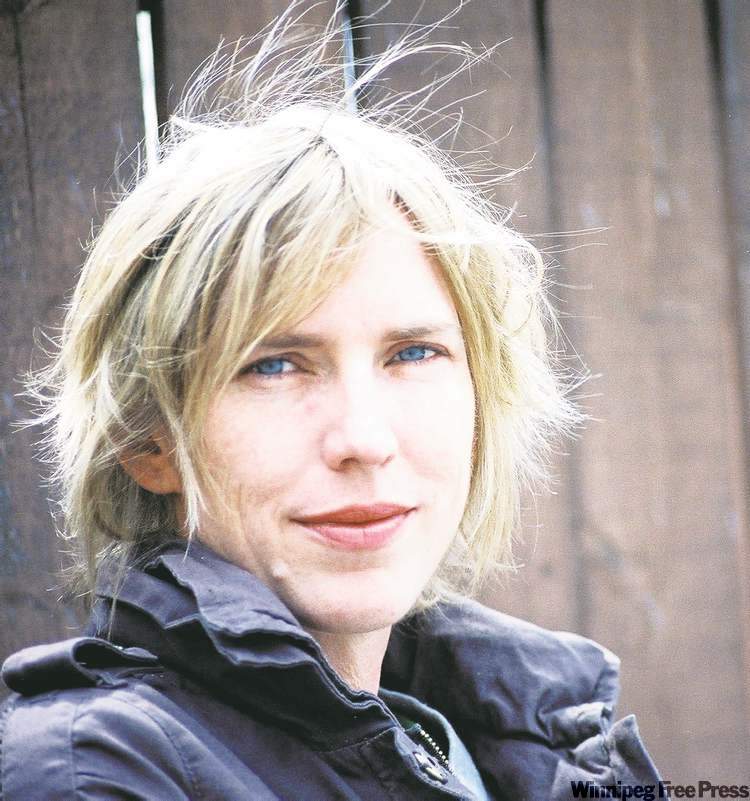
A new novel by a well-loved local (or formerly local) writer is always cause for celebration, and Winnipeg fans of Miriam Toews have good reason to break out the champagne.
Replete with the Steinbach-born Mennonite’s distinctive voice and self-deprecating humour, Irma Voth is a beautiful, heartbreaking novel about a young Mennonite woman discovering the cost of living an authentic life.
Toews’ four previous novels, from Summer of My Amazing Luck in 1996 to The Flying Troutmans in 2008, have earned her a reputation for unflinching honesty and keen insight into both the tragedy and comedy of human existence. Irma Voth continues this exploration.
No doubt inspired by her experience acting in the German art film Silent Light in Mexico in 2007, Irma Voth is set in a Mexican-Mennonite colony (Campo 6.5) near the city of Chihuahua.
The novel is relatively short, like Troutmans before it. It is narrated by its 19-year-old title character, who has earned her father’s wrath for marrying outside the community.
Having fled from Canada with her family under mysterious circumstances when she was 13, Irma is a stranger in a strange land.
She lives like a ghost in her community, yet works like a slave for her family. She wants to leave, but her harsh and autocratic father holds her there with threats only to punish her.
At first, her young Mexican husband, Jorge, lives with her, but then wants to make money so they can run away. He begins to work as a drug runner and soon he is never home.
Denied any real contact, she spies on her family in the evening. She lies awake at night trying to think of ways to be a better wife so Jorge will stay. She relies on cows for companionship and she prays.
“God, help me to live. Please, God, I need help living.”
As the enforced isolation plays fast and loose with her sanity, she observes the ridiculousness of her situation. Irma maintains her grip by appreciating the humour of her desperation and keeping her subversive rebellion alive.
“I spent the rest of the day cleaning the house and milking the cows and embroidering dangerous words onto the inside of my dresses, words like lust and agony and Jorge.”
Irma’s little sister Aggie finds ways to meet Irma on the road for “speed conversations.”
“It’s a silly thing we do together to make it seem like our imposed separation is not the source of continuous heartbreak and an abomination of what is just and loving but one long ridiculous joke like the Berlin Wall.”
It is in one of these meetings Irma finds out her mother is pregnant again, news that fills her with despair.
Though she puts on a brave face, we know that Irma is harbouring an ugly, dark secret. We also can tell that her father is capable of much more than we’ve already seen.
As if in answer to her prayers, a film production company moves in to the house next to hers. They’re there to shoot a moody and artistic film about the Mennonites of Mexico (not unlike, one supposes, Silent Light).
With remarkable courage, Irma crosses the field between her house and theirs, joins the crew and becomes an interpreter for the director.
Equally bewildered and delighted by this ragtag band of creative types, Irma adopts a cavalier confidence. Translating the director’s instructions to the German leading lady, she puts her own spin on his direction. She’s making her own movie, telling her own story.
When Aggie is beaten by their father for trying to run away from home, Irma takes action. The unwavering support of their mother, and the incredible risks she takes to protect her daughters, is astonishing.
Though very different from both her last novel, Troutmans, and her 2004 breakthrough, A Complicated Kindness, Irma Voth explores some similar themes.
Toews, who left Winnipeg for Toronto in 2009, mines the contradictions of growing up in a religious and culturally isolated community and explores coming of age in a society that has no regard for teen culture.
She explores the father-daughter relationship in a new light, giving it a tough and clear-eyed treatment here.

But this novel also calls to mind Ann-Marie MacDonald’s 1996 epic, Fall On Your Knees (although it’s a fraction of its length), with its strong sister relationships, a mother who loves and suffers and sacrifices for them, and the terrified, overprotective and volatile father who holds them all hostage.
Not content to let us just hate the bad guy, Toews gives us a glimpse into his deep humanity, his fumbling attempts at grace, his startling vulnerability.
This novel really is about forgiveness. It challenges the reader to forgive the characters for their flaws and tragic mistakes.
As we watch Irma learn to forgive herself, we see how easily she could lift the veil of unbearable grief from the family home. We begin to believe that all things are possible.
Debbie Patterson is a Winnipeg playwright and director.