Styron-dissing daughter lacks dad’s talents
Advertisement
Read this article for free:
or
Already have an account? Log in here »
To continue reading, please subscribe:

Digital Subscription
One year of digital access for only $205*
- Enjoy unlimited reading on winnipegfreepress.com
- Read the E-Edition, our digital replica newspaper
- Access News Break, our award-winning app
- Play interactive puzzles
*First annual payment billed as $205.00 + GST for one year. This annual subscription will automatically renew at $233.00 + GST every 52 weeks (10% off the regular annual price of $259.35). Offer available to new and qualified returning subscribers only. Cancel any time.
To continue reading, please subscribe:
Add Free Press access to your Brandon Sun subscription for only an additional
$1 for the first 4 weeks*
- Enjoy unlimited reading on winnipegfreepress.com
- Read the E-Edition, our digital replica newspaper
- Access News Break, our award-winning app
- Play interactive puzzles
*Your next Brandon Sun subscription payment will increase by $1.00 and you will be charged $17.95 plus GST for four weeks. After four weeks, your payment will increase to $24.95 plus GST every four weeks.
Read unlimited articles for free today:
or
Already have an account? Log in here »
Hey there, time traveller!
This article was published 23/04/2011 (5604 days ago), so information in it may no longer be current.
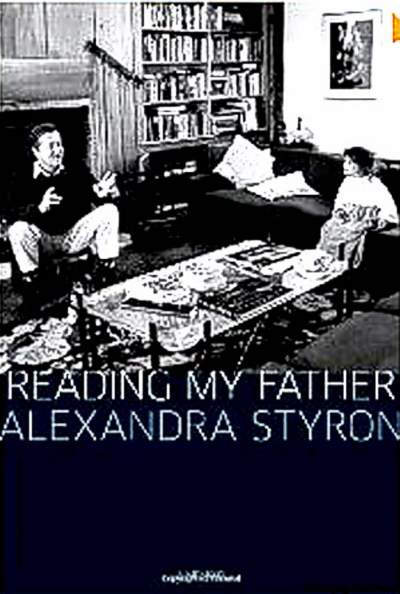
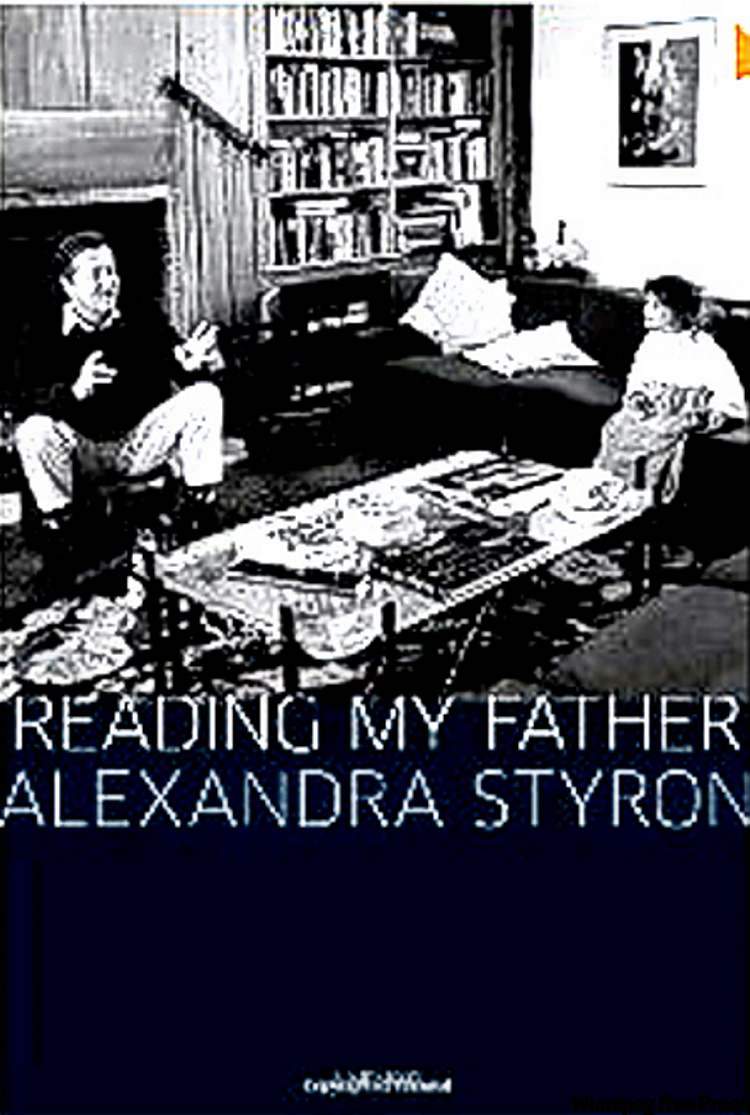
Reading My Father
By Alexandra Styron
Scribner, 281 pages, $29
WHEN she was a baby, the author of this dubious Daddy Dearest-style memoir fell down the basement stairs, landing on her head while Pop napped through the whole commotion.
When she was eight, Alexandra Styron’s father, the late American novelist William Styron, threatened, under no provocation, to sell her beloved pony “to the glue factory.”
This is pretty much as bad as he got. The author of two excellent postwar novels, The Confessions of Nat Turner (1967) and Sophie’s Choice (1979), Styron may have been a dreadful father to his son and three daughters — Alexandra was the baby by six years — but his sins were largely those of benign neglect.
Styron died five years ago at age 81, the last two decades of his life shrouded by a clinical depression that saw him twice institutionalized.
Like many career-obsessed men of his time, and certainly like most male artists always, Styron had no qualms about structuring his life around his work.
While his wife, Rose, ran the household, he slept until noon. He roused himself for lunch, read the papers, went for country walks and settled into writing, longhand on legal-sized pads, at 4 p.m.
His muse drained, he’d stop at 9 p.m. for dinner and drinks. Lots of drinks. He also managed to find time for considerable philandering, which Alexandra did not learn about until she was well into her teens. But the New York novelist Anne Roiphe, in her new memoir Art and Madness, is one to admit jumping into bed with Styron following a house party in the early 1960s.
“You could say my father’s whole life was one long preamble to personal armageddon,” Styron writes. “Hypersensitive, aloof, unexamined, not to mention hypochondriacal, agnostic, and alcoholic. Intellectual, passionate and infantile.”
Born in the South, he lost his mother to cancer when he was 13. The broad outlines of his youth appear in his first two autobiographical novels, and his biographer, James West, published an authorized life in 1998, on which the Styron offspring relies heavily.
So it’s fair to ask why Alexandra, now 45, a mother of two and the author of one novel herself, followed through with this cathartic project, which blends filial vengeance and a daughter’s natural awe with banal recollections of her own adolescent and adulthood.
She lacks the Gothic material given the memoir-scribbling children of such major writers as J.D. Salinger, John Cheever and Kingsley Amis. Moreover, it has been almost 20 years since Styron’s last book, the depression memoir Darkness Visible, and he has fallen from the culture’s radar, even though the 1982 movie version of Sophie’s Choice, with Meryl Streep, remains a touchstone among high-toned Hollywood dramas.

What stands out most here is not the family’s suffering but their privilege. Styron married into wealth — Rose’s parents, assimilated German Jews, owned a big department store in Baltimore — so money was never a problem, even before Nat Turner sold millions.
Like characters from Revolutionary Road or Mad Men, Bill and Rose socialized non-stop. The George Plimptons, Leonard Bernsteins, James Joneses and Norman Mailers occupied their exalted circle. (Styron had a notorious feud with Mailer, which West detailed and Alexandra repeats).
Joan Baez played folk songs in their house. They summered on Martha’s Vineyard, where various Kennedys, and even a Maria-Shriver-courting Arnold Schwarzenegger, dropped by for barbecues. No wonder Styron took so long between books.
As a writer herself, Alexandra has a warm touch. Her prose is vastly lighter than her dad’s formal and florid style. But he had the genius of anticipating the zeitgeist — with a novel about slavery, another about the Holocaust and a memoir about depression. Reading My Father, sorry to say, is beside the point.
Morley Walker edits the Free Press Books section.