

The less-friendly border
Intransigent customs agents make crossing a pain
Advertisement
Read this article for free:
or
Already have an account? Log in here »
To continue reading, please subscribe:
Monthly Digital Subscription
$1 per week for 24 weeks*
- Enjoy unlimited reading on winnipegfreepress.com
- Read the E-Edition, our digital replica newspaper
- Access News Break, our award-winning app
- Play interactive puzzles
*Billed as $4.00 plus GST every four weeks. After 24 weeks, price increases to the regular rate of $19.95 plus GST every four weeks. Offer available to new and qualified returning subscribers only. Cancel any time.
Monthly Digital Subscription
$4.99/week*
- Enjoy unlimited reading on winnipegfreepress.com
- Read the E-Edition, our digital replica newspaper
- Access News Break, our award-winning app
- Play interactive puzzles
*Billed as $19.95 plus GST every four weeks. Cancel any time.
To continue reading, please subscribe:
Add Free Press access to your Brandon Sun subscription for only an additional
$1 for the first 4 weeks*
*Your next subscription payment will increase by $1.00 and you will be charged $16.99 plus GST for four weeks. After four weeks, your payment will increase to $23.99 plus GST every four weeks.
Read unlimited articles for free today:
or
Already have an account? Log in here »
Hey there, time traveller!
This article was published 04/06/2011 (5425 days ago), so information in it may no longer be current.
VANCOUVER — Wayne Liptrot has fond memories of crossing the U.S. border in the 1970s at Point Roberts, where he had a bank account because he owned two condos in Hawaii.
“‘Hi, Wayne, where you going today?'” he recalled the friendly customs officer asking. “He’d just wave me through.”
Back then, he lived in Tsawwassen, B.C., a block from the border at Point Roberts. Wash.
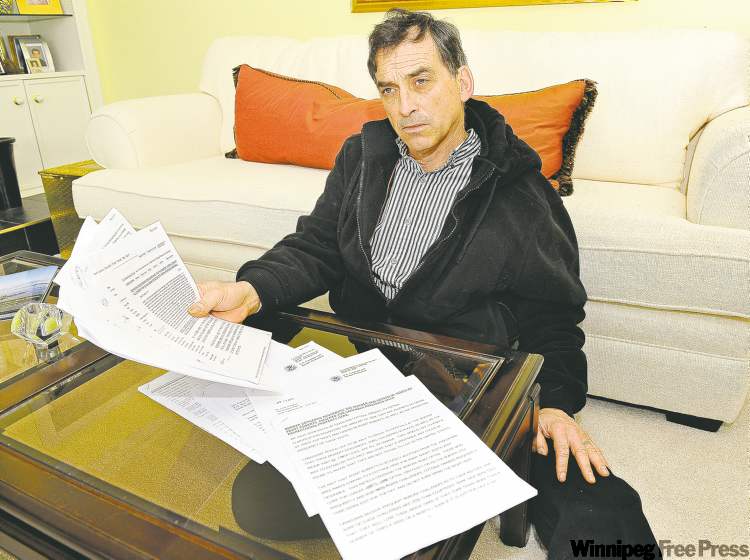
But the border is not friendly any more for Liptrot and an increasing number of Canadians.
In 2008, he was banned from entering the U.S. while trying to board a plane to Hawaii with his wife at Vancouver International Airport.
Liptrot, 68, recalls being pulled aside and questioned for more than six hours by a U.S. customs officer, who accused him of living in the U.S. between 1993 and 2006.
Flabbergasted, Liptrot told the officer he had all sorts of documents at home to prove he had been living in Canada and occasionally entered and left the U.S.
Without being allowed to show his documents, he was banned from entering the U.S.
“They told me if I tried going to the U.S., I’d be put in jail.”
He went back to the airport the next day with his documents and talked to the officer’s supervisor, who said he couldn’t overturn the decision.
“We ended up going to Mexico instead,” said Liptrot, who hasn’t been to the U.S. since.
Leah Shaffer, a North Vancouver man, owned a cottage in Point Roberts for 23 years.
Shaffer said he had a run-in with a border officer, who recently banned him from the U.S. for five years
Shaffer still is unsure what made the U.S. border guard who issued the ban think he was living permanently in the U.S. But the prospect of spending thousands of dollars to hire a lawyer and fight his removal order didn’t seem worth it.
He bid goodbye to America and sold his Point Roberts summer home.
The U.S. law being used against Canadians is called the Illegal Immigration Reform and Immigrant Responsibility Act of 1996, said Seattle lawyer Robert Pauw.
The intention of the law, he said, is to keep illegal aliens from sneaking across the border with fraudulent papers and seeking asylum in the U.S.
The law gave border officers the power to order an expedited removal of a suspected illegal alien for five years.
“It’s used much more widely on the southern border (with Mexico),” Pauw said
The lawyer believes a growing number of Canadians has been banished at the border after security was tightened following the Sept. 11, 2001 terrorist attacks in the U.S.
“I think it’s fair to say it was used much more broadly after 9/11.”
Len Saunders, a Canadian now working as a Blaine, Wash., immigration lawyer, deals exclusively with clients who have border immigration problems.
He said has been “swamped” with work since the 2001 terrorist attacks. “Since 9/11, there has been much more enforcement.”
The U.S. Department of Homeland Security, however, doesn’t provide breakdowns of its national figures for Canada or any of the provinces.
According to Homeland Security, which includes U.S. Customs and Border Protection, the U.S. welcomed 300 million people in 2009, the most recent statistics available.
Of those, 393,000 foreign nationals were removed from the U.S. that year — the seventh consecutive record high — with 72 per cent from Mexico.
Another 580,000 were allowed to return to their home countries without an expedited removal order, with 85 per cent of those being Mexican or Canadian.
There were 106,613 expedited removals from the U.S. in 2009, a figure that has been rising steadily from 69,923 in 2001.
Pauw, a Harvard Law School graduate and a nationally recognized expert on litigating immigration cases in Federal Court, believes the law is being wrongly applied to law-abiding Canadians who have proper travel documents (a Canadian passport) and are seeking only to enter the U.S. for pleasure.
“They are not coming with fraudulent travel documents or trying to sneak in,” he said. “It’s just insane how our border officers are treating Canadians. We see Canadians over and over again being grilled and intimidated.”
Pauw said he understands why Canadians subjected to such treatment start avoiding going to the U.S.
“It’s really terrible that our policies are causing people to have that attitude,” he said.
— — —
The law makes it very difficult to appeal a border officer’s decision, Pauw added.
An appeal must be filed in U.S. federal district court challenging whether a person is a U.S. citizen or an alien and whether an expedited removal order should have been issued.
Litigation can be expensive. One of Pauw’s Canadian clients, banned from entering the U.S. for five years, has spent $48,000 on a court challenge of a 2009 expedited removal order by a customs officer, which has the same effect as a court order by an immigration judge.
Pauw’s position in that case is that border officers are acting illegally, beyond the scope of what they are entitled to do. He learned recently that his client had lost the case.
“Basically, the U.S. Customs and Border Protection agency feels there is no law and they can do whatever they want,” Pauw said. “They can just look at a person and say, ‘I don’t like you, I don’t believe you’ and immediately act as the judge, jury and executioner, and banish a person from the United States for five years.”
A U.S. Court of Appeals case known as Khan vs. Holder put it this way last year: “The troubling reality of the expedited removal procedure is that a CBP officer can create the… charge by deciding to convert the person’s status from a non-immigrant with valid papers to an intending immigrant without the proper papers, and then that same officer, free from the risk of judicial oversight, can confirm his or her suspicions of the person’s intentions and find the person guilty of that charge.
“The entire process, from the initial decision to convert the person’s status to removal, can happen without any check on whether the person understood the proceedings, had an interpreter, or enjoyed any other safeguards. To say that this procedure is fraught with risk of arbitrary, mistaken, or discriminatory behaviour — suppose a particular CBP officer decides that enough visitors from Africa have already entered the U.S. — is not, however, to say that courts are free to disregard jurisdictional limitations.”
Pauw said the only way the problem can be fixed is if there are some high-level Canadian diplomatic discussions with Homeland Security Secretary Janet Napolitano, or if Canada’s prime minister raises the matter with the U.S. president.
— — —
Chief Tom Schrieber of Customs and Border Protection in Blaine, Wash., said officers across the U.S. check almost two million visitors a day and, on average, only 225 are refused entry.
“We have to facilitate legitimate travel and trade while providing border security,” he explained.
Schrieber said he couldn’t discuss specific cases because of privacy protections, but added: “If an individual thinks they were improperly inspected at the border, there is a redress program.”
He said those who want to file a complaint with Homeland Security can do so online at www.dhs.gov and go to a section under Border Security titled One-Stop Travellers Redress Program.
Homeland Security will investigate each complaint, he said. “We get somebody to take a second look at it.” Schrieber acknowledged post-9/11 security measures have resulted in some people being unfairly refused entry or flagged, such as a person with the same name as a criminal deemed inadmissible, or someone who lost their passport or had it stolen.
“Now we have to build down to the fact that this is the victim, not the thief,” Schrieber said.
“It’s a bit of a learning curve.” But that’s little comfort for people such as Liptrot, who couldn’t join his wife, daughter, mother-in-law and one of his five grandchildren last November when they went to Hawaii.
“It’s total stupidity,” he said of being banned from the U.S. for what he believes was no clear reason, considering he is a law-abiding citizen.
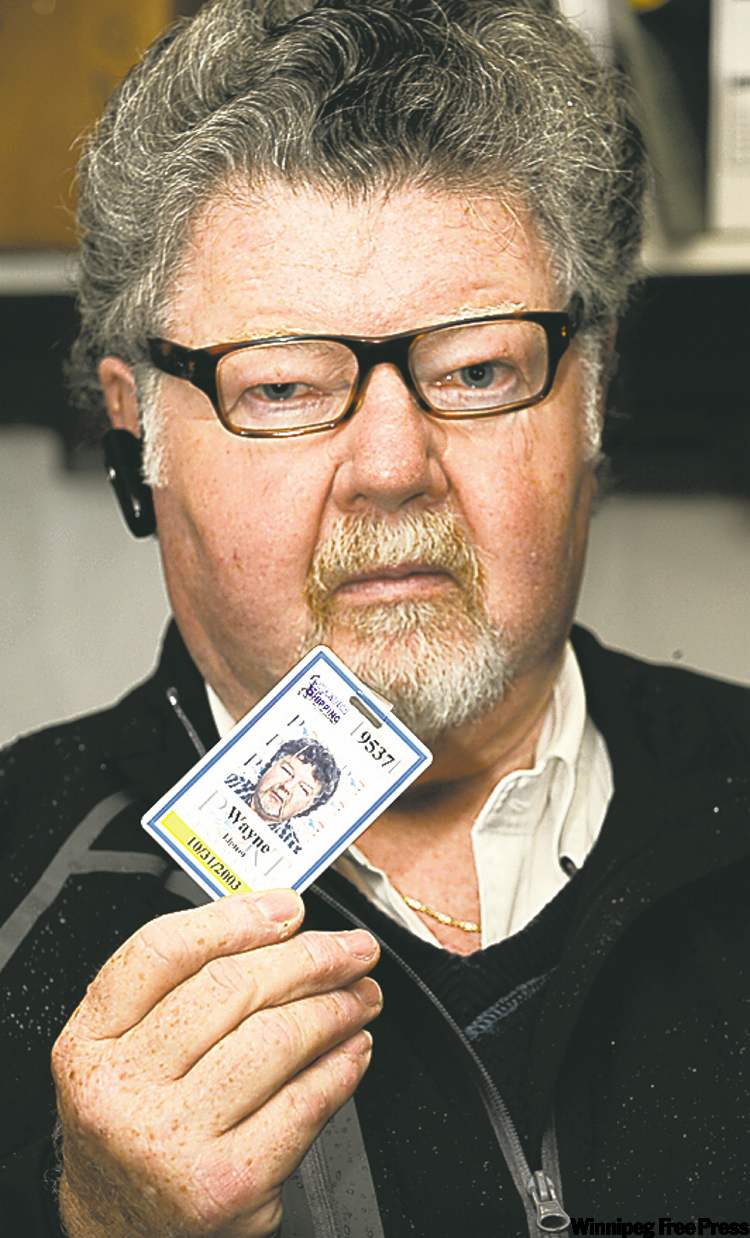
Ironically, Liptrot worked on contract in 1994-95 for U.S. Immigration at Vancouver’s airport, and had a security pass for the Port of Vancouver when he had a business in 2003 selling specialty food products to cruise ships.
Liptrot tried hiring a U.S. lawyer to sort out his border problem but was told it would take $8,000.
“I said, ‘Forget it.’ ” He went to his MP at the time, John Cummins, who told him to write to Homeland Security, which he did, sending along copies of his documents. He said he never received a reply.
“We have a pretty good relationship with the U.S. and this is the way they treat us.”
— — —
Glenn Walsh, a 69-year-old Canadian businessman from Vancouver, suffered a similar border nightmare.
Walsh said he’s been turned away from the U.S. border four or five times over the last two years.
“Each time I cross the border, I have to go into the back room for two hours,” he said over the phone from his vacation home in Puerto Vallarta. “I go through an inquisition. Sometimes they turn me away, sometimes they don’t. There’s no rhyme or reason to it.”
Walsh said his problems began in 2009 when the harbour master in Blaine, Wash., where he moors his 16-metre power cruiser, phoned him in Mexico to say there was a problem with the bilge pump on his boat.
Walsh flew back to Vancouver and tried to cross the border late at night, planning to stay overnight on his boat and get the problem fixed in the morning. He was grilled about working in the U.S. and was refused entry. No reason was given, he said, adding the border officer told him: “I ask the questions around here.” The worst part, Walsh said, was that the officer red-flagged his name on the computer. Now, every time he crosses the border he is questioned for hours by officers.
“It’s a huge inconvenience,” Walsh said. “Once, at the truck crossing, I was handcuffed and body-searched. I have gone through this inquisition at the Toronto, Los Angeles, Sea-Tac and Vancouver airports, and three of the land crossings into Washington.”
He has a U.S. lawyer, who is trying to get the flag removed.
“There’s no real appeal process,” he explained. “It’s kind of a blind tunnel. I don’t know where to turn… The really disappointing thing is I spend a fair amount of time in Europe — it’s a lot easier than getting in the U.S..”

To avoid the border hassles, Walsh now moors his U.S.-registered boat in Campbell River, even though he’s still paying moorage in Blaine.
He and his wife used to spend a few weeks on the boat in Blaine, getting it ready for summer, then would go cruising up B.C.’s coast for several months.
Walsh said he owns more than a dozen companies in B.C. and Alberta and has major investments in three corporations in Arizona, Alaska and Washington. He used to go to Seattle for business meetings. Now, he asks his Seattle associates to come to Vancouver, so he doesn’t have to face crossing the border.
–Vancouver Sun