

Indian Act must go, agreed
Advertisement
Read this article for free:
or
Already have an account? Log in here »
To continue reading, please subscribe:
Monthly Digital Subscription
$1 per week for 24 weeks*
- Enjoy unlimited reading on winnipegfreepress.com
- Read the E-Edition, our digital replica newspaper
- Access News Break, our award-winning app
- Play interactive puzzles
*Billed as $4.00 plus GST every four weeks. After 24 weeks, price increases to the regular rate of $19.95 plus GST every four weeks. Offer available to new and qualified returning subscribers only. Cancel any time.
Monthly Digital Subscription
$4.99/week*
- Enjoy unlimited reading on winnipegfreepress.com
- Read the E-Edition, our digital replica newspaper
- Access News Break, our award-winning app
- Play interactive puzzles
*Billed as $19.95 plus GST every four weeks. Cancel any time.
To continue reading, please subscribe:
Add Free Press access to your Brandon Sun subscription for only an additional
$1 for the first 4 weeks*
- Enjoy unlimited reading on winnipegfreepress.com
- Read the E-Edition, our digital replica newspaper
- Access News Break, our award-winning app
- Play interactive puzzles
*Your next Brandon Sun subscription payment will increase by $1.00 and you will be charged $17.95 plus GST for four weeks. After four weeks, your payment will increase to $24.95 plus GST every four weeks.
Read unlimited articles for free today:
or
Already have an account? Log in here »
Hey there, time traveller!
This article was published 14/07/2011 (5411 days ago), so information in it may no longer be current.
The Assembly of First Nations has once again set out its intent to get Canada’s reserves and status Indians out from under the rule of the Indian Act, to begin the dismantling of the department that delivers funding, services and oversight to band governments. Most Canadians may agree with the country’s chiefs on this vision. The devil is in the details.
And there is very little detail in the paper released by AFN Grand Chief Shawn Atleo Tuesday. A summary of recommendations of various studies and of previous assembly ideas, it reasserts the need for a national commitment to self-government by First Nations, to strong, accountable governance on reserves and to a new entity to mediate government relations.
These themes have outlasted generations of governments, band and federal alike. The Indian Act, an archaic and paternalistic piece of law that ought to be the embarrassment of a modern, democratic state, was targeted in 1969 by Jean Chrétien, then Liberal Indian affairs minister under a prime minister who was offended by the concept of two tiers of citizenship in Canada. Pierre Trudeau thought all Canadians should possess equal rights and obligations. His White Paper was killed by the bands, not out of love for the Indian Act, but because it would have displaced treaty rights and assimilated Indian people.
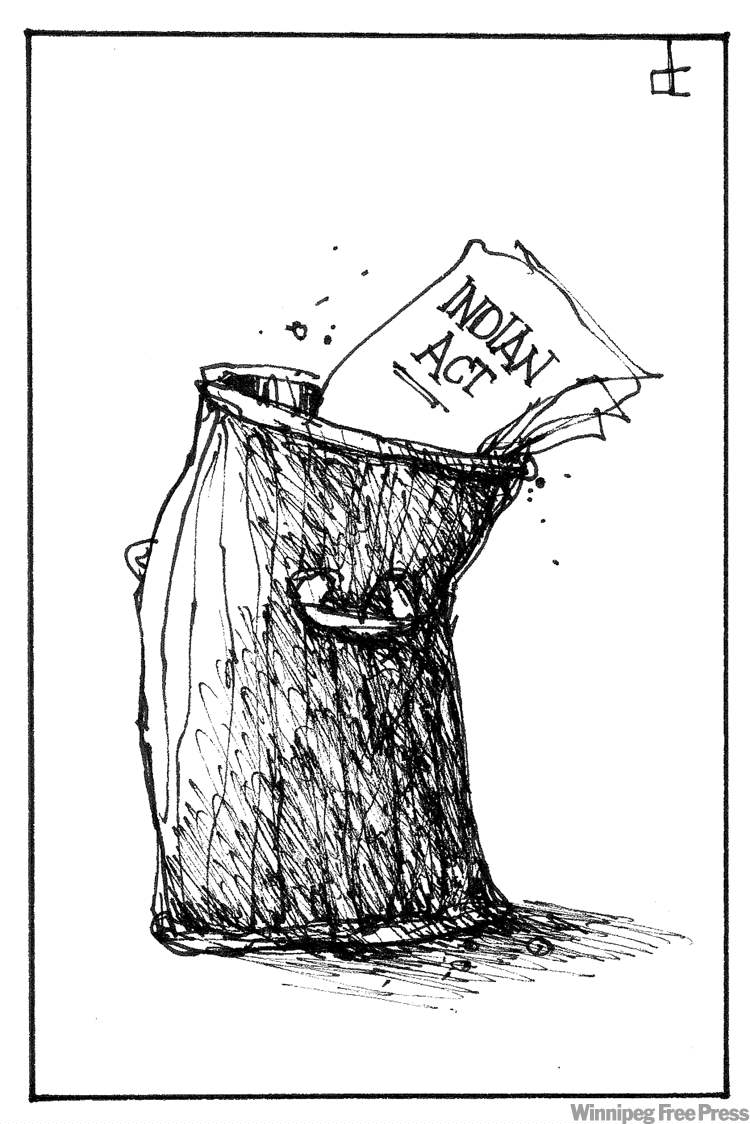
Negotiations, governance and services with, by and for band members in the last 40 years have changed slowly. But the demand for self-government has remained constant. New treaties have been signed that give robust recognition to the right to self-government and the claim First Nations hold over traditional land and resources since the signing of agreements in past centuries with the Crown. What has not been ceded by either side of the negotiating table, however, is the concept of sovereignty — some First Nations believe they are nations unto themselves and that Canadian law does not apply on their land; Ottawa and successive Supreme Court decisions assert the federal government’s rule.
The assembly’s paper does not resolve that disconnect. It recognizes that something as basic as First Nation citizenship remains murky. But what everyone can agree upon is the futility of retaining the Indian Act. The overhaul required to respect the integrity of First Nations governments, which must seek the federal minister’s approval for every bylaw passed, and the rights of individuals on reserves would be so extensive as to render it unrecognizable. Better to scrap it and sign new agreements that lead to good governance and sufficient funding so that band services can be modernized, as well.

It is not so simple, however. Beyond the fine details of eliminating both the act and the government department that flows funding and services to bands, some reserve residents are afraid such dismantling would hand too much power to their politicians and sever a long-standing relationship with the Crown.
First Nations chiefs want meaningful power for their bands and fair, predictable funding agreements to bring their communities’ living standards to a Canadian norm. Canadians want the same. The Harper government’s tack to date is to focus on improving specific services. The agendas have lots of common ground and goodwill. That should be exploited to the lasting benefit of 700,000 of this country’s citizens.