

The rise of junk justice
Advertisement
Read this article for free:
or
Already have an account? Log in here »
To continue reading, please subscribe:
Monthly Digital Subscription
$0 for the first 4 weeks*
- Enjoy unlimited reading on winnipegfreepress.com
- Read the E-Edition, our digital replica newspaper
- Access News Break, our award-winning app
- Play interactive puzzles
*No charge for 4 weeks then price increases to the regular rate of $19.00 plus GST every four weeks. Offer available to new and qualified returning subscribers only. Cancel any time.
Monthly Digital Subscription
$4.75/week*
- Enjoy unlimited reading on winnipegfreepress.com
- Read the E-Edition, our digital replica newspaper
- Access News Break, our award-winning app
- Play interactive puzzles
*Billed as $19 plus GST every four weeks. Cancel any time.
To continue reading, please subscribe:
Add Free Press access to your Brandon Sun subscription for only an additional
$1 for the first 4 weeks*
*Your next subscription payment will increase by $1.00 and you will be charged $16.99 plus GST for four weeks. After four weeks, your payment will increase to $23.99 plus GST every four weeks.
Read unlimited articles for free today:
or
Already have an account? Log in here »
Hey there, time traveller!
This article was published 27/07/2011 (5244 days ago), so information in it may no longer be current.
The appalling treatment of an American grandmother who was jailed for 12 days in Winnipeg on suspicion of trying to smuggle heroin into Canada exposes the problem of relying on fallible technology at the expense of common sense and human intelligence.
Janet Goodin, 66, was ensnared in an Orwellian nightmare when Canadian border agents arrested her after a roadside drug test determined a jar of what she assumed was motor oil was heroin. She was locked up at the Winnipeg Remand Centre while the motor oil/heroin was sent off for tests, a process that took 12 days, even though the results were requested on an urgent basis.
Ms. Goodin’s protests of innocence were ignored because the field test is considered nearly infallible by the Canadian Border Services Agency (CBSA).
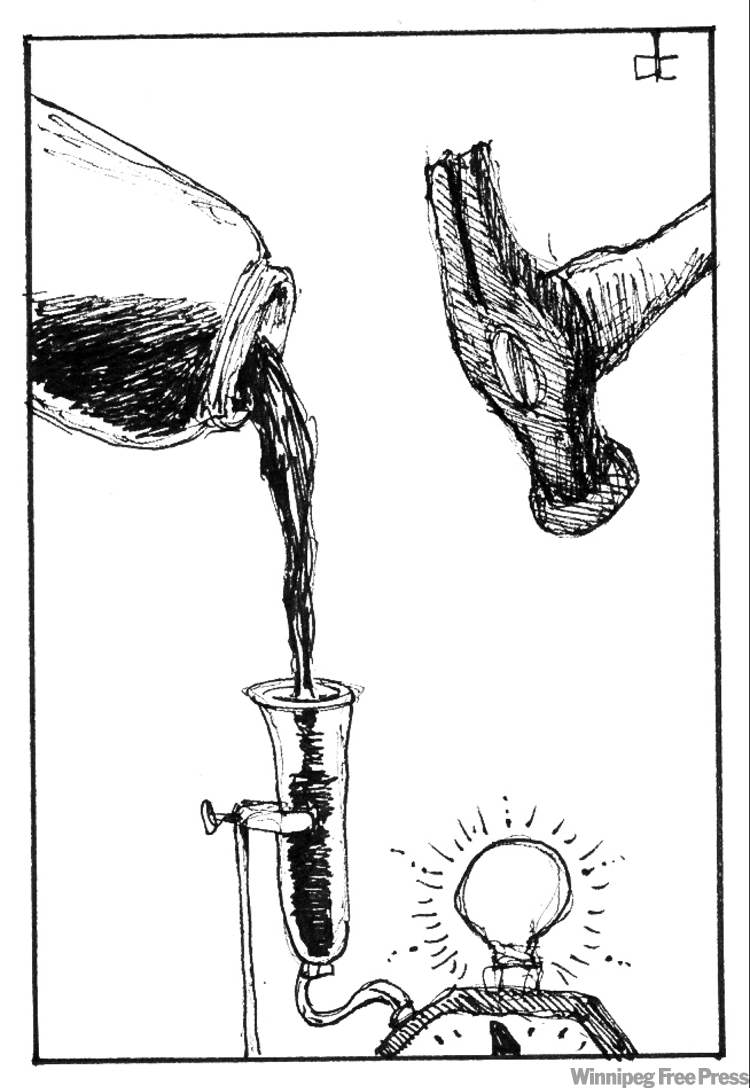
The case might be written off as an anomaly or unfortunate mistake, except for the fact it was not the first time false positives have turned up during border searches.
A Toronto couple was arrested at an airport three years ago when something in their carry-on bag tested positive for hashish. After being cleared of that charge, they were stopped months later on a border crossing in eastern Canada and again charged with trying to smuggle drugs. Both times it was chocolate that produced the false positives.
Other Canadians and Americans have been caught in the same trap, sometimes being jailed for months, a problem that civil libertarians and lawyers say is growing as police and border agencies increasingly rely on drug tests and other technology to screen travellers. It turns out there is a long list of products, particularly organic compounds and natural foods, that can produce false results.
Technology plays an important role in security and criminal investigations, but it can also lead to horrible cases of persecution of the innocent. Facial-recognition technology, for example, is considered the next frontier in security, at least until it leads to the false arrest of someone’s grandmother.

The risk is that gadgets will supersede street smarts in making ordinary evaluations of human conduct. Once Ms. Goodin was in Canada, for example, there was no need to lock her up. Could no one determine that her nervousness was born of fear, not guilt? It should have been enough to seize her passport until the matter was settled.
The border agency needs to conduct a thorough review of its field tests to determine their reliability. And new protocols are needed on how to manage people who are caught by a drug or explosives test, but who have no history of law-breaking and present no other signs of being a threat.
No one’s liberty, as the American Civil Liberties Union has stated, should be subject “to a game of chance.”
Everyone involved in Ms. Goodin’s nightmare — the border agency, RCMP and the federal justice department — all claim they were merely doing their jobs. RCMP took its cue from the CBSA, which isn’t responsible for the fact the woman was charged and then denied bail; the justice department never interviewed the poor woman and merely followed legal protocol; and on and on.
No one took the time to ask if it was fair to deny an elderly widow her liberty because of an unreliable field test, the ultimate breakdown in justice and decency.
Related Articles
Border drug tests defended Arrested senior wants apology, compensation for her ordeal
Advertisement Advertise With Us
Advertisement Advertise With Us