

FEELING DOWN? How about some Descartes?
Advertisement
Read this article for free:
or
Already have an account? Log in here »
To continue reading, please subscribe:
Monthly Digital Subscription
$1 per week for 24 weeks*
- Enjoy unlimited reading on winnipegfreepress.com
- Read the E-Edition, our digital replica newspaper
- Access News Break, our award-winning app
- Play interactive puzzles
*Billed as $4.00 plus GST every four weeks. After 24 weeks, price increases to the regular rate of $19.95 plus GST every four weeks. Offer available to new and qualified returning subscribers only. Cancel any time.
Monthly Digital Subscription
$4.99/week*
- Enjoy unlimited reading on winnipegfreepress.com
- Read the E-Edition, our digital replica newspaper
- Access News Break, our award-winning app
- Play interactive puzzles
*Billed as $19.95 plus GST every four weeks. Cancel any time.
To continue reading, please subscribe:
Add Free Press access to your Brandon Sun subscription for only an additional
$1 for the first 4 weeks*
*Your next subscription payment will increase by $1.00 and you will be charged $16.99 plus GST for four weeks. After four weeks, your payment will increase to $23.99 plus GST every four weeks.
Read unlimited articles for free today:
or
Already have an account? Log in here »
Hey there, time traveller!
This article was published 28/08/2011 (5323 days ago), so information in it may no longer be current.
WASHINGTON — Patricia Anne Murphy is a philosopher with a real-world mission.
Murphy may have a PhD and an intimate knowledge of Aristotle and Descartes, but in her snug suburban bungalow, she’s helping a broken-hearted patient struggle through a divorce.
Instead of offering a prescription for Effexor — which she’s not licensed to do anyway — she instructs the wounded wife to read Epictetus, the original cognitive therapist, who argued that humans often mistake their feelings for facts and suffer as a result.
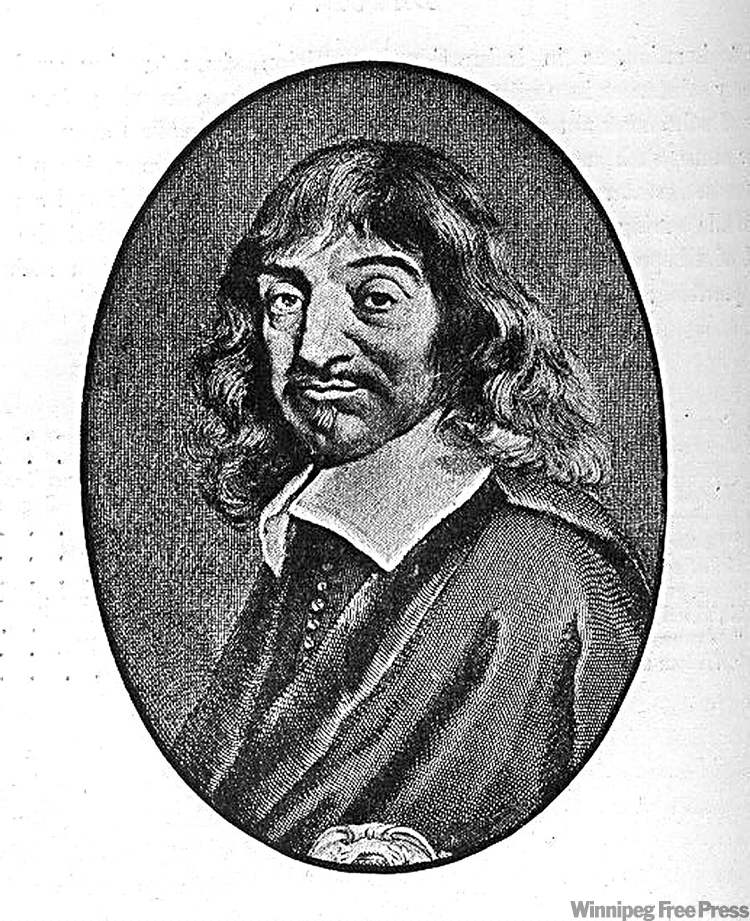
Murphy is one of an increasing number of philosophical counsellors, practitioners who are putting their esoteric learning to practical use helping people with some of life’s persistent afflictions. Though they help clients cope with many of the same issues that conventional therapists do — divorce, job stress, the economic downturn, parenting woes, chronic illness and matters of the heart — their methods are very different.
They’re like intellectual life coaches. Very intellectual. They have in-depth knowledge of Jean-Paul Sartre’s existentialist theories on the nature of life and can recite passages from Martin Heidegger’s phenomenological explorations of the question of being. And they use them to help clients overcome their mother issues.
Philosophical counsellors are becoming increasingly popular at a time when North Americans are taking more antidepressants than ever.
“Not everyone needs to be medicated,” Murphy said. “Whereas drugs can treat the body… there may be other things that the soul needs.”
Seeing Murphy doesn’t involve lying on a couch or reaching for the obligatory tissue box. Though she works from a home library lined with tomes by Albert Camus, Soren Kierkegaard and Immanuel Kant, Murphy takes clients outside for brisk strolls because Kant believed that walking helped thinking and was soothing for the soul.
Of course, such therapy is not for everyone.
“It really depends on the disorder or mental health issue,” said Mark Hamilton, director and chief executive of American Mental Health Counsellors Association. “I think the fact that (philosophical counsellors) are not trained as clinical mental health counsellors is a concern… For someone with a serious mental issue, they need to see a trained mental health professional.”
Philosophical counsellors say they immediately refer any client with clinical depression or suicidal thoughts to psychiatrists, fearing lawsuits if they make a mistake by prescribing Kierkegaard to a client who really needs Klonopin.
The field is still in its early stages. There are about 300 philosophical counsellors in more than 20 countries who are certified by the American Philosophical Practitioners Association, said Lou Marinoff, president of the organization.
The bushy-bearded Marinoff is the public face of philosophical counseling. Dispensing his rapid-fire Socratic-shrink shtick, he could be a cross between Woody Allen and Sigmund Freud.
Trying to overcome the grief of losing your job in a bad economy?
“Read the Chinese philosopher Lao Tzu, founder of Taoism, who taught that every loss comes bundled with gain, for they are inseparable manifestations of yin and yang,” offered Marinoff.” Instead of focusing on the loss, focus on the gain: Losing a job, you have just gained an opportunity to develop a latent talent and to enter a more suitable career path.”
Those mired in depression and anxiety over weight gain should turn to the French existentialist philosopher Sartre, who has much to say on the art of self-deception.

The advent of this new therapy is well-timed, since many philosophers are out of work — or more out of work than usual.
Colleges and universities responding to the demand for majors that students can bring to the bank have cut philosophy departments and classes. As Marinoff puts it: “What are the first words a philosophy graduate utters? ‘Would you like fries with that, sir?’
“See, the fries joke, that’s exactly what we are trying to change,” Marinoff said. “The Greeks had ancient philosophers at every street corner. Today, our society is more like Rome with our circus culture. It’s all very entertaining. But we have to change the public perception of a philosopher as some useless academic relic.”
— The Washington Post