

Secrets of the Bay of Pigs
Revealed: The CIA's own account of its epic failure
Advertisement
Read this article for free:
or
Already have an account? Log in here »
To continue reading, please subscribe:

Digital Subscription
One year of digital access for only $205*
- Enjoy unlimited reading on winnipegfreepress.com
- Read the E-Edition, our digital replica newspaper
- Access News Break, our award-winning app
- Play interactive puzzles
*First annual payment billed as $205.00 + GST for one year. This annual subscription will automatically renew at $233.00 + GST every 52 weeks (10% off the regular annual price of $259.35). Offer available to new and qualified returning subscribers only. Cancel any time.
To continue reading, please subscribe:
Add Free Press access to your Brandon Sun subscription for only an additional
$1 for the first 4 weeks*
- Enjoy unlimited reading on winnipegfreepress.com
- Read the E-Edition, our digital replica newspaper
- Access News Break, our award-winning app
- Play interactive puzzles
*Your next Brandon Sun subscription payment will increase by $1.00 and you will be charged $17.95 plus GST for four weeks. After four weeks, your payment will increase to $24.95 plus GST every four weeks.
Read unlimited articles for free today:
or
Already have an account? Log in here »
Hey there, time traveller!
This article was published 03/09/2011 (5478 days ago), so information in it may no longer be current.
MIAMI — A once-secret CIA history of the Bay of Pigs invasion lays out in unvarnished detail how the American spy agency came to the rescue of and cut deals with authoritarian governments in Central America, largely to hide the U.S. role in organizing and controlling the hapless Cuban exile invasion force.
The report, in chronicling how American secret agents dealt with the ’60s-era governments of Guatemala and Nicaragua, provides important evidence, in official U.S. government words, to the truth of the old adage that the most powerful people in Central American embassies were the CIA station chiefs.
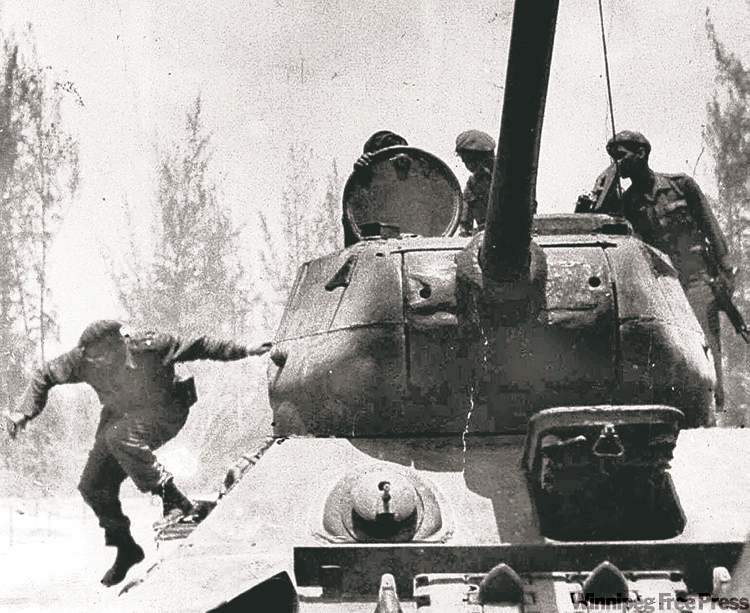
Ambassadors stepped aside and allowed the CIA to negotiate deals for covert paramilitary bases in a newly released portion of the CIA’s Official History of the Bay of Pigs Operation. CIA pilots and Cuban foot soldiers then helped suppress a Guatemalan army coup attempt that threatened their foothold in the country. Gen. Anastasio Somoza hit up the CIA for a $10-million payoff, development loans, as the price of letting the Americans launch the Cuban exile invasion from Nicaragua.
“What you’re reading in this report shows again that in the hypocritical name of democracy the United States and CIA were willing to prop up some of the most cutthroat dictatorships,” said George Washington University researcher Peter Kornbluh of the school’s National Security Archive. He sued the CIA for release of the top secret document that dissects one of the agency’s greatest failures.
Using secret interviews, cables and memos, CIA historian Jack B. Pfeiffer wrote the classified account of the disastrous operation to topple Fidel Castro. It’s unusually candid, because nobody except spies were expected read it.
Volume II, just released, focuses on foreign policy, particularly dealings with Guatemala and Nicaragua. It struck Kornbluh as a surprisingly self-complimentary description of the CIA’s agile role as a diplomatic force.
Both the Eisenhower and Kennedy governments wanted to be able to deny responsibility for the invasion. So the bulk of the paramilitary training took place in Guatemala, with hundreds of anti-Communist Cuban foot soldiers and their CIA trainers packed away for months on a remote ranch. Nicaragua would later provide the runway and launch site for the actual air and sea operation.
But Guatemala was formative. So much so that the Cuban exile force’s Brigade 2506 got its name there when a trainee fell off a cliff and plunged 1,800 metres to his death. Carlos Rodriguez was the first to die in the fiasco, seven months before the assault while scouting for a base camp on the farm of an anti-Communist confident of the Guatemalan president. His brigade dog tag was numbered 2506.
Leaders of both countries are shown in the documents refusing to take the heat for the Bay of Pigs at a time when the United States pointedly picked them in order to argue plausible deniability in the invasion of a sovereign country. Then Nicaraguan president Luis Somoza wanted a promise that, once the exile endeavour was exposed, the U.S. government would protect him from the wrath of the Organization of American States and United Nations for helping Cuban exiles prepare the April 1961 invasion.
But the most dramatic episode is laid out in a 1960 coup attempt in Guatemala. It threatened the U.S. special relationship with Guatemalan President Miguel Ydigoras Fuentes and imperiled Brigade training on a farm belonging to Ydigoras Fuentes’ confidant Roberto Alejo.
The Guatemalan president and CIA had been beating the anti-Communist drum for months. The Guatemalan president is described as spreading lies about a Cuban warship off his country’s coast — there was none, said Pfeiffer — and as a byproduct helps brigade recruitment in August 1960.
Then, on Nov. 13, 1960, a large group of dissident Guatemalan Army officers led an uprising against the presidency. The military seized the Caribbean banana port Puerto Barrios and junior officers disarmed the chief of staff at La Auroria Air Force headquarters.
The president, for his part, blamed Cuban Communists and appealed to the CIA for help. Pfeiffer called it a convenient lie.
The charge that the revolt was Castro-backed would be repeated throughout the period, Pfeiffer wrote on page 34. But no evidence was ever found to indicate it was anything other than an internal uprising of dissident Guatemalans, principally elements of the army.
Either way, the special CIA-Guatemalan relationship was in peril, as was the future of the Cuban Brigade.
Cuban foot soldiers, believing that Cuban Communists were behind the rebellion, volunteered by the hundreds. American pilot C.W. Seigrist reported he and another CIA pilot flew sorties aboard B-26 Invader planes, each with Cuban pilot-observers in the cockpit. At Puerto Barrios, they strafed the area with rockets and .50-calibre machine-gun fire. C-46 Commando planes followed carrying members of the brigade.
The ambassador was kept in the dark about the operation. Seigrist said he and the Cuban fighters were all volunteers. “We felt that what we were working for would all go down the tubes if the revolt was successful and we were exposed,” he says in the official history.
Former Bay of Pigs pilot Esteban Bovo was on standby to join a second brigade wave defending Ydigoras Fuentes. About 200 Cuban exile infantrymen were dispatched to Puerto Barrios, he recalled, but the rebellion was over by the time they arrived.
“If we lost the friendliness of the Guatemalan government, the operation would have to be disbanded,” he said in an interview with the Miami Herald. “Not transferred. Disbanded.”
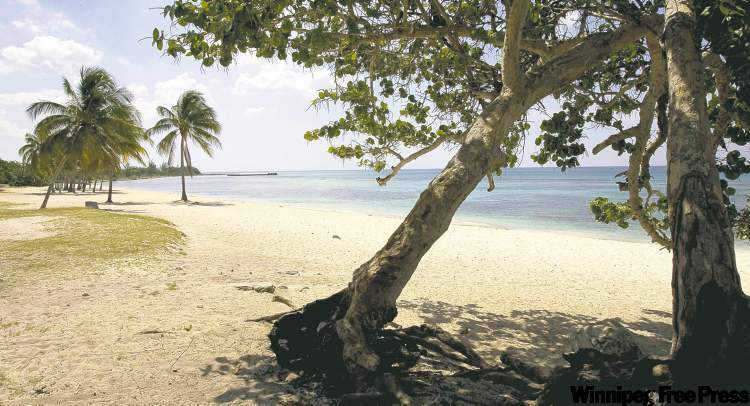
Secrecy was still crucial to the naive U.S. view it could portray the invasion as a wholly Cuban exile, not puppet, operation — a notion that Bay of Pigs veteran Juan Clark, a Miami Dade College sociologist, finds laughable even now.
“Everything was provided by the CIA and the other American agencies involved,” he said. “Cubans only provided the sweat, the blood and the dead.”
Besides, the training of the Cubans in Guatemala was hardly a secret. The U.S. ambassador to Guatemala, John J. Muccio, was not a party to the CIA negotiations and says in the history he learned about the details not from the Americans but from President Ydigoras Fuentes.
“He couldn’t keep anything to himself… assumed that I knew what was going on and he talked,” Muccio said.
A former U.S. military attaché to the CIA in Miami at the time, Manny Chavez, said Ydigoras Fuentes complained the Cuban exiles “couldn’t keep a secret. They’d get homesick and sneak off the base clandestinely at night, they were hitting the bars and the cathouses.”
Pressure mounted on the program to move elsewhere for the actual invasion.
In order to argue deniability, the operation could not launch from Florida’s shores.
The CIA set its sights on the Caribbean port city of Puerto Cabezas in Nicaragua and launched a round of CIA diplomacy with one of most tyrannical families of Latin America — the Somoza brothers, Luis, the president, and Anastasio, the general.
In January 1961, the general met secretly with CIA director Allen Dulles about the base and sought $10 million in development loans. The CIA passed the request on to the state department, with a recommendation to provide them, but the history does not spell out whether the money was delivered.

The historian, writing more than a decade after the deal-making, did not mince words about the partner’s unsavoury character. Of Luis he wrote, “Somoza was an absolute dictator.”
And it was not lost on Luis that he was dealing with an envoy of the Central Intelligence Agency. The U.S. ambassador was President John F. Kennedy’s ranking representative at the time. To one CIA operative negotiating the base arrangement, he complained that some long-haired, Department of State liberals might seek to humiliate him for helping the exiles and Americans oust Castro.
“Somoza wants it understood and accepted by all levels of the U.S. government that Nicaragua was on the side of the angels,” the historian wrote, “and, therefore, no U.S. official should be allowed to attack Nicaragua for either its actions or its positions vis-a-vis Cuba.”
— The Miami Herald