Anita Badami’s new novel explores why people ‘Tell it to the Trees’

Advertisement

Advertise with us

TORONTO - The seed for Anita Rau Badami's new novel, "Tell it to the Trees," was planted more than a decade ago.

Read this article for free:


By clicking the button above, an account will be created and you will begin to receive some of our recommended newsletters. You may opt out of any newsletter by visiting your Email and Communication Preferences page or by clicking "unsubscribe" at the bottom of any email.

or

Already have an account? Log in here »

To continue reading, please subscribe:

Digital Subscription

One year of digital access for only $1.44 a week*

  • Enjoy unlimited reading on winnipegfreepress.com
  • Read the E-Edition, our digital replica newspaper
  • Access News Break, our award-winning app
  • Play interactive puzzles

*Billed as $5.77 plus GST every four weeks. After 52 weeks, price increases to the regular rate of $19.95 plus GST every four weeks. Offer available to new and qualified returning subscribers only. Cancel any time.

To continue reading, please subscribe:

Add Free Press access to your Brandon Sun subscription for only an additional

$1 for the first 4 weeks*

  • Enjoy unlimited reading on winnipegfreepress.com
  • Read the E-Edition, our digital replica newspaper
  • Access News Break, our award-winning app
  • Play interactive puzzles
Start now

*Your next Brandon Sun subscription payment will increase by $1.00 and you will be charged $17.95 plus GST for four weeks. After four weeks, your payment will increase to $24.95 plus GST every four weeks.

Hey there, time traveller!
This article was published 19/09/2011 (5513 days ago), so information in it may no longer be current.

TORONTO – The seed for Anita Rau Badami’s new novel, “Tell it to the Trees,” was planted more than a decade ago.

The Montreal-based author was visiting a remote town in northern British Columbia to do research for a freelance magazine story when a young Indian woman — a complete stranger — offered to put her up for the night.

Badami dined with the woman’s family and spent half a day in their home.
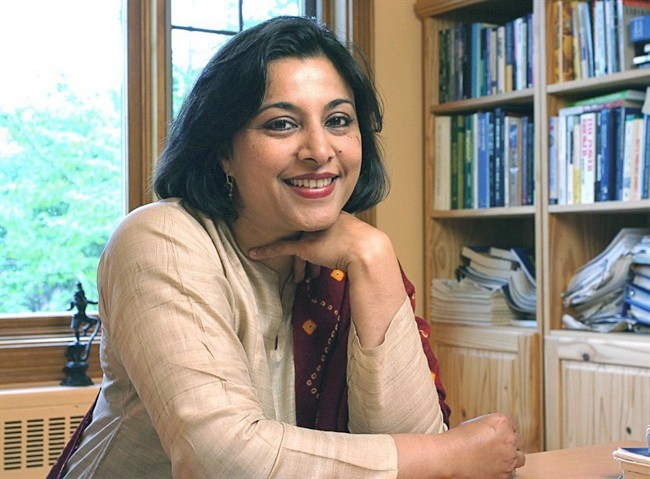
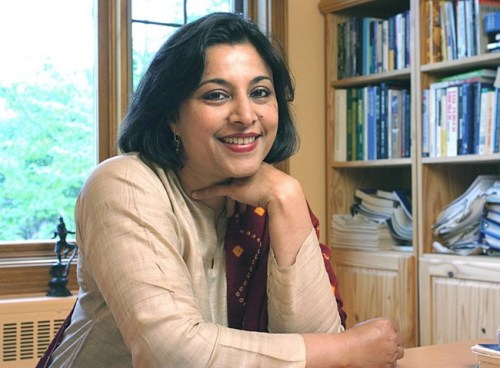
Author Anita Badami is shown in this undated handout photo. The seed for Badami's new novel,
Author Anita Badami is shown in this undated handout photo. The seed for Badami's new novel, "Tell it to the Trees," was planted more than a decade ago.The Montreal-based author was visiting a remote town in northern British Columbia to do research for a freelance magazine story when a young Indian woman — a complete stranger — offered to put her up for the night. THE CANADIAN PRESS/HO, Richard-Max Tremblay

“There was this feeling of desperate unhappiness in the house,” recalls Badami. “I think that stuck with me, the mood in that home.”

Perhaps the woman invited a stranger to stay because she was reaching out for help, muses Badami, who watched the wife tolerate her husband’s verbal abuse as an elderly mother-in-law — beautiful and educated — sat in complete silence.

“There was something going on,” Badami says. “I was a stranger there, and this man didn’t seem to have any problems abusing his wife verbally while I was sitting there. I don’t know what else went on.”

Badami draws from that family, as well as from long-ago interviews she conducted at a women’s shelter in Bangalore, India, in “Tell it to the Trees.”

The novel tells the story of an Indian family living in an isolated town called Merrit’s Point.

At first glance, the Dharmas appear to be a loving and close-knit unit. Patriarch Vikram has arranged a second marriage for himself and he and wife Suman live with his mother, Akka, and their children, Varsha and Hemant.

Things change when an outsider named Anu takes up residence in behind the home and begins to penetrate the family’s secrets.

Anu was somewhat of a stand-in for Badami herself, the author says, as she attempted to make sense of the long-ago visit to British Columbia.

Another inspiration for the novel came from interviews Badami did nearly 20 years ago with staff and patients at a crisis intervention centre, the first of its kind in Bangalore.

Badami worked as a journalist in India before moving to Canada in 1991.

Many of the women at the centre had fled their homes and wanted to return to collect their children. Some of the women’s husbands had gathered outside the building’s high walls and iron gate to try to lure their wives back home.

“It really, really moved me to see such helplessness,” says the author. “Some of the women had been totally abandoned by their families. Some of them just didn’t have anywhere to go. A lot of them were ashamed that they had to leave their marriages. It was a very complex set of emotions.”

Badami says she always becomes curious when she enters a home and senses tension.

“There are all these stories of hidden violence inside homes,” she says. “Sometimes you wonder what’s going on in your neighbour’s house. Even if you’re living in close proximity to that neighbour, you really don’t have any idea.”

Intervening can be a tricky thing, the author concedes.

“All of us lead such busy lives,” says Badami, whose other novels include “Tamarind Mem,” “The Hero’s Walk” and “Can You Hear the Nightbird Call?”

“There’s that delicate line. Are you going to alienate someone? Are you poking your nose in when nothing is really going on? Is it just your imagination working overtime?”

She adds, “I wonder what that kind of atmosphere of fear and dislike must do to a child’s psyche.”

The idea of how far a child will go to protect what he or she thinks is important is a central premise in “Tell it to the Trees.”

Although “Tell it to the Trees” follows an Indian family, the notion of secret keeping — of people suffering in silence rather than reaching out for help — is universal, says Badami.

“Tell it to the Trees” is set to hit shelves Tuesday.
Report Error Submit a Tip

More Stories

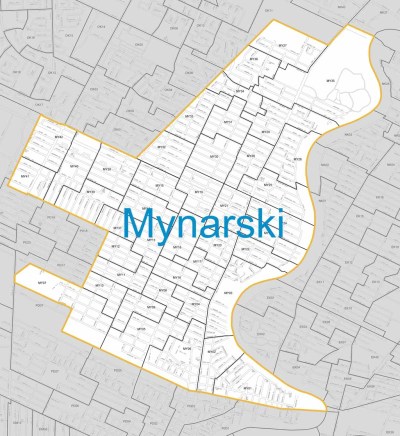
Eadie faces crowded field — including former councillor — in bid for fifth term in Mynarski

Malak Abas 8 minute read Preview

Eadie faces crowded field — including former councillor — in bid for fifth term in Mynarski

Malak Abas 8 minute read 6:00 AM CDT

The city’s most crowded council race has a little bit of everything: a long-serving incumbent, a former ward councillor in the 1980s, an unsuccessful candidate in the last municipal election seeking a rematch and three political newcomers.

Mynarski has long been led by Coun. Ross Eadie, who was first elected in 2010 and is seeking his fifth term. Five challengers want the job: Natalie Smith, who ran in the ward in 2022 and came in second, Terry Wachniak, Harold Brazil, Laurie Kozak and Ayaz Noor Mohammed.

It’s the city ward with the largest number of candidates this year.

Eadie describes himself as “a dancer, a singer and a city councillor” who has made inroads on garbage pickup, back-lane cleaning and earning the respect of his fellow council members by being the first Mynarski councillor to be appointed to executive policy committee, the mayor’s inner circle, in decades.

Read
6:00 AM CDT

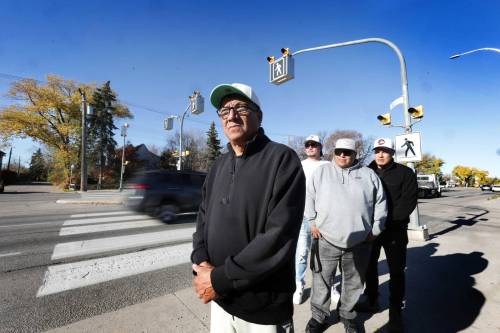
Henderson crosswalk has glaring safety gap, say researchers months after pedestrian killed

Maggie Macintosh 5 minute read Preview

Henderson crosswalk has glaring safety gap, say researchers months after pedestrian killed

Maggie Macintosh 5 minute read Yesterday at 2:00 AM CDT

Six months after a fatal collision at a crosswalk on Henderson Highway, two traffic safety researchers question why the intersection remains an outlier that is missing key flashing lights.

The City of Winnipeg is being urged to install “backflashers” to better protect road users moving in all directions at the intersection where a 32-year-old father died in the spring.

“It’s these little, mundane, non-sexy engineering problems that can cause everything right up to fatality,” said Curt Pankratz, an associate professor at the University of Winnipeg who studies traffic engineering and policymaking.

On April 19, shortly before sunrise, Gabe Beardy was struck when he was crossing the six-lane thoroughfare at Neil Avenue.

Read
Yesterday at 2:00 AM CDT

El Clásico has become spectacle of hatred between Barcelona and Real Madrid

Jerrad Peters 5 minute read Preview

El Clásico has become spectacle of hatred between Barcelona and Real Madrid

Jerrad Peters 5 minute read 3:24 PM CDT

El Clásico is more than a match. That is, the encounters between Barcelona and Real Madrid, while ostensibly about football, tend to collect all manner of drama, controversy and animus before — and after — the 90 minutes played twice per season in La Liga.

And yet, even by its typical standards, the build-up to Sunday’s showdown at Camp Nou (3 p.m., TSN) has been especially rancorous. From organized labour to name-dropping Joseph Goebbels, there’s not much this Clásico hasn’t touched on, and it’s still some time away.

Rather importantly, it should be noted that, yes, the two sides will actually face one another as scheduled. This was only confirmed Thursday, when it was determined that a workers’ strike would not prevent the game going ahead.

Approximately 60 of Barcelona’s seasonal employees are participating in the action, which began midnight Friday and will extend into Monday. They’re concerned about worsening conditions and task overload caused by understaffing. It’s just the latest organizational issue at a club that seems to lurch from one to the next.

Read
3:24 PM CDT

AI usage is prominent in Winnipeg’s municipal race, and it’s likely here to stay

Conrad Sweatman 7 minute read Preview

AI usage is prominent in Winnipeg’s municipal race, and it’s likely here to stay

Conrad Sweatman 7 minute read 2:55 PM CDT

Winnipeg voters may have noticed an uncanny sheen to aspects of certain mayoral campaigns this year.

Social media images and text a little too synthetically smooth — or, in some cases, downright surreal.

“This is the new normal. Everyone needs to accept that there is going to be rampant AI use by political parties … it’s the speed of adoption that’s been so disorienting,” says Aengus Bridgman, a former Winnipegger and assistant professor at McGill University whose research addresses the intersection of artificial intelligence and democracy.

“(Generative-AI use in elections) ranges from innocent fun to augmenting an under-resourced campaign to pretty clear examples of misleading.”

Read
2:55 PM CDT

Anita Badami’s new novel explores why people ‘Tell it to the Trees’

Alexandra Posadzki, The Canadian Press 4 minute read Preview

Anita Badami’s new novel explores why people ‘Tell it to the Trees’

Alexandra Posadzki, The Canadian Press 4 minute read Monday, Sep. 19, 2011

TORONTO - The seed for Anita Rau Badami's new novel, "Tell it to the Trees," was planted more than a decade ago.

The Montreal-based author was visiting a remote town in northern British Columbia to do research for a freelance magazine story when a young Indian woman — a complete stranger — offered to put her up for the night.

Badami dined with the woman's family and spent half a day in their home.

"There was this feeling of desperate unhappiness in the house," recalls Badami. "I think that stuck with me, the mood in that home."

Read
Monday, Sep. 19, 2011

Is Osborne a street or a road? ‘Stroad’ status fails everyone

Mel Marginet 6 minute read Preview

Is Osborne a street or a road? ‘Stroad’ status fails everyone

Mel Marginet 6 minute read Yesterday at 2:00 AM CDT

Last month, the City of Winnipeg said it would soon begin to study ways to improve pedestrian and cyclist safety along Osborne Street, which runs between two of the city’s densest neighbourhoods, where residents walk and bike for many of their daily activities.

Read
Yesterday at 2:00 AM CDT