Winnow out biases in energy issues tome
Advertisement
Read this article for free:
or
Already have an account? Log in here »
To continue reading, please subscribe:

Digital Subscription
One year of digital access for only $205*
- Enjoy unlimited reading on winnipegfreepress.com
- Read the E-Edition, our digital replica newspaper
- Access News Break, our award-winning app
- Play interactive puzzles
*First annual payment billed as $205.00 + GST for one year. This annual subscription will automatically renew at $233.00 + GST every 52 weeks (10% off the regular annual price of $259.35). Offer available to new and qualified returning subscribers only. Cancel any time.
To continue reading, please subscribe:
Add Free Press access to your Brandon Sun subscription for only an additional
$1 for the first 4 weeks*
- Enjoy unlimited reading on winnipegfreepress.com
- Read the E-Edition, our digital replica newspaper
- Access News Break, our award-winning app
- Play interactive puzzles
*Your next Brandon Sun subscription payment will increase by $1.00 and you will be charged $17.95 plus GST for four weeks. After four weeks, your payment will increase to $24.95 plus GST every four weeks.
Read unlimited articles for free today:
or
Already have an account? Log in here »
Hey there, time traveller!
This article was published 24/09/2011 (5448 days ago), so information in it may no longer be current.
The Quest
Energy, Security, and the Remaking of the Modern World
By Daniel Yergin
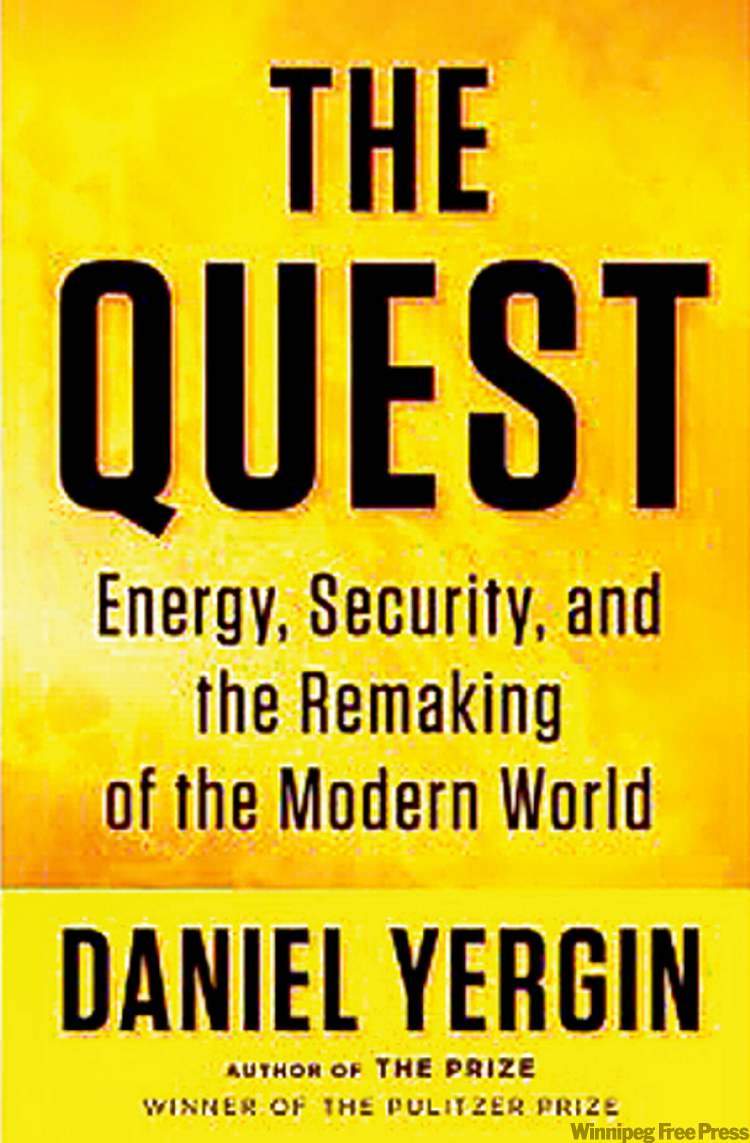
The Penguin Press, 816 pages, $38
ASTUTE readers may detect the biases of an oil-industry apologist in this heavyweight tome that tackles many of the top energy issues of the last decade, among them terrorism, the 2003 invasion of Iraq and climate change.
American author Daniel Yergin won a Pulitzer in 1992 for his epic and detailed history of the global oil industry, The Prize. Since then, the Washington-based guru has made a pile of money as the head of a firm that consults for energy companies and government.
The Quest, unfortunately is not as ground-breaking or timely as The Prize.
The geopolitical energy overview that Yergin attempts here has been undertaken recently by scores of authors, some of whom, such as Michael Klare in Rising Powers, Shrinking Planet and the lesser-known but brilliant Dilip Hiro in Blood of the Earth, arguably do a better job.
Yergin shows that he is still among the masters of the craft when narrating the histories of the post-Soviet oil industry, climate-change science and policy, and the renewable energy industry.
But there is an evident change in Yergin’s approach to geopolitics since the early ’90s. When he moves into more controversial subject matter, his historical objectivity becomes questionable.
After declaring that the Iraq invasion was not about oil, Yergin cursorily mentions that the Iraqi oil ministry was one of the only government buildings untouched by looters because it was, in fact, protected by American troops.
He then spends a chapter offering odd twists on some of the all-but-debunked reasons for the Iraq invasion, including Iraq’s leader Saddam Hussein being “addicted” to weapons of mass destruction. He also employs the cheap scare tactic of connecting Iraq with Sept. 11 by stating that the U.S. was concerned about Saddam carrying out an “Iraqi version of 9/11.”
Yergin enjoys focusing on the failings of select foreign nations — notably Iran and Venezuela — when it comes to their oil and foreign policy. In his telling, the U.S. often comes across as a benign player in the geopolitics of energy, one whose actions are inevitable, if not laudable.
Yergin uses much space to debunk the theory of an imminent peak in conventional oil production by, among other things, providing us with a personal character assassination of peak-oil movement pioneer M. King Hubbert.
Yergin believes that the market will prevent energy shortages: as prices rise, new sources will be developed, more investment will be made and new technologies will emerge.
Elsewhere he explains that oil companies are consolidating due to the exorbitant costs of development projects and shortage of trained personnel, and that investors are reluctant to fund new exploration bids — things that many other writers point to as indicators of peak oil.
Yergin’s history of climate-change science includes most of the major players and pioneers in the field. But he also gives ample space to the opinions of minority scientists, some funded by oil companies, who question the prevalent views of human-induced climate change.

He blames growing carbon emissions on rising population and incomes, issues that are conveniently difficult for individuals to address. He ignores such middle-class sins as car dependence and conspicuous consumption, but highlights the polluting emissions of poor people burning scrounged biomass.
Echoing oil industry claims, he argues that the new “fraccing” method of producing shale gas will provide a 100-year supply and, despite the environmental criticism, is highly unlikely to contaminate groundwater.
In the end, readers will learn much about the global energy scene over the last two decades but they must be careful to winnow opinion from historical fact.
Matthew E. Havens is a research assistant with the Institute of Urban Studies at the University of Winnipeg.
Related Articles
Gillian Sze casts melancholic eye Holy cow! Bovines give us perspective on humanity
Advertisement Advertise With Us
Advertisement Advertise With Us