

Crime bill unfairly targets women, aboriginals, critics say
Advertisement
Read this article for free:
or
Already have an account? Log in here »
To continue reading, please subscribe:

Digital Subscription
One year of digital access for only $205*
- Enjoy unlimited reading on winnipegfreepress.com
- Read the E-Edition, our digital replica newspaper
- Access News Break, our award-winning app
- Play interactive puzzles
*First annual payment billed as $205.00 + GST for one year. This annual subscription will automatically renew at $233.00 + GST every 52 weeks (10% off the regular annual price of $259.35). Offer available to new and qualified returning subscribers only. Cancel any time.
To continue reading, please subscribe:
Add Free Press access to your Brandon Sun subscription for only an additional
$1 for the first 4 weeks*
- Enjoy unlimited reading on winnipegfreepress.com
- Read the E-Edition, our digital replica newspaper
- Access News Break, our award-winning app
- Play interactive puzzles
*Your next Brandon Sun subscription payment will increase by $1.00 and you will be charged $17.95 plus GST for four weeks. After four weeks, your payment will increase to $24.95 plus GST every four weeks.
Read unlimited articles for free today:
or
Already have an account? Log in here »
Hey there, time traveller!
This article was published 20/10/2011 (5457 days ago), so information in it may no longer be current.
SOCIAL service groups say a new federal bill designed to reduce crime will unfairly target aboriginal people and women.
The opposition to the omnibus crime bill C-10 was the focus of a press conference at the West End Cultural Centre Wednesday. The bill, dubbed the Safe Streets and Communities Act, calls for changes such as the end of house arrest for those convicted of serious and violent crimes.
Canada’s pardon system would also change, with more time passing before offenders can apply for pardons.
The government has called the bill “comprehensive legislation that will target crime and terrorism and provide support and protection to victims of crime,” but a number of community service agencies disagree, saying it hurts people who are already vulnerable to inequitable treatment in the justice system.
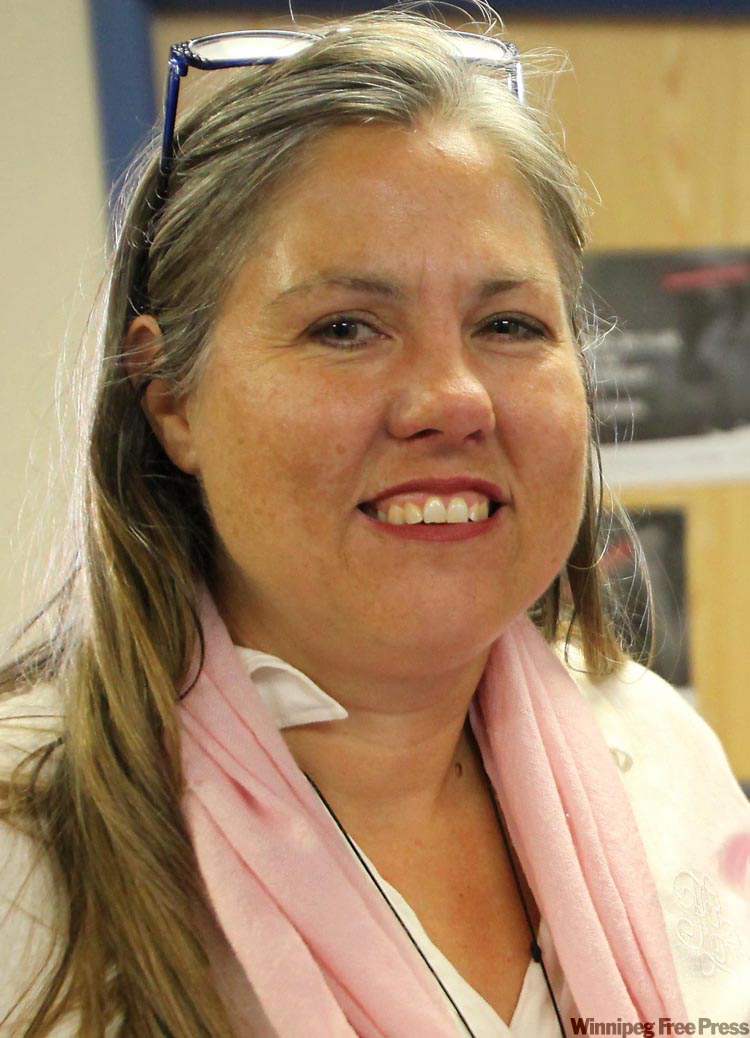
Tracy Booth, executive director of the Elizabeth Fry Society of Manitoba, said the bill will impact female prisoners and their offspring.
The majority of women in jail are mothers, and they are usually the primary caregivers in their families, she said. Elements of the new bill will result in more women being held behind bars, she said.
“It’s going to increase criminalization and marginalization, and this will certainly have a very negative impact on children,” Booth said. “No one’s really speaking about the impact (on) children when mom and dad are in jail, particularly for aboriginal people and for women in this province.”
The crime bill means “taxes will need to be raised in order to care for children,” she said.
Booth was one of five speakers at the press conference opposing the bill.
The event was supported by the John Howard Society, the Canadian Centre for Policy Alternatives, the Mennonite Central Committee Manitoba, the Social Planning Council of Winnipeg, the Southern Chiefs’ Organization, Initiatives for Just Communities, Ogijiita Pimatiswin Kinamatwin (OPK) and Building Urban Industries for Local Development (BUILD).
Cora Morgan, executive director of Onashowewin, which provides restorative justice services for aboriginals, called the bill “completely asinine.”
“At the end of the day, the omnibus (bill) will have the greatest effect on the aboriginal community, as we’re so highly over-represented in the prisons and jails,” Morgan said.

The bill is “another reminder of the disconnect between the political leadership with the grassroots people and the aboriginal community,” she said.
“The omnibus bill can be perceived as a way of (legitimizing) the further expansion of prisons and jails.”
Ken Kuhn, a retired chaplain who worked at Stony Mountain Institution from 1995 to 2003 and is a member of the Manitoba Multi-faith Council Corrections Committee, said the bill “will dump more people into an already overtaxed system.” He said one of the reasons he opposes the bill is the impact on pardons — those who want to apply will have to wait 10 years after they’re found guilty of indictable offences.
“(It’s) the fact that those who are doing well, who are well-motivated, it will take them 10 years of having their nose clean before they are able to interact fully in the society,” Kuhn said. “I think that’s a real injustice.”
gabrielle.giroday@freepress.mb.ca