

Many Métis deprived of the promised land
Let's 'get right with our history,' says their lawyer
Advertisement
Read this article for free:
or
Already have an account? Log in here »
To continue reading, please subscribe:

Digital Subscription
One year of digital access for only $205*
- Enjoy unlimited reading on winnipegfreepress.com
- Read the E-Edition, our digital replica newspaper
- Access News Break, our award-winning app
- Play interactive puzzles
*First annual payment billed as $205.00 + GST for one year. This annual subscription will automatically renew at $233.00 + GST every 52 weeks (10% off the regular annual price of $259.35). Offer available to new and qualified returning subscribers only. Cancel any time.
To continue reading, please subscribe:
Add Free Press access to your Brandon Sun subscription for only an additional
$1 for the first 4 weeks*
- Enjoy unlimited reading on winnipegfreepress.com
- Read the E-Edition, our digital replica newspaper
- Access News Break, our award-winning app
- Play interactive puzzles
*Your next Brandon Sun subscription payment will increase by $1.00 and you will be charged $17.95 plus GST for four weeks. After four weeks, your payment will increase to $24.95 plus GST every four weeks.
Read unlimited articles for free today:
or
Already have an account? Log in here »
Hey there, time traveller!
This article was published 12/12/2011 (5371 days ago), so information in it may no longer be current.
OTTAWA — More than 140 years after the guns were put away, the last battle in the rebellion that brought Manitoba into Confederation is about to be fought.
Lawyers are to argue in front of the Supreme Court on Tuesday that the federal government never lived up to the 1870 deal that settled the Red River Rebellion, fought by Métis struggling to hold on to their land in the face of growing white settlement.
“It’s important for us to get right with our history,” said Tom Berger, the legendary aboriginal rights lawyer who will represent the Manitoba Métis Federation in its last legal attempt to right what it calls the betrayal of a generation of Métis children,who lost their land and birthright.
“We have to remember our history and we have to remember that the Métis didn’t go away. They’re still here.”
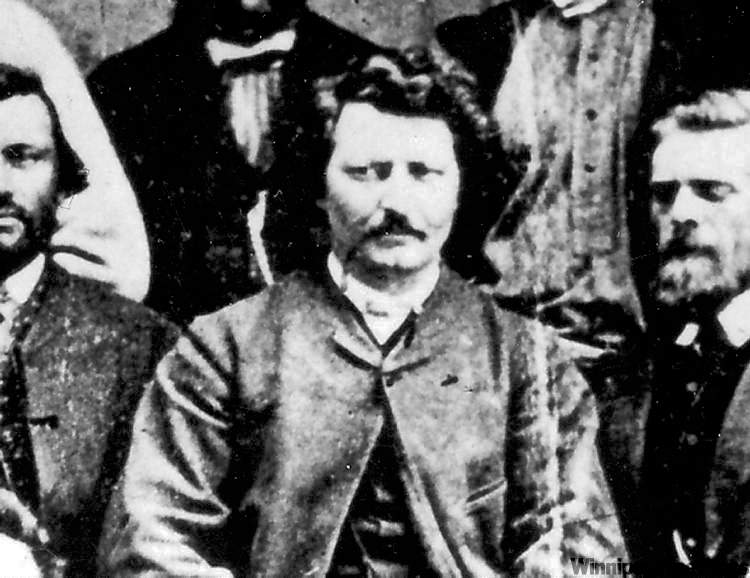
A Métis win would probably lead to high-stakes land-claim negotiations — and fulfil a prophesy made by Métis leader Louis Riel more than a century ago.
Sovereignty over the vast prairies west of Ontario was still uncertain in the immediate years after Confederation as the federal government negotiated with the Hudson’s Bay Co. for control over half a continent.
White settlers from Ontario and the United States were pouring into what is now Manitoba, alarming Métis who had lived and farmed there for generations.
In an attempt to assert control, Riel declared a provisional Métis government in 1870 to negotiate with Ottawa — a government backed by armed Métis insurgents. In response, the federal government passed the Manitoba Act, which carved the province out of the sprawling region called the Northwest Territories and established Canadian dominion.
The act promised 5,565 square kilometres of land would be set aside for the 7,000 children of the Red River Métis.
However, it took 15 years for those lands to be completely distributed. Meanwhile, large numbers of new settlers continued to arrive, some of whom were openly hostile to the former rebels. The Métis were beaten and even killed.
“A lot of our people went into hiding,” said David Chartrand, president of the Manitoba Métis Federation. “Some of them, if they were white enough and spoke French, they said they were French-Canadian so they could protect their children.”
The land was ultimately distributed through a random lottery that allotted children parcels of land far from that of their parents or other Métis, destroying any chance of a Métis homeland. Some children only got scrip redeemable for land.
Speculators snapped up much of it for a fraction of its value. Many Métis fled the region they had occupied for generations and headed farther west.
Berger argues what happened was a failure of the Crown’s duty to look after the interests of the children and a betrayal of the land grant’s intent.
“A fiduciary is somebody who accepts responsibility to protect the interests of a person or a group that is legally vulnerable,” he said. “They had that responsibility to the Métis settlers and the 7,000 children.”
He points to statements made in the House of Commons by then-prime minister Sir John A. Macdonald.
“No land would be reserved for the benefit of white speculators, the land being only given for the actual purpose of settlement,” Macdonald said on May 4, 1870.
His Quebec lieutenant, George-Étienne Cartier, said 11 months later that: “Until the children came of age, the government were the guardians of the land and no speculators would be suffered to get hold of it.”
As well, Berger points out Macdonald said the land was granted to extinguish Métis aboriginal title to the land, which means Ottawa owed them the same level of care owed other First Nations.
Crown lawyers argue the Métis were consulted and that the land was, in fact, distributed. They also say the statute of limitations has long run out.
It’s too late to go back and try to understand Riel’s and Macdonald’s intent, say Crown court documents.
“Proceeding to consider the claims forces the defendant… to respond to allegations made on the basis of a documentary record alone without witnesses who could explain the facts or fill in the gaps. Assessing this century-old documentary record against modern legal standards compounds the potential for unfairness.”
The court action asks only for a declaration that the Crown didn’t live up to its duty, but Chartrand acknowledges it wouldn’t end there. “It would potentially lead to a land claim,” he said.
Chartrand said he hopes to change how Canadians understand their past.
“They took away children’s land. This country needs to know that.”

The case is also a chance to restore Métis pride, said Chartrand.
“John A. Macdonald said our people would be vanished in 100 years. Riel said my people would rise in 100 years.
“It’s 100 years now — and we’re rising.”
— The Canadian Press