Has notorious French author begun to mellow?
Michel Houellebecq's latest novel keeps sex to a minimum
Advertisement
Read this article for free:
or
Already have an account? Log in here »
To continue reading, please subscribe:

Digital Subscription
One year of digital access for only $205*
- Enjoy unlimited reading on winnipegfreepress.com
- Read the E-Edition, our digital replica newspaper
- Access News Break, our award-winning app
- Play interactive puzzles
*First annual payment billed as $205.00 + GST for one year. This annual subscription will automatically renew at $233.00 + GST every 52 weeks (10% off the regular annual price of $259.35). Offer available to new and qualified returning subscribers only. Cancel any time.
To continue reading, please subscribe:
Add Free Press access to your Brandon Sun subscription for only an additional
$1 for the first 4 weeks*
- Enjoy unlimited reading on winnipegfreepress.com
- Read the E-Edition, our digital replica newspaper
- Access News Break, our award-winning app
- Play interactive puzzles
*Your next Brandon Sun subscription payment will increase by $1.00 and you will be charged $17.95 plus GST for four weeks. After four weeks, your payment will increase to $24.95 plus GST every four weeks.
Read unlimited articles for free today:
or
Already have an account? Log in here »
Hey there, time traveller!
This article was published 28/01/2012 (5352 days ago), so information in it may no longer be current.
Has France’s most notorious writer begun to mellow?
On the evidence of his new novel, Michel Houellebecq may indeed be toning down the shock quotient.
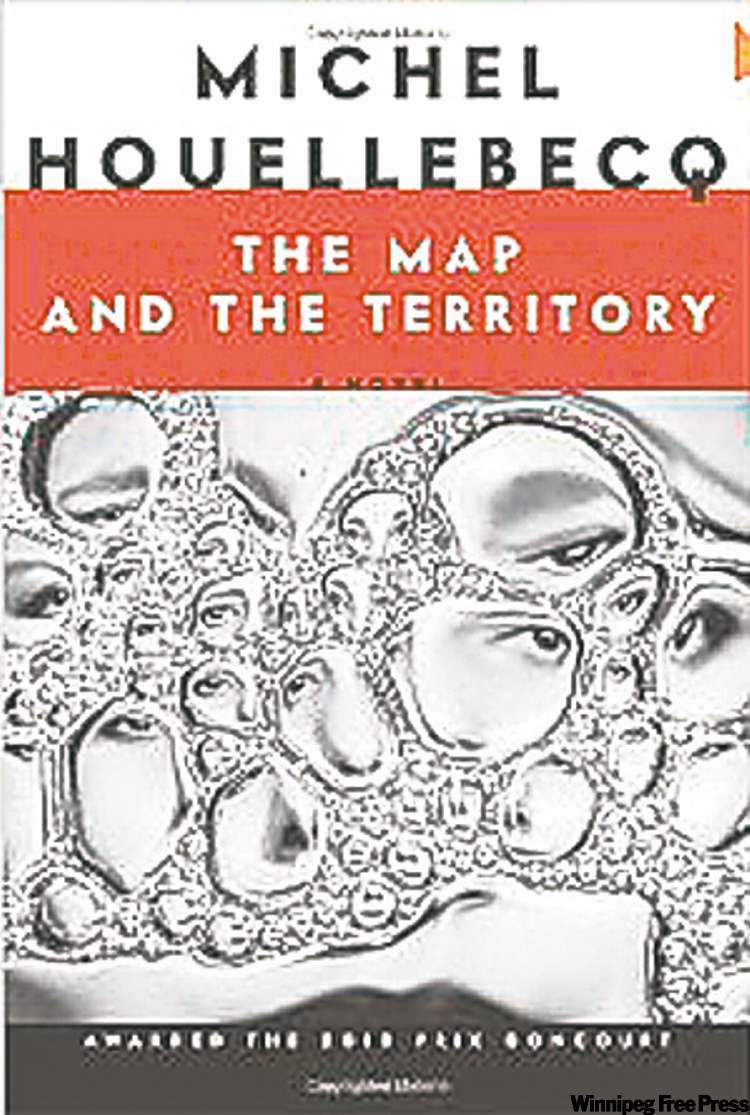
The Map and the Territory, which arrived on these shores late last year after having won the equivalent of the Governor General’s Literary in his home country in 2010, is many things: a satire of the visual-arts world, a murder mystery, and a meditation on aging and globalization.
What it isn’t, however, is a full-out assault on the bourgeois sensibility, as are his earlier novels, most notably The Elementary Particles (1998) and Platform (2001).
This time out, Houellebecq keeps the sex to a minimum, grudgingly admits to the value of human relationships and seems almost resigned to the influence of European multiculturalism and religion. At least the deadpan comedian remains.
His protagonist is a Parisian artist, Jed Martin, who makes his reputation in the highbrow art world as a kind of Andy Warhol figure photographing Michelin maps.
When Jed turns to painting, churning out a series of figurative works employing world-renowned artists and businessmen, his agent suggests he hire a successful writer to pen the catalogue copy for a solo exhibition.
The writer? None other than “Michel Houellebecq.”
“He’s a good author, it seems to me,” Jed’s father says at one point. “He’s pleasant to read, and he has quite an accurate view of society.”
In his fictional presentation of himself, the real-life author Houllebecq plays into his reputation as a drunk, a misanthrope and a loner.
Without giving too much away, we can say he puts this characterization of himself to rest in grisly fashion, while his main protagonist, Jed, moves on to and isolated and sad existence not unlike his earlier alter-egos.
By definition, it seems, a Houllebecq novel must be pessimistic about the human condition. After all, here is writer who is perennially compared to the likes of such scabrous French writers as Camus and Celine, even the Marquis de Sade.
He signals early to his English language readers — the novel is translated clearly by Englishman Gavin Bowd, who has worked with him before — that he is fluent in British and North American culture.
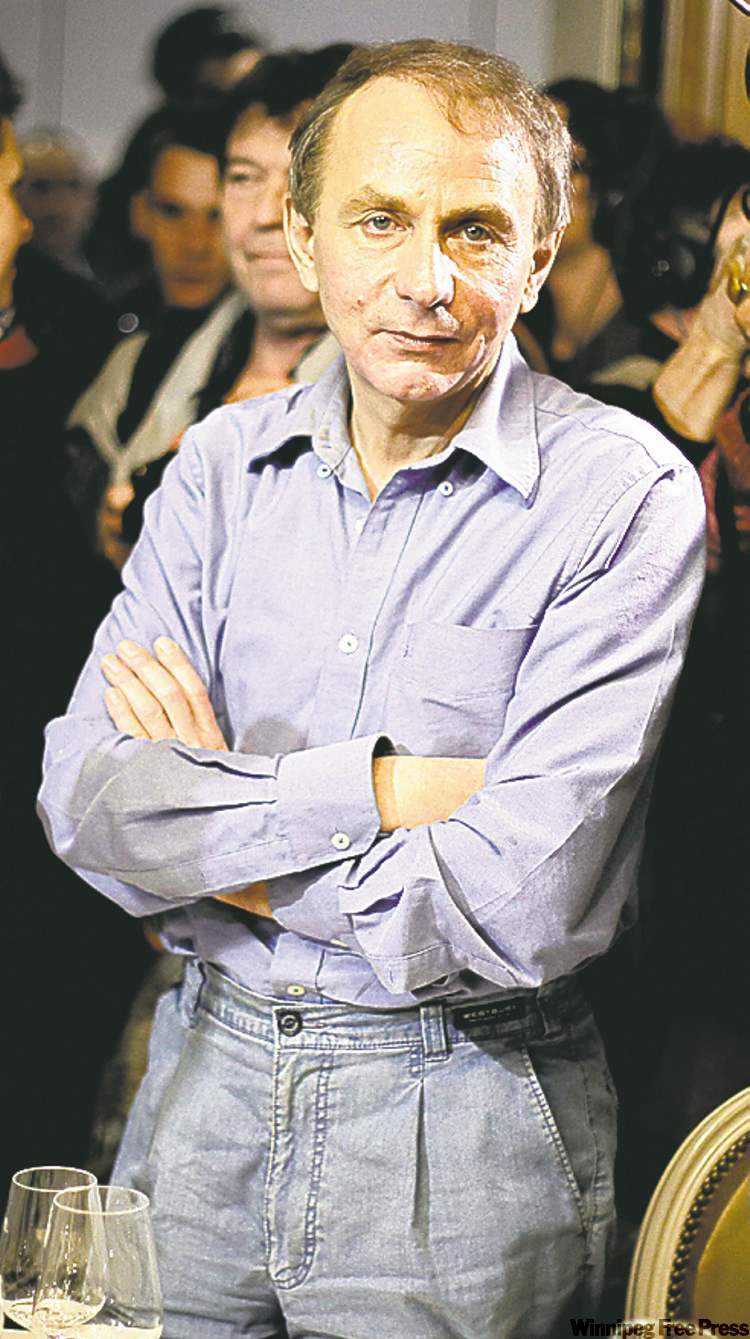
The opening scene has American artist Jeff Koons and Britain’s Damient Hirst sitting for one of Jed’s paintings.
Jed’s most famous work, which goes on to sell for millions, is called Bill Gates and Steve Jobs Discussing the Future of Information Technology. (Houllebecq, of course, finished The Map and the Territory well before Jobs’ death last fall).

That said, parochial North Americans will be mystified by the references to and depictions of leading French cultural figures. It’s as if Houllebecq is saying to us: “We in France are familiar with your cultural avatars; the least you could do is know ours.”
Even more noteworthy, perhaps, is Houllebecq’s ability to converse fluently on such topics as computer science, genetics and consumerism.
The Map and the Territory may not the ideal place to start with the Houllebecq oeuvre, but it does provide a good catalogue of his novelistic strengths.
Morley Walker edits the Free Press books section.
Book review
The Map and the Territory
- By Michel Houellebecq
- Knopf, 269 pages, $31
Related Articles
Eye-opener to health and well-being
Advertisement Advertise With Us
Advertisement Advertise With Us