

James to elude jail, victim predicts
Kennedy backs minimum terms for sex crimes against minors
Advertisement
Read this article for free:
or
Already have an account? Log in here »
To continue reading, please subscribe:

Digital Subscription
One year of digital access for only $205*
- Enjoy unlimited reading on winnipegfreepress.com
- Read the E-Edition, our digital replica newspaper
- Access News Break, our award-winning app
- Play interactive puzzles
*First annual payment billed as $205.00 + GST for one year. This annual subscription will automatically renew at $233.00 + GST every 52 weeks (10% off the regular annual price of $259.35). Offer available to new and qualified returning subscribers only. Cancel any time.
To continue reading, please subscribe:
Add Free Press access to your Brandon Sun subscription for only an additional
$1 for the first 4 weeks*
- Enjoy unlimited reading on winnipegfreepress.com
- Read the E-Edition, our digital replica newspaper
- Access News Break, our award-winning app
- Play interactive puzzles
*Your next Brandon Sun subscription payment will increase by $1.00 and you will be charged $17.95 plus GST for four weeks. After four weeks, your payment will increase to $24.95 plus GST every four weeks.
Read unlimited articles for free today:
or
Already have an account? Log in here »
Hey there, time traveller!
This article was published 22/02/2012 (5314 days ago), so information in it may no longer be current.
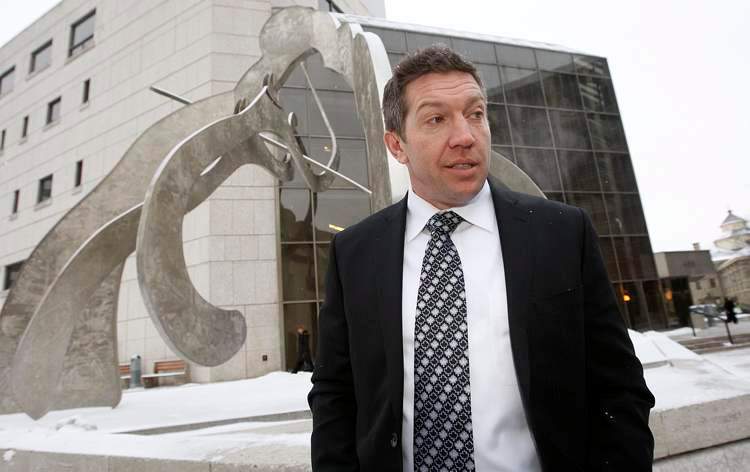
OTTAWA — Sheldon Kennedy is predicting his former coach and abuser, Graham James, won’t do jail time after pleading guilty to new sex offences against two more of his past hockey players.
Kennedy told a Senate committee Tuesday he supports proposed new mandatory minimum sentences for sex offences against minors because they will help convince more victims to come forward.
"I don’t think sex offences (are) happening more in society as we open the paper up every day and see it on the front page," said Kennedy, the former NHLer who went public with his accusations against James in 1997.
"But I do believe that our young people and older people are feeling safer to come forward."
Despite that improved atmosphere, Kennedy argued more must be done to ensure abusers face "consistent convictions that will stick."
Kennedy was speaking on the eve of a sentencing hearing Wednesday in Winnipeg for James, the former junior hockey coach who has twice been convicted of abusing young players under his influence.
James was sentenced to 31/2 years in 1997 for abusing Kennedy and two others, and in December he pleaded guilty to the abuse of yet two more, including former NHL star Theo Fleury.
"What we’re probably going to deal with tomorrow is a conditional sentence," Kennedy told the Senate committee studying Bill C-10, the Conservative government’s massive crime bill.
"You know, Graham James is going to walk — again. That’s not right."
Kennedy said in the early 1990s, Swift Current, Sask., population 20,000, many people knew something was amiss with the high-profile junior coach, but nobody spoke out.
"There was a lot of people that knew what Graham James was doing in that town, but didn’t have the confidence to act on their gut," said Kennedy.
"We’ve come a long ways and I think the justice system, this bill, is going to bring up to speed kind of where we’ve come in society in the understanding of these issues."
His testimony was just part of a day of hearings that largely focused on the child sex offence provisions in the new legislation.
Bill C-10 includes new offences, such as providing sexually explicit material to a child and arranging through telecommunications to commit a sexual offence against a child, along with more than a dozen new mandatory minimum sentences for other sex crimes.
But as with much of the Conservative criminal justice agenda, testimony from experts at the Senate committee suggested the reforms may be based as much on emotion as on evidence.
"The victims need to know that there is going to be some consequences," said Ellen Campbell, a former abuse victim who heads the Canada Centre for Abuse Awareness.
"I really feel so strongly that this is going to give more permission for victims to come forward. And also it says that the government cares."
However, Lawrence Ellerby, a forensic psychologist representing the Association for the Treatment of Sexual Abusers, cautioned against regarding mandatory minimum sentences as a kind of cure-all.
He said there’s some evidence mandatory minimums cause offenders to fight the charge rather than pleading guilty, an outcome that may force unwilling victims to testify and result in acquittals.
Ellerby said much more reliable risk-assessment tools are now available to determine which offenders are most likely to reoffend, and intensive targeted treatment of offenders has proven to get results.

Mandatory minimum sentences, longer jail terms and reductions in supervised release of offenders have been tried elsewhere, he said, adding: "The evidence from other countries, particularly the United States, is not promising that these are indeed effective."
A senior government researcher from Public Safety Canada also rattled some Conservative senators with a presentation of studies about sex crimes and the people who commit them.
Karl Hanson told the committee between 10 and 15 per cent of sex offenders commit another sex offence within five years, but that after more than 10 years being crime-free, their chance of reoffending is close to that of the general population.
— The Canadian Press
History
Updated on Wednesday, February 22, 2012 8:31 AM CST: Adds live blog widget
Updated on Wednesday, February 22, 2012 9:34 AM CST: adds colour photo
Updated on Wednesday, February 22, 2012 10:01 AM CST: adds photo of James' lawyer