

Somali’s life reflects Easter message
Advertisement
Read this article for free:
or
Already have an account? Log in here »
To continue reading, please subscribe:
Digital Subscription
One year of digital access for only $75*
- Enjoy unlimited reading on winnipegfreepress.com
- Read the E-Edition, our digital replica newspaper
- Access News Break, our award-winning app
- Play interactive puzzles
*Billed as $5.77 plus GST every four weeks. After 52 weeks, price increases to the regular rate of $19.95 plus GST every four weeks. Offer available to new and qualified returning subscribers only. Cancel any time.
Monthly Digital Subscription
$4.99/week*
- Enjoy unlimited reading on winnipegfreepress.com
- Read the E-Edition, our digital replica newspaper
- Access News Break, our award-winning app
- Play interactive puzzles
*Billed as $19.95 plus GST every four weeks. Cancel any time.
To continue reading, please subscribe:
Add Free Press access to your Brandon Sun subscription for only an additional
$1 for the first 4 weeks*
- Enjoy unlimited reading on winnipegfreepress.com
- Read the E-Edition, our digital replica newspaper
- Access News Break, our award-winning app
- Play interactive puzzles
*Your next Brandon Sun subscription payment will increase by $1.00 and you will be charged $17.95 plus GST for four weeks. After four weeks, your payment will increase to $24.95 plus GST every four weeks.
Read unlimited articles for free today:
or
Already have an account? Log in here »
Hey there, time traveller!
This article was published 07/04/2012 (5162 days ago), so information in it may no longer be current.
It was out of Somalia that I came across an account that helps me understand what Easter is all about. It is told by Somali-born Ahmed Ali Haile in a slim volume entitled Teatime in Mogadishu: My Journey as a Peace Ambassador in the World of Islam.
For a number of years from 1982 to 1988, while Somalia struggled under the Marxist-Leninist rule of Siad Barre, Haile and — for several of those years — his African-American wife Martha, worked in the country, trying wherever possible to bridge differences between clans and improve the lives of people through medical aid, and well-drilling and educational projects.
After the dictator Siad Barre fled in 1991, the country began its conflicted downward spiral that has not yet ended. Haile was mainly in America for several years after 1988, but went back to Somalia from time to time. The first occasion came early in 1991, when Haile says he “focussed on networking with clan leaders who were committed to finding a way to end the violent hostilities.” He returned to the U.S. that June, then returned in October after an “urgent invitation from the clan elders.” Some months later he was severely wounded in a grenade attack that cost him a leg and nearly his life. It was in December of that year that the American and UN military intervention in Somalia began, which ended so disastrously later.
Haile had grown up in a Muslim home that welcomed peace. The culture of his home included both Islamic and pre-Islamic traditions. The aphorism “Give your enemy fresh milk” that characterized them helped shape his attitudes. Haile says that “unknown to them, in quiet ways their spiritual insights and practices were used by the Holy Spirit to plant within my soul a spiritual quest that Jesus has now fulfilled.”
Some of that, strangely enough, had to do with animal sacrifices, but it is important to remember that the culture within which Jesus died on the cross was also very familiar with animal and human sacrifices.
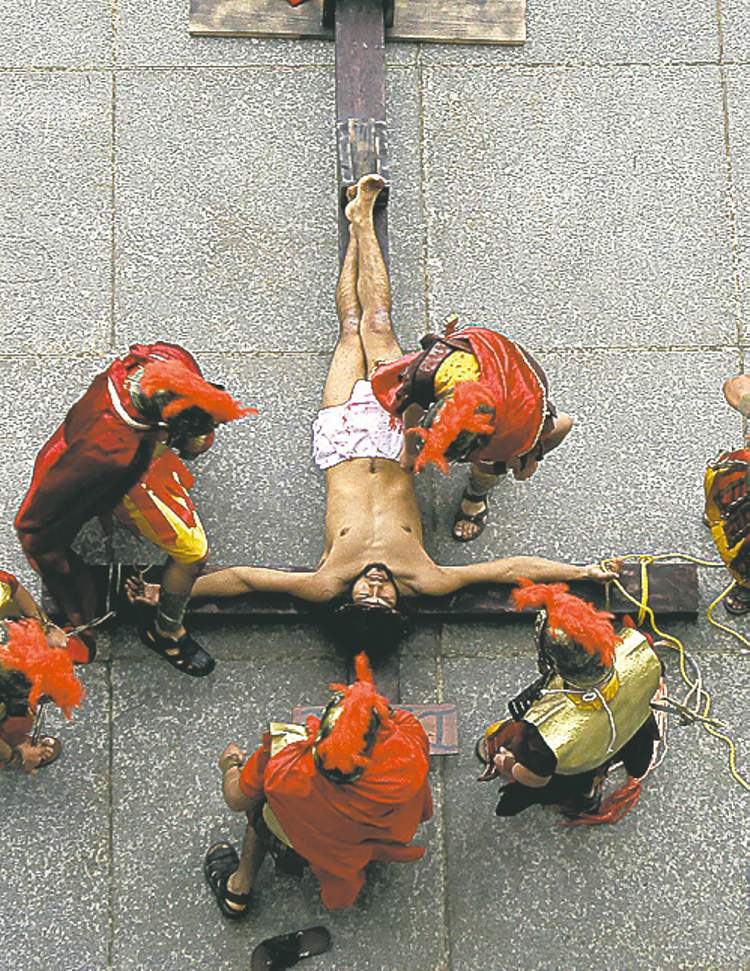
Why did Jesus’s death on the cross touch Haile so deeply? Haile says he got to see what the French anthropologist Rene Girard has noted, namely that such sacrifices are always offered where there is “a commitment to reconciliation and restoration. The sacrificial animal must be perfect and innocent of the causes of the conflict.” In this way, these sacrifices remind us of Jesus, they are a “prototype that is fulfilled in Christ, the Lamb of God.” Through his death on the cross, Jesus set out to reconcile the world to himself and people who were separated by huge differences to God and then to one another.
“He is the divine sacrifice who absorbs the hostility and forgives, thereby bringing reconciliation. At the communion table the reconciled community partakes of the bread and the wine, symbols of the body and blood of Christ. The communion table with the bread and the wine are signs of the cross and resurrection of Christ, confirming the believer’s participation in the covenant of reconciliation with God and with others.”
As Haile reflected on his years of effort at trying to reconcile feuding clans, he said that he would try to make “linkages between the cross of Christ and the traditional themes.” At the same time, he added he never “disparaged values from other streams of spirituality or wisdom” or “imposed his Christ-centred peacemaking commitments” on others, even though he drew his own strength from the cross and resurrection of Christ.
“The real restoration that goes to the root causes of strife within the human heart,” Haile would say, “is centered in the cross and resurrection of Christ and the healing work of the Holy Spirit.”
This Somali Christian expresses an understanding of the meaning of the cross and resurrection for peacemaking that could help many North American Christians. While he readily acknowledges the existence of many “ideologies and theologies of peacemaking,” he describes the cross as “distinct and revolutionary.”

This is how he puts it: “In Christ crucified, the God of the universe suffers and dies for us and forgives. In his crucifixion and resurrection, Jesus decisively breaks the cycles of retributive justice. He invites us into the forgiving and reconciling embrace of God. No philosophy or religion has ever imagined that God could love that much. The call of God upon my life is to be a faithful ambassador of Jesus Christ and the truly healing peace he offers.”
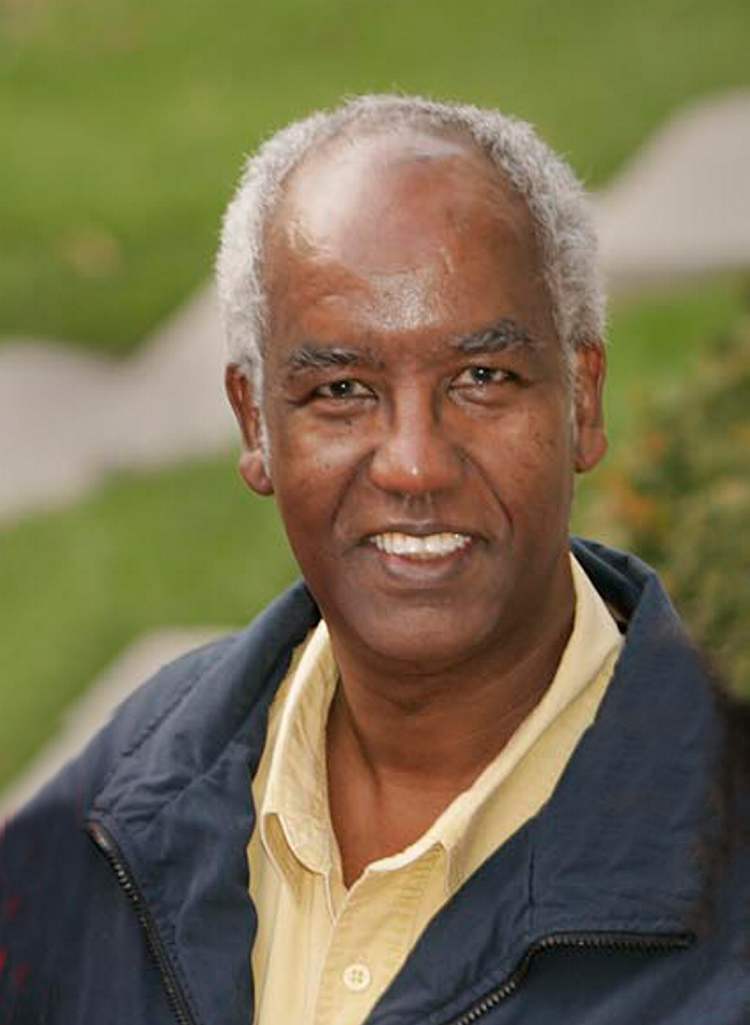
I’ve never found the death and resurrection of Christ explained and lived out better than done by this noble Somali, Ahmed Ali Haile.
Harold Jantz is a retired editor and Christian journalist.
jantz@mts.net
The Free Press is committed to covering faith in Manitoba through our Religion in the News project. This reporting continues because readers like you step forward to fund it.
Donate now to support our reporting on religion.
Your donation is eligible for a charitable tax receipt.
BECOME A FAITH JOURNALISM SUPPORTER
The Free Press acknowledges the financial support it receives from members of the city’s faith community, which makes our coverage of religion possible.